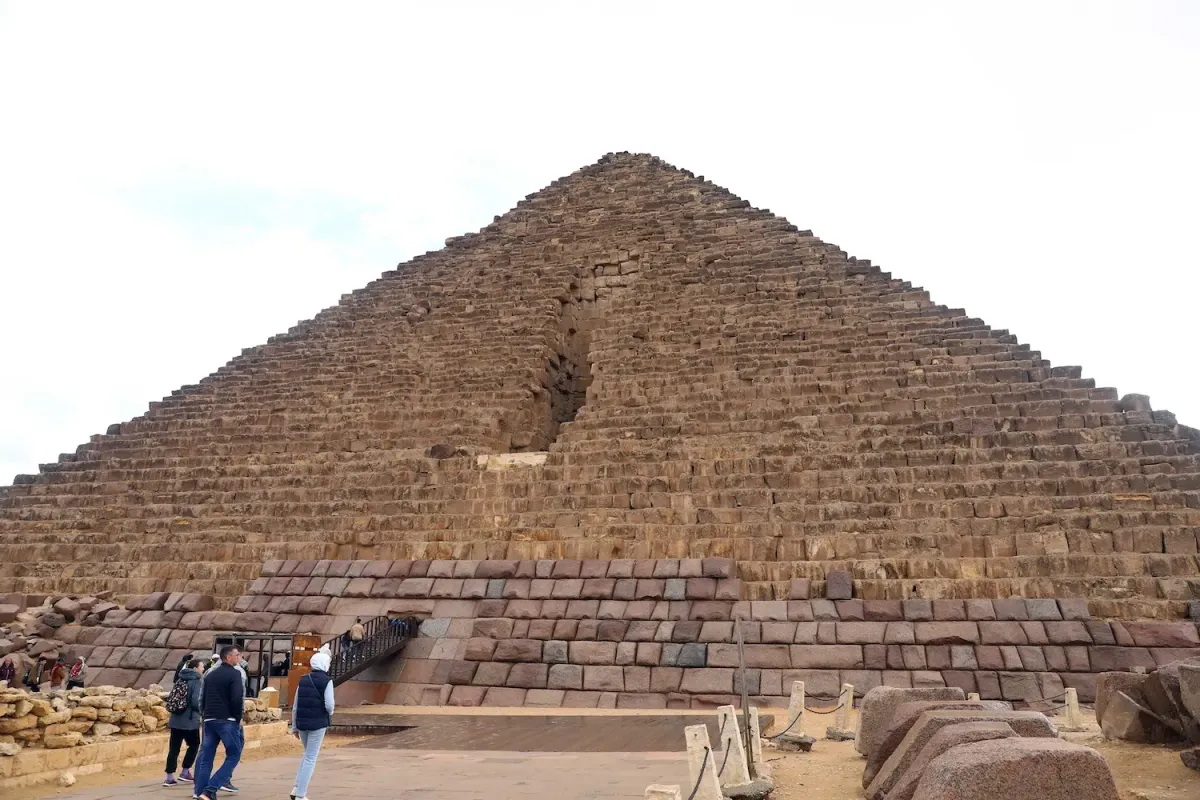
Just when you thought Egypt's pyramids had given up all their secrets, the smallest of the Giza giants decided to play coy. Archaeologists have confirmed two hidden spaces inside the Menkaure pyramid, and they're wondering if these voids point to a secret entrance that's been hiding in plain sight for millennia.
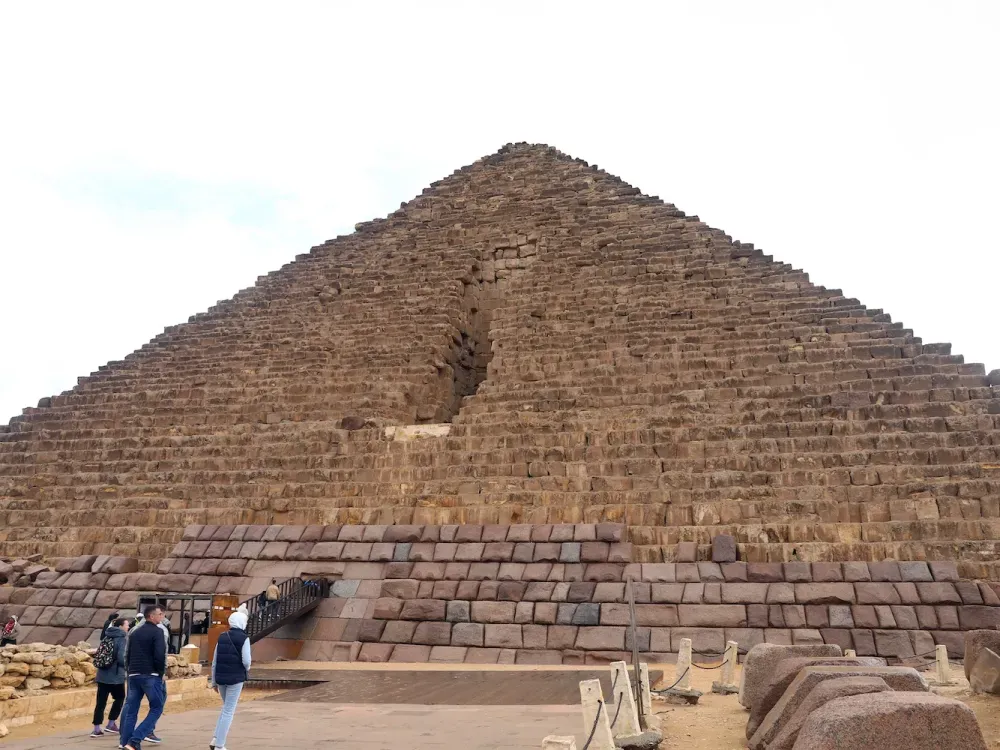
Built for ruler Menkaure in the 26th century BC, this particular pyramid has always been a bit of an enigma. It's the runt of the litter on the Giza plateau, partially clad in red granite, and features an oddly smooth, polished section on its eastern side. For years, this spot has been a head-scratcher, looking suspiciously similar to the main entrance on the north side.
Peeking Inside Ancient Stone
Enter the modern-day pyramid whisperers from Cairo University and the Technical University of Munich. They didn't grab a pickaxe; instead, they deployed a suite of non-invasive tech: ground-penetrating radar, ultrasound, and electrical resistivity tomography (ERT). Think of it as an ancient MRI, revealing what's beneath the surface without disturbing a single 4,500-year-old stone.
We're a new kind of news feed.
Regular news is designed to drain you. We're a non-profit built to restore you. Every story we publish is scored for impact, progress, and hope.
Start Your News DetoxTheir scans confirmed it: empty spaces lurk behind that smooth eastern facade. This isn't just a random void; it strongly backs up a 2019 theory by researcher Stijn van den Hoven, who suggested a second entrance might be precisely in that spot. Because apparently, one grand entrance to an ancient tomb just isn't enough.
This high-tech hide-and-seek is all part of the larger ScanPyramids project, which kicked off in 2015 with the noble goal of exploring these monumental structures without, you know, smashing them up. The project already made headlines in 2023 by finding a new corridor in the Great Pyramid of Giza, proving that these ancient architects were big fans of secret passages.
Christian Grosse, a specialist from TUM, sounds pretty confident. He says their testing brings them much closer to proving the existence of another entrance. Which, if you think about it, is both impressive and slightly terrifying. Imagine finding a new front door to a 4,500-year-old building. What else have we missed?