Imagine being a 22-foot-long, dolphin-like predator with a broken jaw and a bum shoulder. Not exactly peak hunting form, is it? Yet, a newly studied fossil from Germany reveals that one ancient ichthyosaur of the Temnodontosaurus genus didn't just survive these brutal injuries; it thrived, hinting at a surprising survival strategy.
Turns out, these Jurassic giants hung around a lot longer than scientists previously thought. And this particular specimen, found in the fossil-rich Mistelgau clay pit in Germany, is giving us a very detailed look at what it takes to be a comeback kid in the Early Jurassic.
The Ultimate Survivor
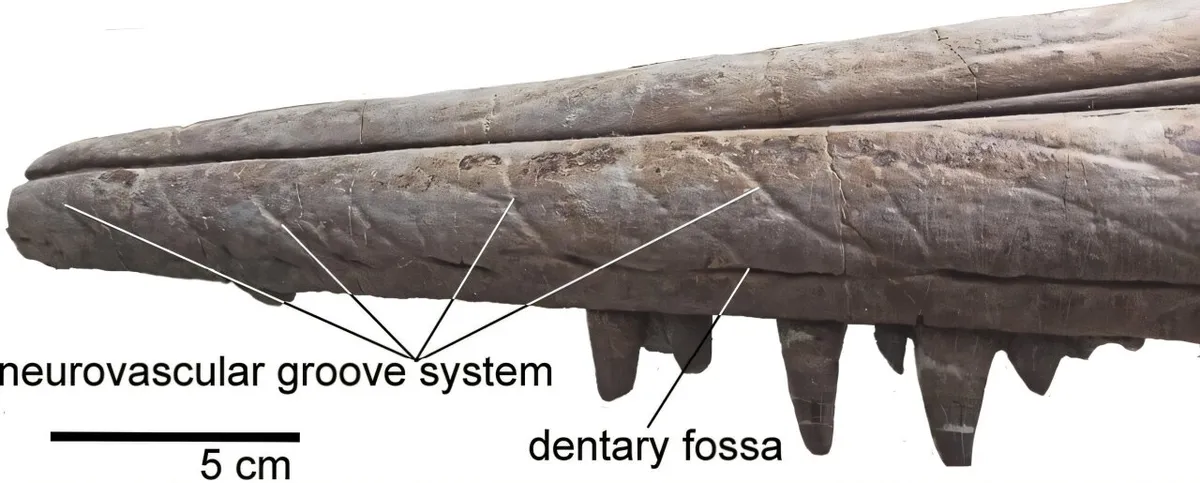
This isn't just any old bone collection. We're talking about a Temnodontosaurus with parts of its skull, jaw, shoulder, fins, and over 100 teeth — all preserved in stunning 3D. It's like paleontologists found the ultimate action figure, complete with battle damage. Based on its 1.5-meter skull, this beast likely stretched about 6.6 meters (22 feet) long. Because apparently, if you're going to tough it out, you might as well do it big.
We're a new kind of news feed.
Regular news is designed to drain you. We're a non-profit built to restore you. Every story we publish is scored for impact, progress, and hope.
Start Your News DetoxDr. Ulrike Albert, an SNSB paleontologist, noted that this fossil is one of the youngest Temnodontosaurus finds, pushing back their extinction date in the Southwest German Basin. So, not only did this specific animal refuse to quit, but its entire lineage stuck around for an encore.
But back to our injured hero. The skeleton clearly shows trauma to its shoulder and jaw joints. Stefan Eggmaier, a preparator at the Urwelt-Museum, theorizes these injuries would have made catching prey incredibly difficult. Think about it: a giant marine reptile with a bad bite and a sore flipper trying to chase down dinner. The struggle was real.
So, how did it manage? The evidence points to a seriously clever pivot: gastroliths. These are stomach stones, usually found in birds, dinosaurs, or crocodiles. Finding them in an ichthyosaur like this is incredibly rare. Eggmaier believes our Temnodontosaurus likely swallowed these stones to help grind up food, possibly switching to a diet of softer, easier-to-catch prey. It's the ancient equivalent of going from hunting gazelles to ordering takeout.
This battered, resilient ichthyosaur offers a fascinating glimpse into the sheer adaptability of life, even 180 million years ago. Sometimes, survival isn't about being the strongest, but the most resourceful. And maybe, just maybe, having a really good dentist. Or, you know, a gut full of rocks.