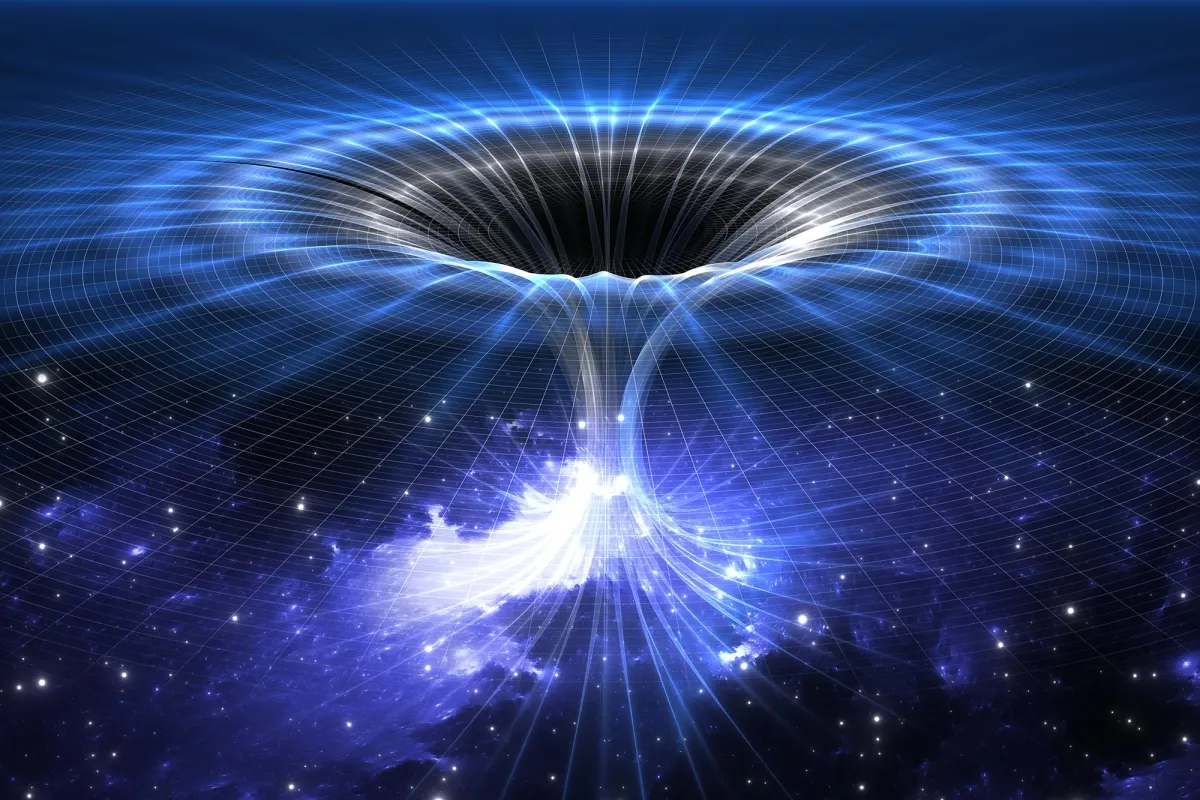
Gravity seems simple in daily life, but it's a huge challenge for science on a cosmic scale. It controls how galaxies form and move, and how the universe is structured. Yet, some cosmic movements don't quite add up.
This long-standing puzzle led cosmologist Patricio A. Gallardo from the University of Pennsylvania and his team to ask a big question. They wondered if gravity might act differently over the vast distances in the universe.
The Cosmic Discrepancy
Gallardo explained that there's a major problem in understanding the universe's mass. Stars orbit too fast within galaxies, and galaxies move too quickly within clusters, based on the visible matter they contain.
We're a new kind of news feed.
Regular news is designed to drain you. We're a non-profit built to restore you. Every story we publish is scored for impact, progress, and hope.
Start Your News DetoxThis issue has two main explanations. Either there's a lot of unseen "dark matter" adding extra gravity, or the basic rules of gravity need to change.
Gallardo and his team used data from the Atacama Cosmology Telescope (ACT) to test gravity on a massive scale. They looked at galaxy clusters hundreds of millions of light-years apart. This was the most extensive test of gravity ever done.
Their findings, published in Physical Review Letters, showed that gravity's strength decreases with distance exactly as Isaac Newton predicted centuries ago. Albert Einstein later included this idea in his theory of general relativity.
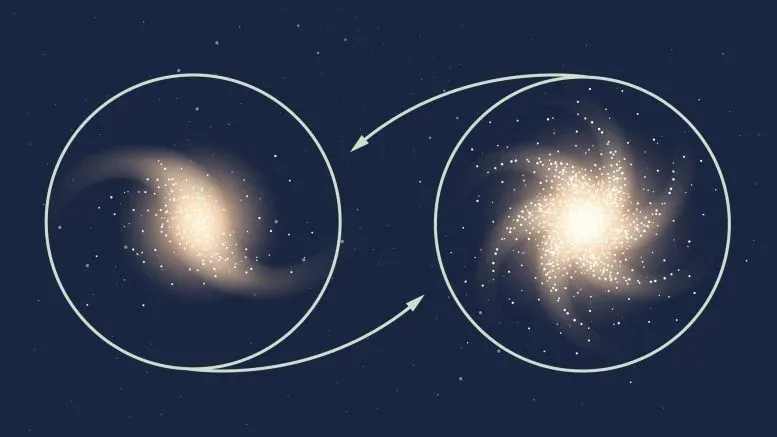
Gallardo noted it's amazing that Newton's inverse square law, from the 17th century, still holds true today. These results support the standard model of cosmology. They also challenge other ideas, like Modified Newtonian Dynamics (MOND), which suggest changing gravity's laws to explain cosmic behavior.
Newton first described the inverse square relationship for our solar system. Today, this same principle has been tested across distances and masses Newton couldn't have imagined.
Understanding the Universe's "Speed Limits"
Galaxies, which number over 200 billion, don't behave as expected if we only consider the matter we can see.
Newtonian physics suggests that stars farther from a galaxy's center should orbit slower. But observations show these outer stars move faster than predicted. The same pattern appears in galaxy clusters, where entire galaxies travel at speeds that visible mass can't explain.

Gallardo said this is the central puzzle. Either gravity acts differently on very large scales, or the universe has extra matter we can't see directly.
Testing Gravity Across the Cosmos
To explore this, researchers used ACT data that tracks light from about 380,000 years after the Big Bang. This light is called the cosmic microwave background.
As this ancient light travels through galaxy clusters, their movement subtly affects its path, leaving detectable signs. By studying these effects across hundreds of thousands of clusters over tens of millions of light-years, the team figured out how gravity works on the largest known structures. If theories like MOND were right, gravity's weakening pattern would be different from current predictions.
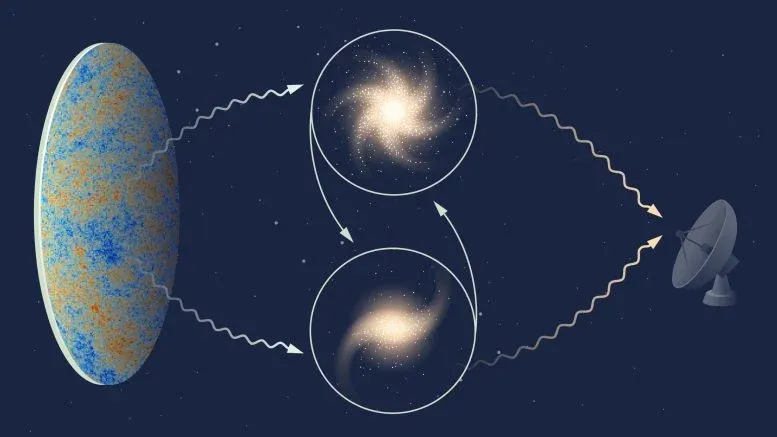
Instead, the measurements closely matched what Newton's and Einstein's theories predicted.
Since gravity behaves as expected, the missing mass problem can't be solved by changing gravity's laws. This strengthens the idea that an unseen form of matter, dark matter, causes the extra gravitational effects.
The Dark Matter Mystery
Figuring out what dark matter truly is remains one of physics' biggest unanswered questions.
Gallardo said this study adds more proof that the universe contains dark matter. However, scientists still don't know what it's made of.
Future observations of the cosmic microwave background and more galaxy surveys are expected to provide even more precise tests of gravity.
Deep Dive & References
Test of the Gravitational Force Law on Cosmological Scales Using the Kinematic Sunyaev-Zeldovich Effect - Physical Review Letters, 2026