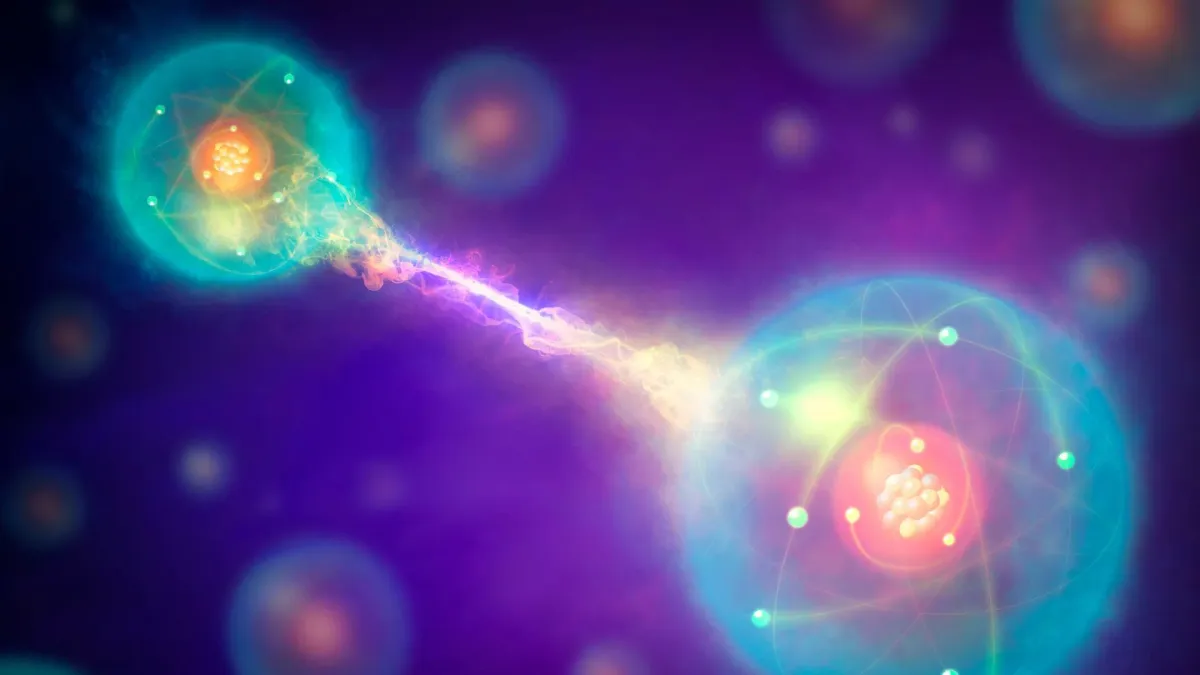
Imagine a chair that's simultaneously in your living room, kitchen, and maybe even on a beach in Tahiti. That's essentially how tiny particles operate in the quantum world, existing in a blurry, multi-state existence called "superposition." It's all described by something called a "wavefunction" — a physicist's fancy way of saying, "It's complicated."
But here in the decidedly un-Tahitian reality of our daily lives, a chair is just a chair. And a clock tells one time. Bridging this chasm between the quantum weirdness and our decidedly less trippy experience has been one of physics' longest-running headaches.
Traditionally, the thinking went like this: when you measure a quantum system, its wavefunction collapses into a single, definite outcome. Poof, no more Tahiti chair.
We're a new kind of news feed.
Regular news is designed to drain you. We're a non-profit built to restore you. Every story we publish is scored for impact, progress, and hope.
Start Your News DetoxNow, a team of physicists, backed by the wonderfully named Foundational Questions Institute (FQxI), has been poking at "quantum collapse models." These aren't just theoretical musings; they propose that wavefunctions might just collapse on their own, no nosy observer required. And here's where it gets interesting: these models could actually mess with time itself, subtly altering how accurately we can measure it. Their findings, published in Physical Review Research, are a lot to unpack.
As Nicola Bortolotti, the PhD student leading the charge, put it, "We took seriously the idea that collapse models may be linked to gravity. Then we asked a very concrete question: What does this imply for time itself?" Which, if you think about it, is a pretty excellent question to ask.
The Wobbly Clock of Quantum Gravity
Back in the 1980s, some very smart people started developing ideas where wavefunctions just… spontaneously collapsed. Unlike other quantum interpretations, these collapse models actually make predictions you can test. Bortolotti's team, including quantum luminaries like Catalina Curceanu and Lajos Diósi, dove deep into two of them. One, the Diósi-Penrose model, specifically links gravity to this wavefunction collapse.
They also managed to quantitatively connect another model, Continuous Spontaneous Localization, to tiny, almost imperceptible shifts in gravitational spacetime. It was the first time anyone had drawn such a precise line between these concepts.
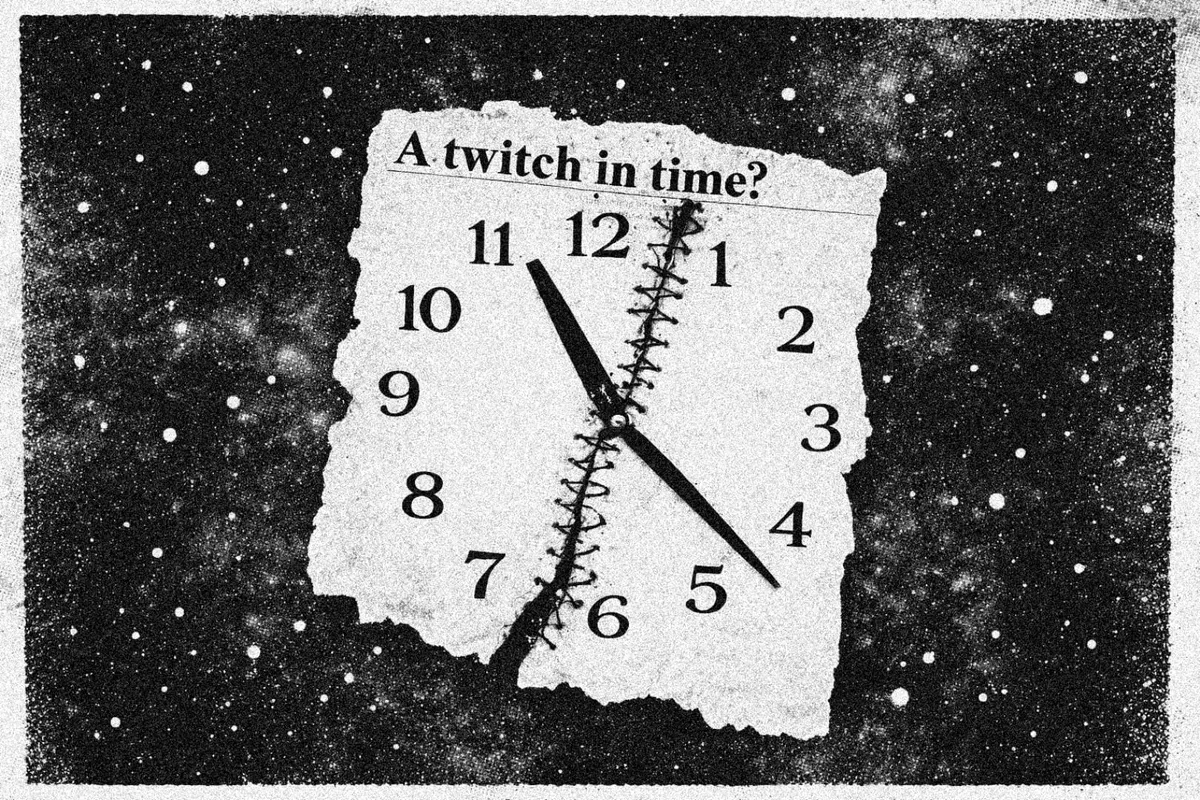
And the big takeaway? If these collapse models are correct, time itself would come with a tiny, inherent wobble — a built-in uncertainty. This would, theoretically, set a fundamental limit on how precisely we could ever measure time. But before you start panicking about your morning commute, Bortolotti offers a reassuring note: "Once you do the calculation, the answer is clear and surprisingly reassuring."
This predicted uncertainty is so incredibly small that even our most ridiculously precise atomic clocks wouldn't notice it. Curceanu explains it's "many orders of magnitude below anything we can currently measure." So, yes, your phone's clock is safe. For now.
For decades, physicists have been trying to smash quantum mechanics and general relativity together. They're both brilliant theories, but they treat time like two completely different concepts. Quantum mechanics sees time as an external, unaffected constant, while Einstein's general relativity views it as a dynamic, bendy fabric that warps with mass and energy. Like two brilliant but stubborn siblings arguing over a toy.
This new research suggests quantum mechanics might just be a piece of a much larger, more integrated puzzle. By hinting at a connection between collapse models, gravity, and time, it points to hidden relationships between the very fabric of our universe. And it’s a testament to the FQxI for funding the kind of "radical ideas" that might just rewrite our understanding of everything. Turns out, even with a wobbly quantum clock, timekeeping remains one of the most stable pillars of modern physics. Let that satisfying thought sink in.