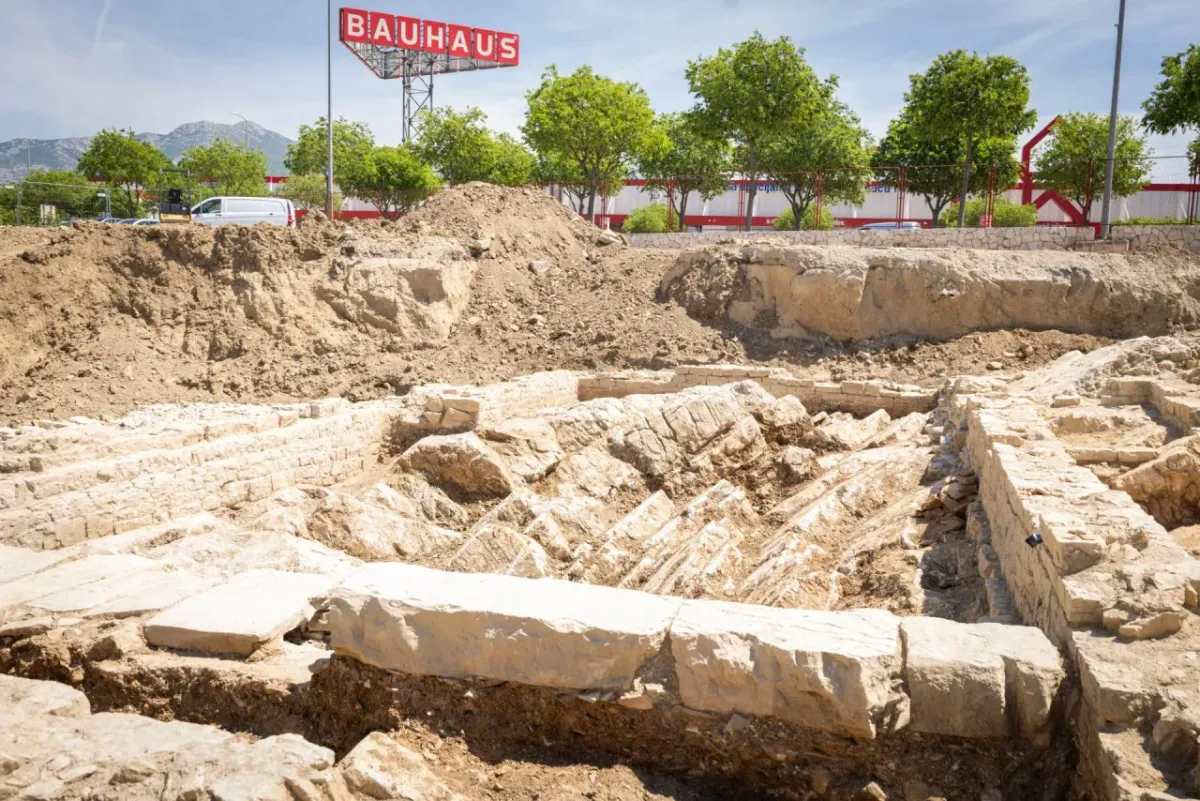
Just when you thought your local strip mall couldn't get any more interesting, Croatian archaeologists have unearthed a sprawling ancient Roman estate. Its location? Directly across from a modern-day shopping center near Split. Because apparently, prime real estate has always been prime real estate.
Led by archaeologist Eduard Visković and his team from Kantharos, the discovery happened during digs at the Mostine site. They were doing what any responsible developer-adjacent archaeological team does: checking for ancient ruins before someone slaps up another commercial building. This particular corner of the world has a history of giving up its secrets, with an early Christian church popping up back in 2011.
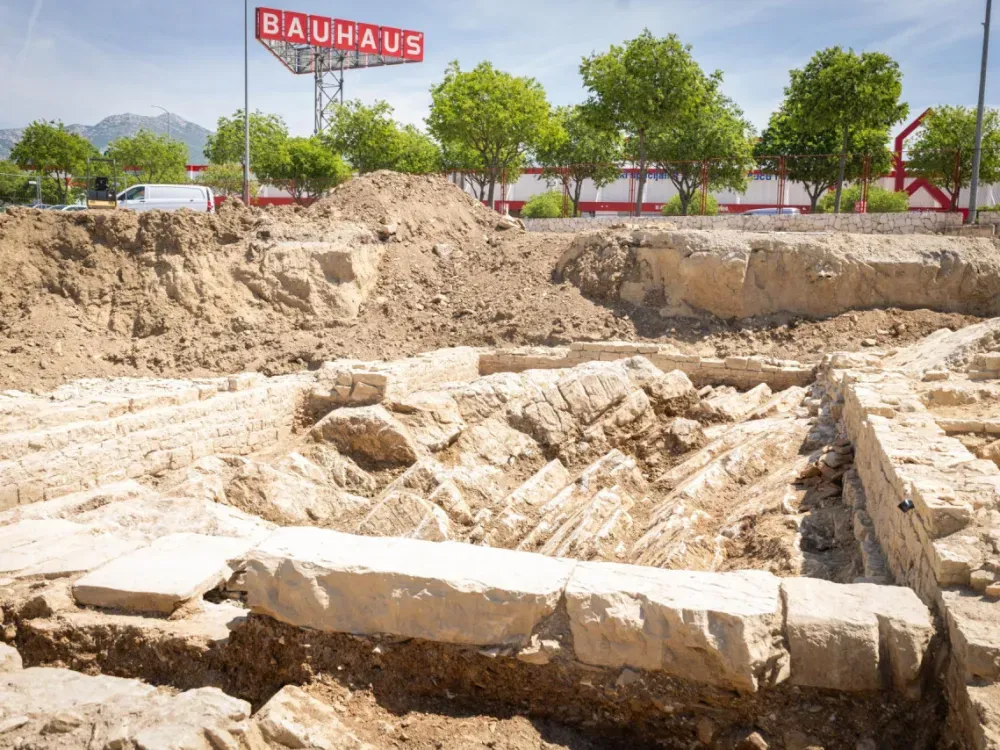
This newly uncovered complex spans a respectable 6,500 square feet, which, if you think about it, is bigger than most modern apartments and probably had better natural light. It wasn't just a fancy pad; it was an olive oil production powerhouse. The team found six large rooms, one nearly 1,000 square feet, along with the remnants of actual olive oil presses, complete with channels to funnel the liquid gold into collection basins. There was even a cistern for storage and a scattering of ceramic pot pieces.
We're a new kind of news feed.
Regular news is designed to drain you. We're a non-profit built to restore you. Every story we publish is scored for impact, progress, and hope.
Start Your News DetoxWhere Empires Met Olives
Starting its life around the 1st century CE, this estate was clearly in the business of making bank from olives for centuries. A 150-foot road extending north from the entrance suggests this place was a major supplier, likely feeding the demand of Salona, the bustling capital of Roman Dalmatia.
But it wasn't all work and no play. The complex included living quarters, presumably a rather swanky villa for the wealthy landowner. Inside, archaeologists found delicate mosaic tiles, fragments of glass, kitchen pottery, and a scattering of coins dating from the 2nd to the 6th centuries CE. Imagine dropping your loose change and having it become a historical artifact for two millennia.
Visković highlighted the rarity of finding such clear evidence of ancient agriculture in the area, calling it a strong indicator of active farming around Salona. The site itself is a treasure trove of Greek, Roman, and early Christian artifacts, though it does have one minor inconvenience for the researchers: it floods. Regularly. Because even ancient Roman estates can't escape the drama of local weather patterns.
Digs are expected to continue for several more weeks. After that, the entire complex will be carefully covered with special fabric and gravel, essentially putting it on pause. A temporary slumber until future generations decide it's time for more research or, perhaps, to build another shopping mall right next to it.