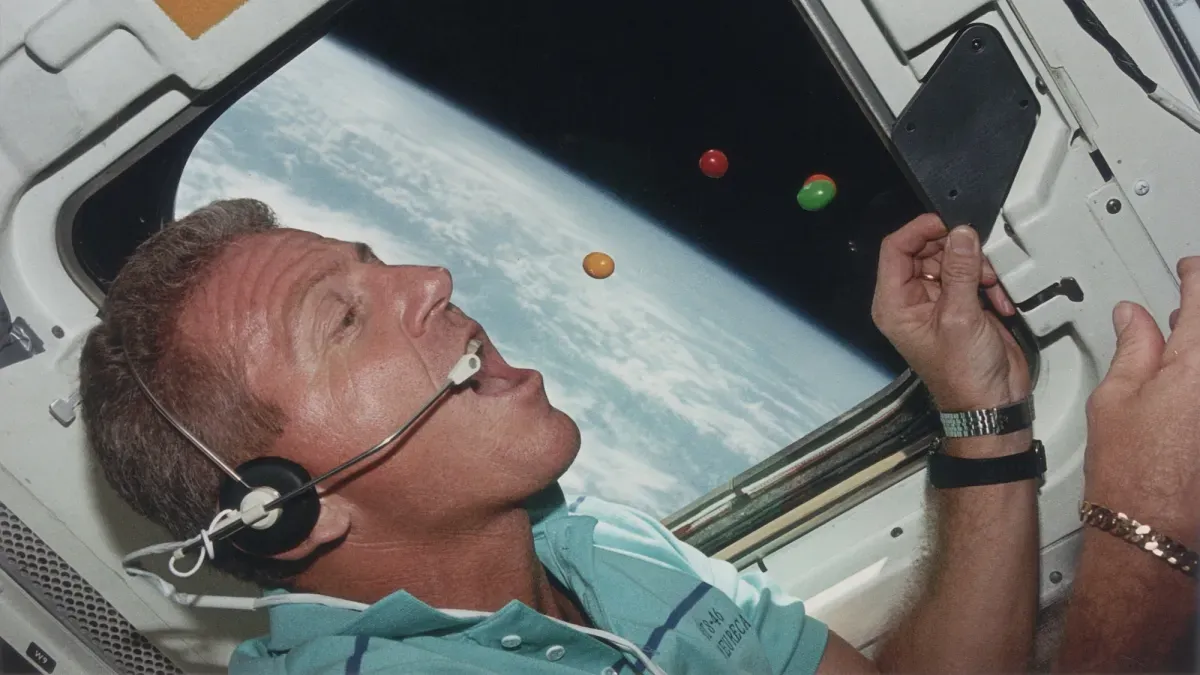
NASA just released the full menu for Artemis II, and it reads less like freeze-dried survival rations and more like a carefully curated road trip—which, technically, it is. Over 10 days in space, the four-person crew will consume mango salad, barbecued beef brisket, and enough tortillas to make you wonder if someone at mission control has strong opinions about carbs.
The shift from Apollo 11's grim packets of freeze-dried chicken to this relatively gourmet spread tells you something about how far space food has come in 55 years. But it also reveals a harder engineering problem: how do you feed people when crumbs can damage equipment, storage is measured in cubic inches, and your kitchen is a "briefcase-style food warmer."
The Constraints That Shape a Menu
Every item aboard Artemis II exists because it solves a puzzle. Tortillas, for instance, are the perfect spacecraft food—they're shelf-stable, low-crumb, and can be paired with almost anything. Compare that to bread, which sheds fragments like a molting bird and has been quietly banned from spacecraft since the early days of spaceflight. The crew's two daily beverage rations (including those 43 cups of coffee across the mission) aren't generous because astronauts love coffee—though they probably do—but because liquids are heavy and launch capacity is finite.
We're a new kind of news feed.
Regular news is designed to drain you. We're a non-profit built to restore you. Every story we publish is scored for impact, progress, and hope.
Start Your News DetoxThe menu was built through a process that feels almost mundane: the four astronauts actually tasted the options during preflight tests and rated them. NASA then locked in their favorites: mango salad, spicy green beans, macaroni and cheese, and that barbecued beef brisket. Five different hot sauces made the cut, along with spreadables ranging from peanut butter to maple syrup. The variety matters more than it might seem. In the psychological strain of a lunar mission, the ability to choose between honey and jam on your rehydrated meal isn't luxury—it's a small anchor to normalcy.
What's notably absent? Astronaut ice cream, the freeze-dried dessert that's become a tourist shop staple. It didn't make the final cut, which suggests NASA's food scientists have moved beyond novelty toward pure functionality and crew morale.
The preparation system itself is a marvel of constraint. Astronauts can't prep food during launch and landing—the critical phases where every hand is needed—so those windows rely entirely on ready-to-eat meals. For the rest of the mission, the potable water dispenser rehydrates freeze-dried foods, and the warmer handles the rest. Meals are packaged in small boxes containing two to three days' worth, so the crew isn't opening new supplies every morning.
This is what progress in space exploration actually looks like: not dramatic breakthroughs, but the accumulation of small decisions that make a 10-day mission to the Moon feel slightly less like survival and slightly more like work. The next crew to leave Earth orbit will probably eat something even better. And somewhere, a food engineer is already thinking about how to make it happen.