For the first time, astronomers have watched stellar explosions called novae unfold in real time, and what they're seeing overturns decades of assumptions about how these cosmic blasts actually work.
Two novae observed in recent years — V1674 Herculis and V1405 Cassiopeiae — revealed something unexpected: these explosions are far messier and more intricate than anyone expected. The first nova erupted and faded in just days, but images showed two separate streams of gas shooting outward in perpendicular directions, colliding with each other. The second unfolded in slow motion, holding onto its outer layers for more than 50 days before finally releasing them into space. Both events produced gamma rays that NASA's Fermi telescope detected from orbit, directly linking the high-energy radiation to the colliding gas flows.
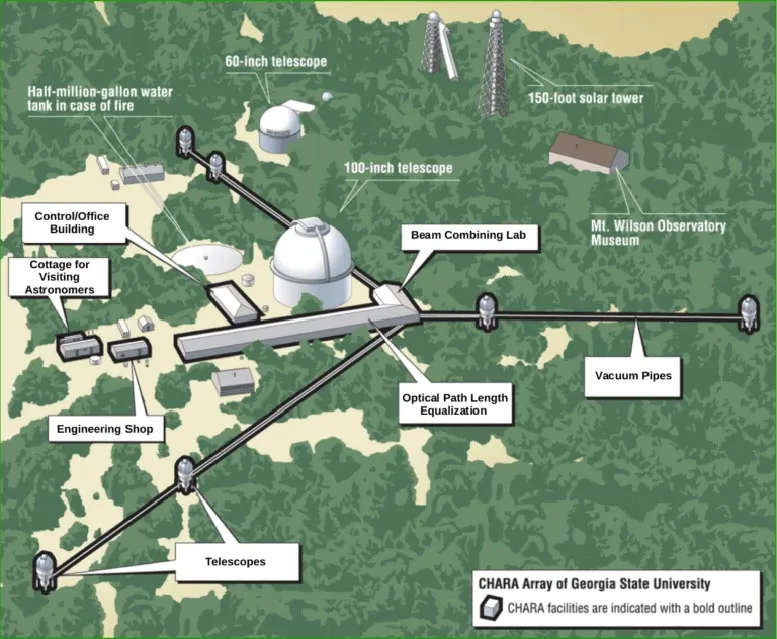
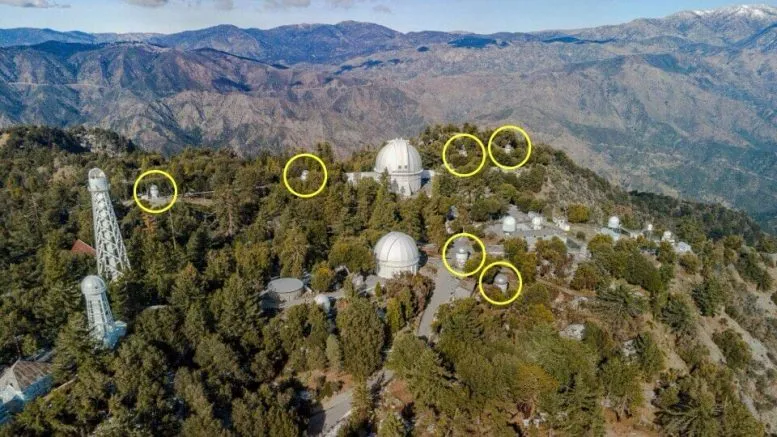
These observations became possible through interferometry — the same technique that produced the first image of a black hole. By combining data from multiple telescopes, astronomers can now resolve details in nova explosions that were completely invisible before. Spectroscopic data from observatories like Gemini tracked the chemical fingerprints of the ejected gas, and as new features appeared in those spectra, they matched perfectly with the structures revealed in the telescope images. It was like watching a puzzle solve itself in real time.
We're a new kind of news feed.
Regular news is designed to drain you. We're a non-profit built to restore you. Every story we publish is scored for impact, progress, and hope.
Start Your News DetoxA New Picture of Stellar Explosions
The old model treated novae as single, violent events — a star's surface erupts, material shoots outward, and that's the story. The new observations show something far richer. Some novae involve multiple outflows happening at different times. Others hold back their material for weeks before releasing it. These variations change how the ejected gas collides, how shock waves form, and ultimately how gamma rays get produced.
Laura Chomiuk, a stellar explosion expert at Michigan State University, described the significance plainly: "By seeing how and when the material is ejected, we can finally connect the dots between the nuclear reactions on the star's surface, the geometry of the ejected material, and the high-energy radiation we detect from space." Novae, it turns out, are natural laboratories for studying how extreme physics works — how shock waves accelerate particles and convert motion into radiation.
Lead researcher Elias Aydi noted that this is just the beginning. More observations of novae in their first days and weeks will answer bigger questions about how stars live, die, and reshape the space around them. What looked simple from a distance — a star exploding — reveals itself up close as something genuinely complex and revealing.