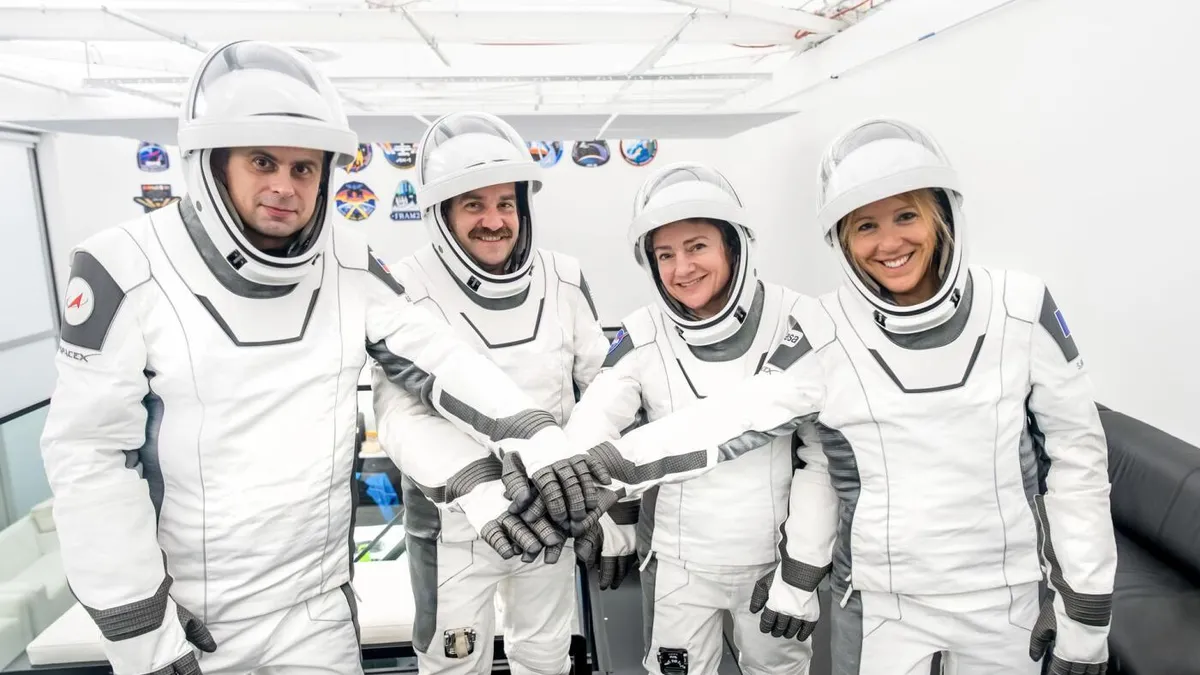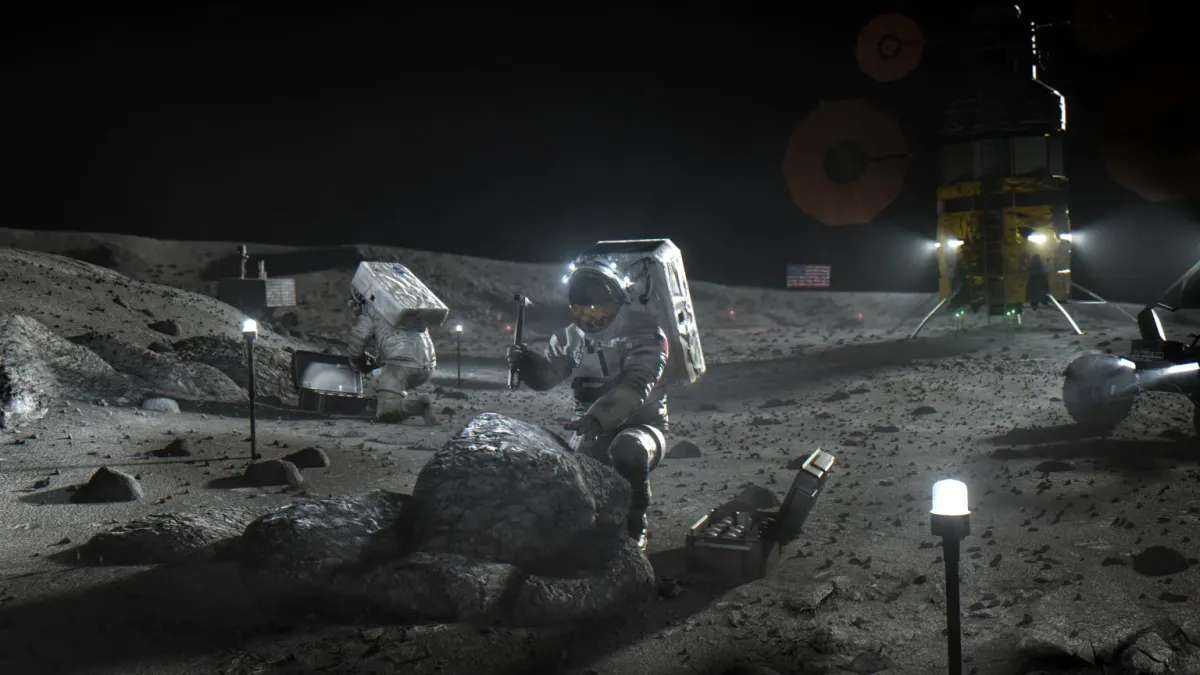
Elon Musk has spent years framing Mars as SpaceX's ultimate destination—the backup plan for humanity if Earth faces catastrophe. Last year, he dismissed lunar missions as "a distraction." Now he's pivoting hard toward the moon, targeting an uncrewed landing in March 2027 and talking about building a "self-growing city" on our nearest neighbor.
The practical logic is straightforward. Mars only aligns favorably with Earth every 26 months, and each trip takes six months or longer. The moon is reachable every 10 days and takes just days to reach. SpaceX also has a $4 billion NASA contract to land astronauts on the moon using its Starship rocket for the Artemis III mission in 2028—a deadline that's already pushing the company hard.
But the shift seems to be about more than just proximity. Musk has become increasingly focused on artificial intelligence, and he's started floating an idea that ties space directly to that ambition: space-based data centers on the lunar surface. Last week, SpaceX merged with his AI company xAI in a deal valuing the combined entity at $1.25 trillion. In comments at an all-hands meeting, Musk described plans for a massive electromagnetic catapult—a "mass driver"—to launch satellites from the moon into space, feeding data back to Earth-based AI systems. The energy constraints holding back AI development on Earth could, in theory, be solved by leveraging the moon's resources and position.
We're a new kind of news feed.
Regular news is designed to drain you. We're a non-profit built to restore you. Every story we publish is scored for impact, progress, and hope.
Start Your News DetoxThe Competitive Edge
There's also the matter of Jeff Bezos. Blue Origin has finally started delivering with its New Glenn launch vehicle, and sources say Bezos wants his team going "all in" on lunar exploration. Blue Origin's crew transportation system has a significant advantage: it doesn't require orbital refueling. SpaceX's Starship, by contrast, will need 10 to 12 tanker flights just to fill its fuel tanks before a lunar mission. Starship has a payload advantage—over 100 tons to the lunar surface—but Blue Origin's relative simplicity could let it land humans on the moon first.
Musk hasn't abandoned Mars entirely. He says SpaceX will still build a city on the red planet, with missions beginning in five to seven years. Given his track record with timelines, those projections deserve skepticism. But the shift toward the moon suggests humanity's first permanent off-Earth settlement may be closer—and sooner—than we've been imagining.
What happens next depends partly on engineering and partly on whether Musk's moonshot vision for AI data centers actually works. Either way, the race to settle beyond Earth is accelerating.