Brazil is about to inject 2.3 billion reais (that's roughly $444 million for those of us not fluent in Brazilian currency) into its artificial intelligence ambitions. The goal? To become an AI powerhouse. The twist? They're doing it by playing geopolitical chess masters, balancing alliances with both the U.S. and China.
Because apparently, in the world of supercomputers and large language models, you can't just pick a favorite.
The Great AI Balancing Act
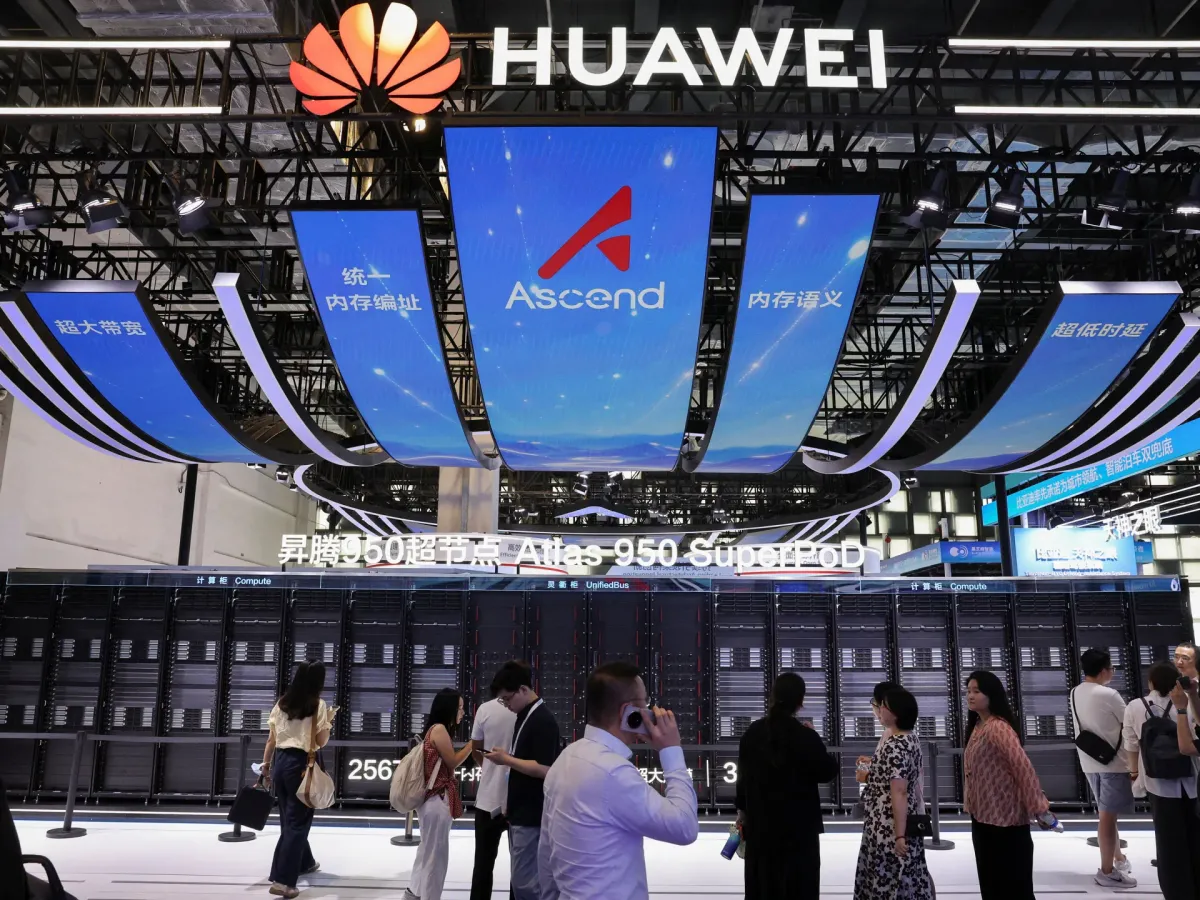
First up, a cool 1.3 billion reais ($251 million) is headed to Rio de Janeiro. This chunk of change is earmarked for a supercomputing project that's a joint venture with China's Huawei Technologies and iFlytek. Their mission: building large language models, which are essentially the brains behind things like ChatGPT, but tailored for Brazil's specific needs. Think custom AI, not off-the-shelf.
We're a new kind of news feed.
Regular news is designed to drain you. We're a non-profit built to restore you. Every story we publish is scored for impact, progress, and hope.
Start Your News DetoxThen, for good measure, another 1 billion reais ($193.1 million) is funding a different supercomputer. This one, slated for Rio Grande do Norte (a state known for its energy resources, because even AI needs power), is expected to rank among the world's top 10 most powerful AI processors. The smart money says U.S. chip giant Nvidia will snag that contract. Because why put all your supercomputing eggs in one basket?
President Luiz Inacio Lula da Silva's government is pretty clear about the strategy: avoid putting all their data — and their digital future — into the hands of a single company, technology, or country. It’s a move designed to strengthen Brazil’s control over its own digital destiny.
Given that China is Brazil's largest trading partner and an AI leader, while the U.S. is its biggest source of foreign investment, this strategic dance makes a certain kind of sense. It’s a high-stakes game of technological diplomacy, all funded by the National Fund for Scientific and Technological Development (FNDCT).
Expect the U.S.-backed supercomputer to be crunching numbers by the end of next year. The Chinese partnership? That kicks off in July 2027. Because apparently, building a technological future takes time, money, and a very good international relations department.