Imagine showing someone how to do something for 3 to 12 seconds, then walking away while they immediately nail it. That's essentially what a new robot model, GEN-1.5, is doing. It’s learning complex physical tasks from a single, blink-and-you-miss-it demonstration, no lengthy training required.
Developed by Generalist AI, GEN-1.5 doesn't need engineers to rewrite its entire brain for every new gig. It watches a short demo, understands the assignment, and then just… does it. Which, if you think about it, is both impressive and slightly terrifying.
In initial tests, this quick-study bot achieved a 59% success rate on 10 different physical tasks after just one go. Give it five minutes of extra data and a few training steps, and that jumps to a respectable 83%. The tasks themselves sound like a day in the life of a very busy, slightly clumsy human: twisting jar lids, extracting cash from a purse, stacking cups, sweeping trash, unzipping a pencil pouch, and even removing a vacuum pad.
We're a new kind of news feed.
Regular news is designed to drain you. We're a non-profit built to restore you. Every story we publish is scored for impact, progress, and hope.
Start Your News DetoxThe Art of the Physical Prompt
GEN-1.5 is a large model, meaning it slurps up video, sensor data, language, and even body position info. It can hold 30 seconds of information in its digital noggin and cooks up action plans 100 times per second. Because apparently that’s where we are now.
The demonstration itself acts as a "physical prompt." A human can guide the robot's grippers, or another robot can show it the ropes. Once that example is in its memory, the robot launches into action without a cumbersome training phase. The truly wild part? Generalist AI didn't even train GEN-1.5 for this specific type of learning, nor did they tweak its design for improvisation. Traditional robots usually need a ton of specific data and endless adjustments for new tasks. This one just… figured it out.
Even better, GEN-1.5 can combine these prompts. Show it how to unzip a pencil pouch. Then show it how to get money from inside. The robot then seamlessly merges these two actions, even adding its own smooth transitions that weren't in either original demo. Because why just learn when you can also freestyle?
Adapting on the Fly
The model also proved it could go beyond exact replication. A demo recorded in a computer simulation could prompt a real robot, even if the model had never seen simulated data before. The robot then adapted to different hands, object positions, and sizes. It even watched a human perform a task with their own hands and then copied it using its own robotic digits.
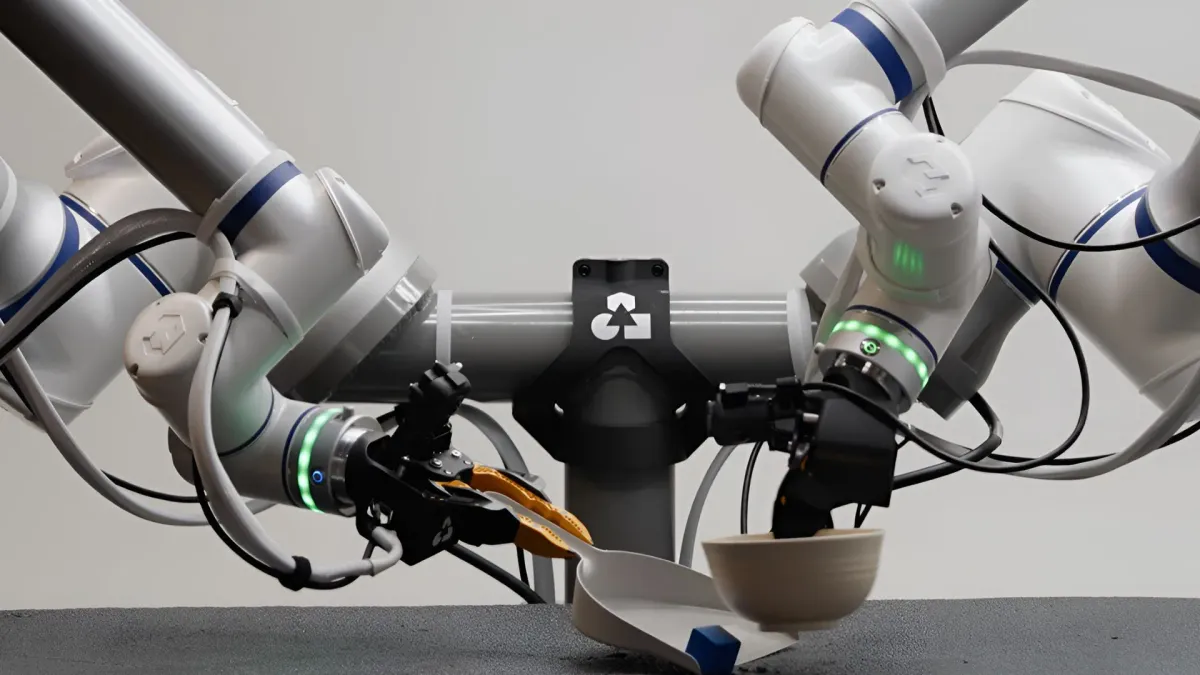
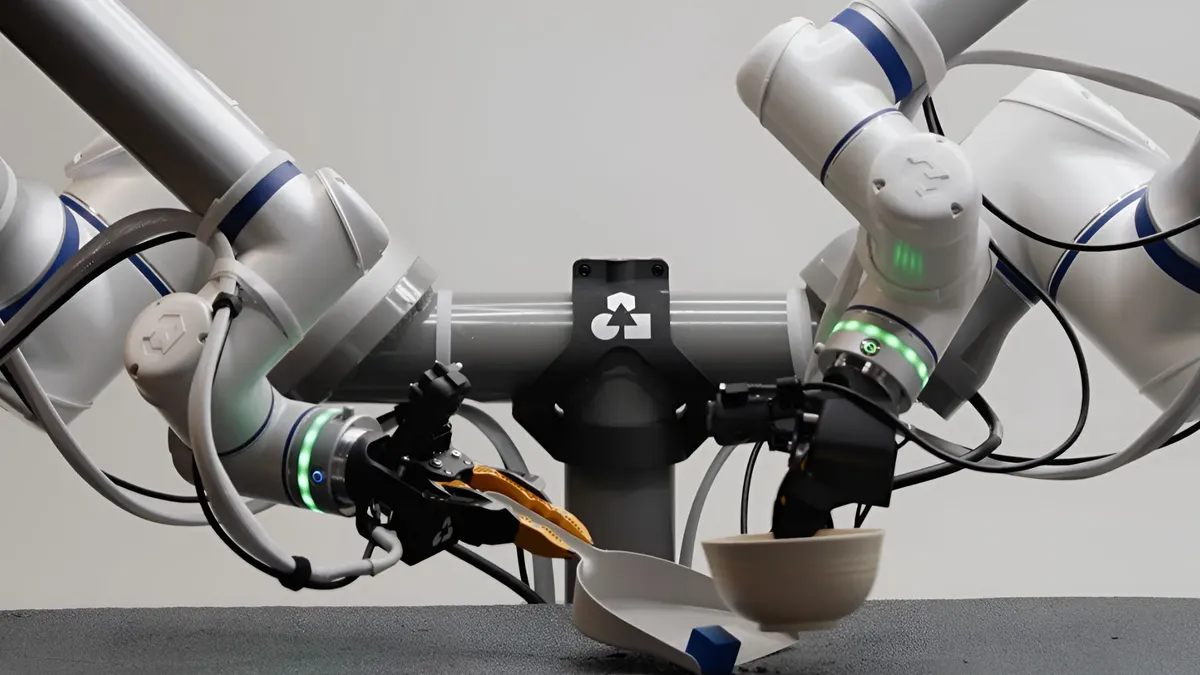
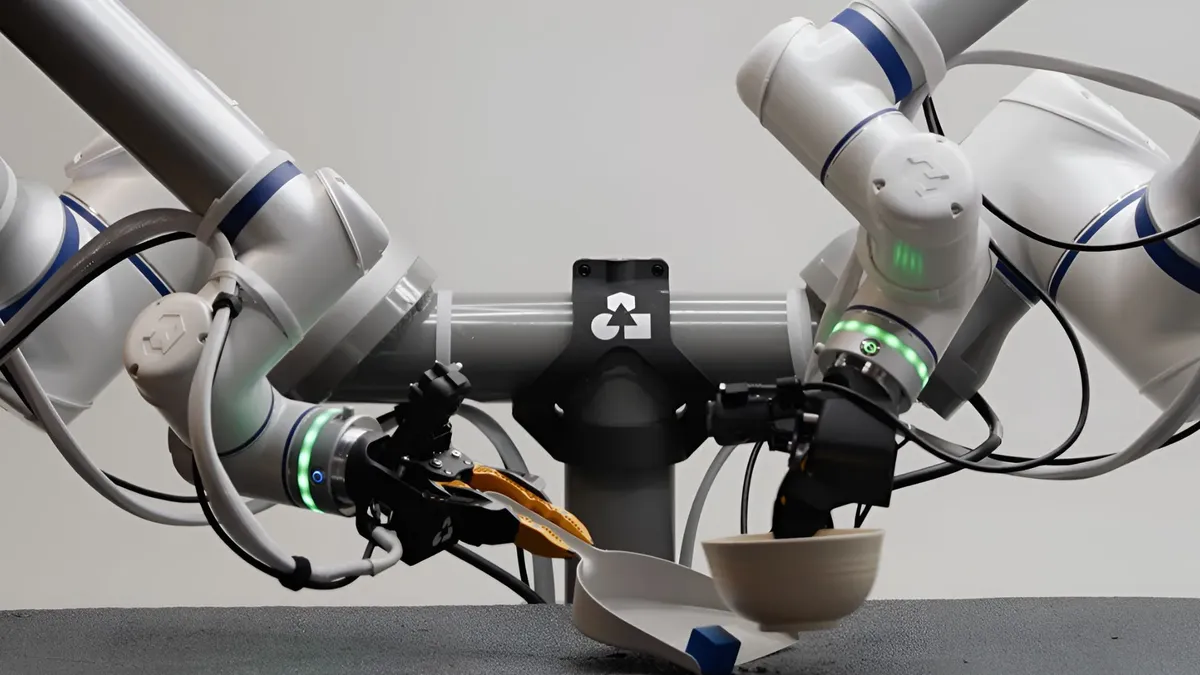
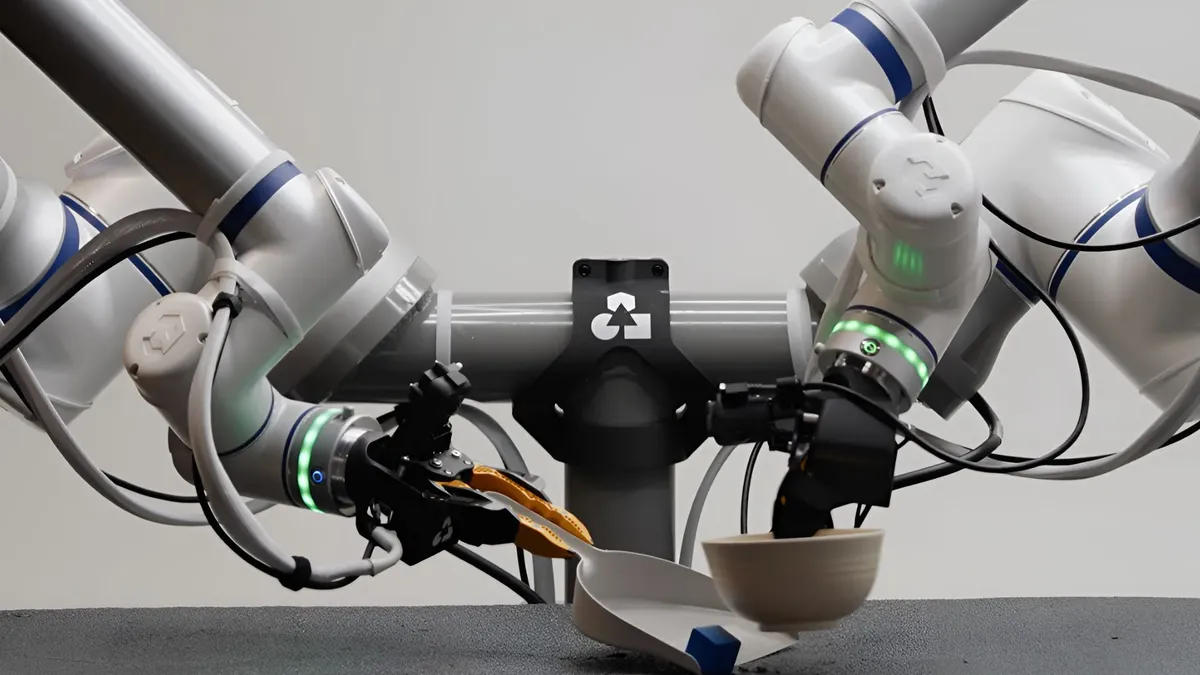
And sometimes, it did more than it was shown. After learning to sweep a block into a bowl with a brush, it spontaneously used a banana as a brush when presented with one. Given a dustpan, it invented a whole new method to lift and dump the block. This isn't just learning; it's resourceful, slightly chaotic ingenuity.
This isn't just a party trick. It hints at a future where programming robots isn't about writing endless lines of code, but simply showing them what you want. The robot handles the messy, physical details. Your job? Just point and demonstrate. And maybe keep an eye on what else it decides to use as a brush.