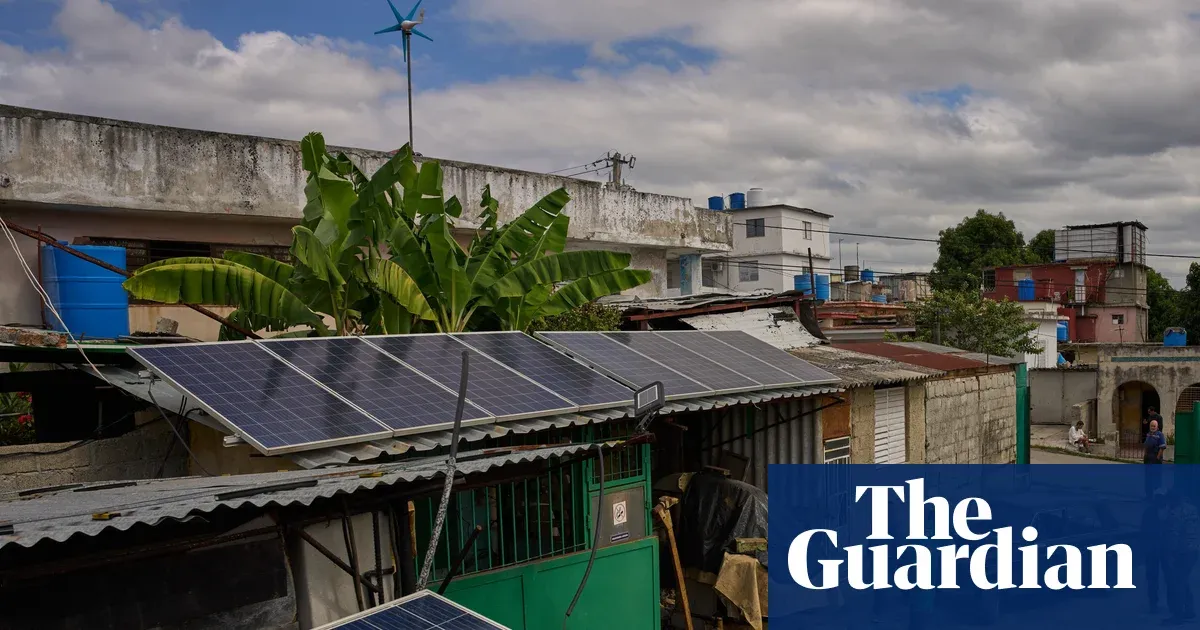
Cuba, a nation that's been wrestling with a U.S. energy blockade for decades, might just have a remarkably elegant (and green) way out. A new analysis suggests that an $8 billion investment in renewable energy could make the island almost entirely energy independent. And for less than $20 billion, it could become the Caribbean's first fully renewable grid. Because apparently, that's where we are now: solving geopolitical energy stalemates with sunshine and wind.
The Common Wealth think tank's Transition Security Project (TSP) laid out the numbers, and they're pretty compelling. An $8 billion injection could cover 93.4% of Cuba's electricity needs. We're talking solar, wind, hydropower, and bioenergy all stepping up to the plate. This isn't just about going green; it's about getting out from under a rather uncomfortable thumb.
Cuba's been feeling the squeeze. Since January, it's received a grand total of one oil shipment from Russia, largely thanks to a Trump-era order threatening tariffs on countries selling oil to the island. By March, the national electric grid had, shall we say, taken a siesta. Ten million people experienced repeated blackouts, hospitals lost power, and entire industries ground to a halt. Not exactly a recipe for a good time.
We're a new kind of news feed.
Regular news is designed to drain you. We're a non-profit built to restore you. Every story we publish is scored for impact, progress, and hope.
Start Your News DetoxA Sunny Solution to a Sticky Problem
Kevin Cashman, a TSP researcher, points out the delicious irony: the U.S. strategy aims to keep countries hooked on fossil fuels, but cheaper solar and battery storage are effectively undermining that very approach. A green energy transition would reduce U.S. influence and, as a bonus, offer a compelling model for other nations facing similar pressures. Talk about a plot twist.
The analysis modeled four scenarios, but even the most modest $5 billion investment would slash fossil fuel reliance to just one-fifth of electricity generation. The sweet spot of $8 billion would make Cuba largely independent of imported fossil fuels, dropping the cost per unit of energy from 14.3¢ per kWh to a lean 6.5¢. Let that satisfying number sink in.
Now, who pays for this green glow-up? The report frames it as "reparative climate finance" – essentially, the world helping Cuba transition, with Cubans repaying investments through the savings from cheaper energy. Cuba has, in fairness, pulled off such societal shifts before; when the Soviet Union collapsed in the 90s, they rapidly pivoted to agroecology and self-sufficiency. Plus, they've already added over 1,000MW of solar with Chinese help in the last year. So, it's not entirely uncharted territory. Just territory that might finally get some consistent electricity.