
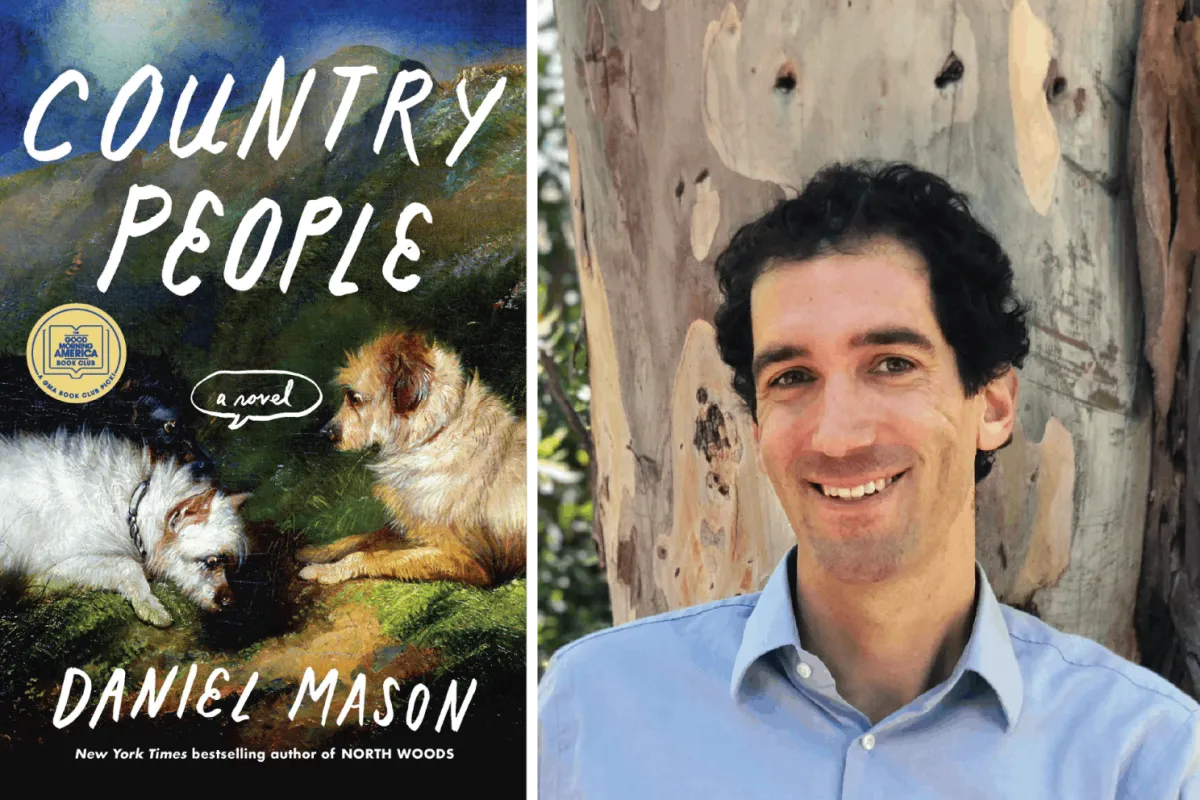
Daniel Mason, the award-winning author and actual psychiatrist, just dropped his fifth novel, "Country People." And for the first time, he actually tried to be funny. Because apparently, after four serious books, the absurdity of life just couldn't be contained.
The book follows Miles, a devoted husband and father whose academic superstar wife snags a visiting professorship in rural Vermont. Miles, bless his heart, tries to adapt to small-town life, finish his dissertation, and figure out what on earth he's doing with his own existence. Think fish out of water, but the fish is also having an existential crisis.

Mason says the inspiration struck while he was researching a previous book, finding himself amused by city folks attempting to embrace rural living with all their preconceived notions. What started as a few wry observations about misplaced L.L.Bean boots and artisanal sourdough starter quickly ballooned into a full-blown novel. Because, as it turns out, there's a lot of comedy in someone trying to find themselves while also trying to figure out how to compost.
We're a new kind of news feed.
Regular news is designed to drain you. We're a non-profit built to restore you. Every story we publish is scored for impact, progress, and hope.
Start Your News DetoxThe Loneliness of the Long-Distance Academic
"Country People" digs into the internal world of its characters, especially Miles, who's surprisingly open to others but also deeply, profoundly lonely. Mason highlights the stark contrast between Miles's wife, who has a bustling network of friends, and Miles, whose connections are more like faint signals from a distant planet. It's a theme of male loneliness that Mason's observed in his own life and among his peers. Miles makes friends, sure, but they're often task-oriented — leaving him with that persistent, quiet hum of solitude.
Then there's the dissertation. Miles just can't seem to finish it, despite having a perfectly good life otherwise. Mason points out that academics often dive into their field with burning passion, but the actual doing of a project is a whole different beast. Miles embodies this perfectly: interested in everything, but still searching for his actual place in the world. Which, if you think about it, is both impressive and slightly terrifying.

Mason also experimented with a narrative style called "free indirect discourse" — basically, a third-person narrator who's somehow inside the character's head, giving you all their inner thoughts and emotional quirks. Ideal for capturing Miles's meandering mental monologues about, say, the profound meaning of choosing between two identical shirts. Because nothing says "existential dread" like wardrobe indecision.
And for good measure, the novel throws in a community of "Hollow Earthers." Mason used them to explore why people believe things that aren't true, and the delightfully blurry line between imagination and outright delusion. Because apparently that's where we are now.
Writing a comedy, Mason found, was surprisingly liberating. It made him realize that even the most mundane moments, when you really look at them, reveal incredible complexity. And sometimes, a good laugh is exactly what you need when the world feels a bit too much. Which Way Is Up. Seriously Up?
It's a reminder that even when grappling with global concerns, sometimes the best lens is a slightly skewed, humor-tinted one.