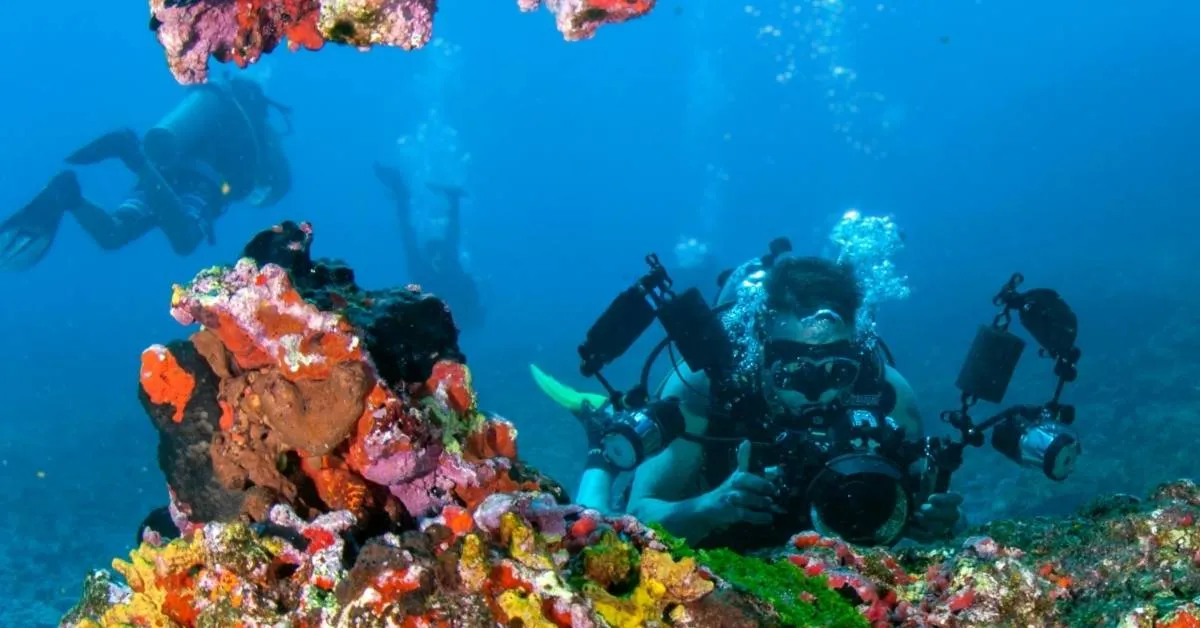
In 2017, divers off the coast of Kumejima, Japan photographed something that looked like it shouldn't exist: a two-centimeter sea creature with black-and-white markings so perfectly panda-like that it seemed almost designed by committee. The images sat quietly until 2018, when researcher Naohiro Hasegawa of Hokkaido University spotted them on Twitter and realized he was looking at something no scientist had formally documented before.
It took six more years of gathering specimens and research, but in 2024 the creature finally got its official name: Clavelina ossipandae. The scientific name translates to "little bottle" (for its shape) and "bone panda" (for obvious reasons). In Japanese, it's the gaikotsu-panda-hoya — the skeleton panda ascidian.
The panda resemblance isn't accidental design, though. Those striking white "bones" running across the creature's body are actually blood vessels threading through its gills. The black patches that look like eyes and a nose are just pigmentation, and researchers still don't fully understand why the pattern evolved at all. "We don't really know why the pattern is there," Hasegawa wrote in the Species Diversity journal, where the discovery was published.
We're a new kind of news feed.
Regular news is designed to drain you. We're a non-profit built to restore you. Every story we publish is scored for impact, progress, and hope.
Start Your News DetoxWhat makes this find particularly timely isn't just that we've discovered a new species — it's what this species actually does. Sea squirts, despite their unglamorous name and appearance, are among the ocean's most efficient water cleaners. They work by drawing water through siphons and filtering it through mucus-covered membranes, trapping plankton, organic debris, and microplastics in the process. Marine biologist Giorgia Carnovale describes them as "a cleaning pump" — simple, effective, and relentlessly hardworking.
That function matters more now than ever. Ocean degradation from pollution and microplastics has become one of the defining environmental challenges of our time. Yet here's what's quietly gaining traction: researchers and coastal communities are beginning to cultivate sea squirts deliberately, essentially farming ocean cleaners. Carnovale notes that "growing and planting sea squirts is a great way to clean seawater" — a low-tech, nature-based solution that works with existing ecosystems rather than against them.
The discovery of Clavelina ossipandae adds a small but meaningful detail to this picture. Every newly documented species expands our understanding of what's possible in marine restoration. It's a reminder that the ocean still holds surprises, and that some of the most valuable creatures are the ones we've barely noticed yet.
As coastal restoration projects expand across Asia and beyond, this little panda-faced sea squirt may become part of a much larger solution.