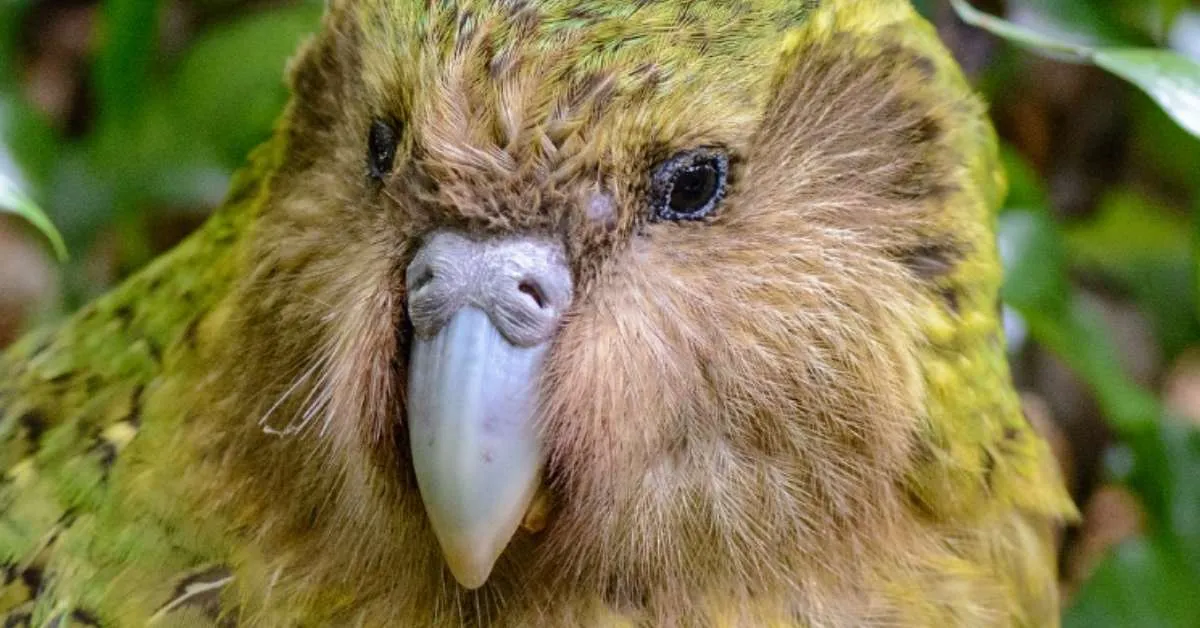
The kākāpō is nature's comedy sketch. It's the world's only flightless parrot, the heaviest parrot ever recorded, and—as Douglas Adams observed in Last Chance to See—a bird whose wings are "just about good for waggling a bit if it thinks it's about to trip over something." When a kākāpō panics, it sometimes runs up a tree and jumps, landing "like a brick in a graceless heap." For decades, this cat-sized oddity seemed destined for extinction. Today, it's staging an unlikely comeback.
In 1974, kākāpōs were thought completely gone. By 1995, only 51 remained. Now, 236 live in the wild—a trajectory that required something rarer than the bird itself: sustained partnership between Western science and indigenous knowledge. New Zealand's Department of Conservation worked alongside the Ngāi Tahu people, who approached the effort not as a rescue mission but as a responsibility to a taonga—a treasure. "It's a taonga species, a treasure to us," said Tāne Davis, Ngāi Tahu's kākāpō conservation representative.
The breakthrough wasn't a new technology. It was berries.
When the Rimu Trees Decide to Breed
Kākāpōs have always bred on their own schedule, triggered by one thing: an abundant harvest from the rimu tree, a native evergreen that can reach 190 feet tall and produces bright red berries. Scientists can't force this. They can only wait and watch. This year, the rimu trees flowered prolifically, and nearly every reproductive-age female kākāpō responded. As of early March, 240 eggs had been laid—roughly half expected to be fertile. Twenty-six chicks had already hatched.
We're a new kind of news feed.
Regular news is designed to drain you. We're a non-profit built to restore you. Every story we publish is scored for impact, progress, and hope.
Start Your News Detox"Right now, most of them are balls of fluff," said Andrew Digby, science adviser for the kākāpō program, "but within a few weeks, they'll become weird little dinosaurs with these huge, oversized feet."
This isn't accidental. The conservation team has spent years playing genetic matchmaker, carefully pairing birds to preserve diversity. They've even resorted to moving "superbreeders" to a neighboring island—dubbed "Bachelor Island"—to prevent any single male from dominating the gene pool. A male kākāpō named Blades fathered 22 chicks since 1982 and became a victim of his own success: "He was too popular," Digby explained.
What makes this story significant beyond New Zealand is what it reveals about conservation itself. This isn't a species saved by captive breeding alone, or by removing humans from the equation. It's been saved by meticulous genetic management combined with habitat restoration—the removal of invasive predators and the restoration of what the Ngāi Tahu call the "mauri," or life force, of the land. Deidre Vercoe, operations manager for the kākāpō program, put it plainly: "We don't have the Eiffel Tower or the pyramids, but we do have kākāpō and kiwi. It's a real New Zealand duty to save these birds."
That duty, it seems, is being fulfilled. The baby boom suggests that once the conditions are right—the berries abundant, the habitat restored, the genetics managed—even the world's clumsiest parrot can find its way back.