Well, that was a whirlwind. After being abruptly canceled by the previous administration, 24 critical USDA grants, totaling a hefty $127 million, are back on the table. Turns out, you can’t just yank funds from programs designed to help underserved farmers without a fight.
The grants, part of the Increasing Land, Capital, and Market Access Program, are meant to support farmers who’ve historically been, shall we say, overlooked. We’re talking about everything from land access to training and market development. Amanda Koehler, who works with the recipients, called it “the largest public investment in land access in our nation’s history.” Let that satisfying number sink in.
Lawsuits and Landmark Legislation
Last year, over two dozen organizations didn’t take the cancellations lying down. They sued, arguing the move was illegal. And Judge Beryl Howell agreed, issuing an order stating these groups would face “irreparable harm” without the funds. The lawsuit continues, but for now, the money is flowing again. Because apparently, sometimes you do get what you fight for.
We're a new kind of news feed.
Regular news is designed to drain you. We're a non-profit built to restore you. Every story we publish is scored for impact, progress, and hope.
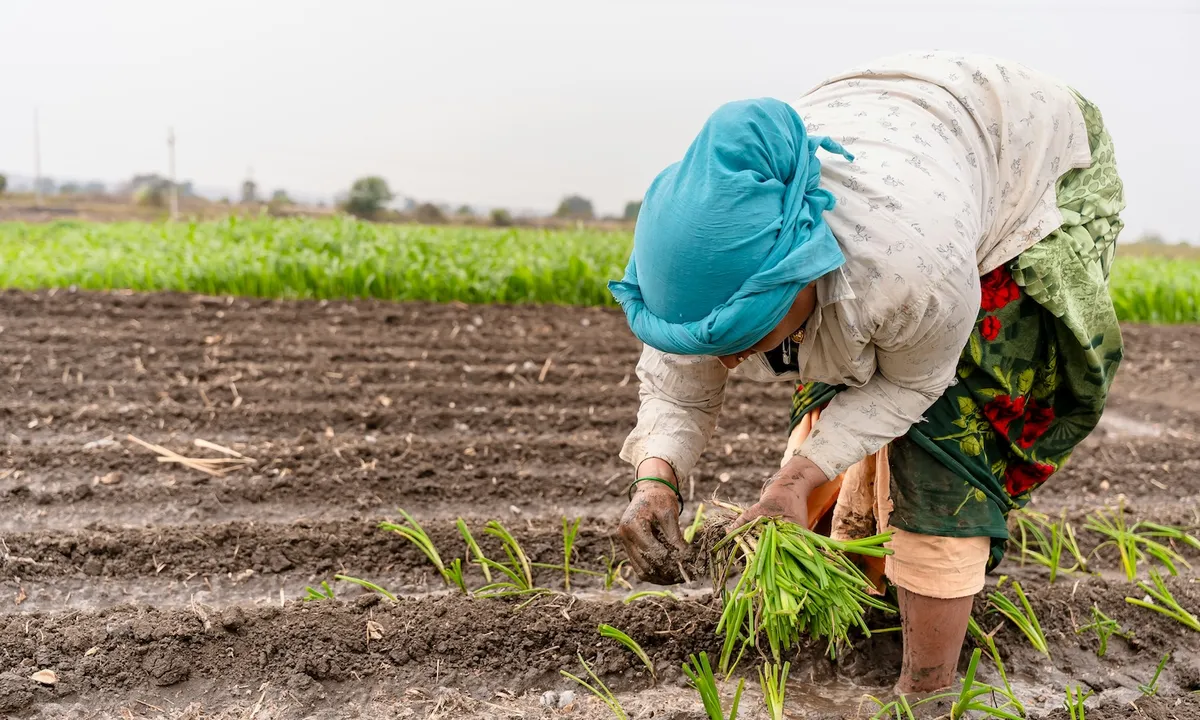
Start Your News DetoxMeanwhile, across the globe, India is making its own strides. The Maharashtra state Assembly just unanimously passed the Women Farmers’ Empowerment Bill. This isn't just a feel-good gesture; it’s a game-changer. It’s the first law of its kind in India to officially recognize all women farmers, even those who don’t own land. This recognition unlocks crucial access to bank loans, crop insurance, government aid, and technology. The Bill is expected to sail through the Maharashtra Legislative Council next, turning a long-overdue acknowledgment into tangible support.
Plant-Based Power and a Deepening Crisis
And speaking of smart moves, new research suggests the European Union could generate over €11 billion annually just by shifting public food procurement towards plant-based options. Commissioned by ProVeg International, the study’s most ambitious scenario could save €3 billion in food budgets, avoid €4.7 billion in environmental costs, and shave off another €4 billion in societal health costs. Experts are now eyeing everything from updated EU School Schemes to farmer training to make it happen. ProVeg calls public food buying a “strategic policy lever hiding in plain sight.”
But not all news is bright. The World Food Programme (WFP) is sounding the alarm bells that Nigeria’s food crisis is spiraling faster than anticipated. In northern Nigeria, hunger levels haven’t been this dire in nearly a decade, thanks to escalating conflict. Kinday Samba, WFP’s Regional Director, noted the “insurgent attacks and violence…are spreading across a much wider area and forcing people from farmland.” With 6.2 million people facing food insecurity in the northeastern states, WFP can only reach about 740,000. Resources, Samba points out, are “at their lowest at the time they are needed most.” A stark reminder that while some battles are being won, others are just beginning.