Bridges aren't just about getting from here to there. The truly great ones don't just span a gap; they span eras, opening up trade routes, linking entire cities, and accelerating the march of railways and roads. Crucially, they also introduce engineering methods so groundbreaking, they change what anyone thinks is possible next.
From a humble cast-iron arch to suspension bridges stretching nearly two kilometers, a select few structures have utterly transformed transportation, society, and, of course, engineering itself. Here are 10 that made history.
The OG Iron Man: Iron Bridge – England
Finished in 1779, England's Iron Bridge over the River Severn holds the title of the world’s first iron bridge. Its importance wasn't just in connecting two riverbanks; it proved, unequivocally, that cast iron could handle the heavy lifting for major structures. This arrived just as the Industrial Revolution was cranking up metal production, making it a powerful symbol of the era. It basically told the world: Iron is here to stay.
We're a new kind of news feed.
Regular news is designed to drain you. We're a non-profit built to restore you. Every story we publish is scored for impact, progress, and hope.
Start Your News Detox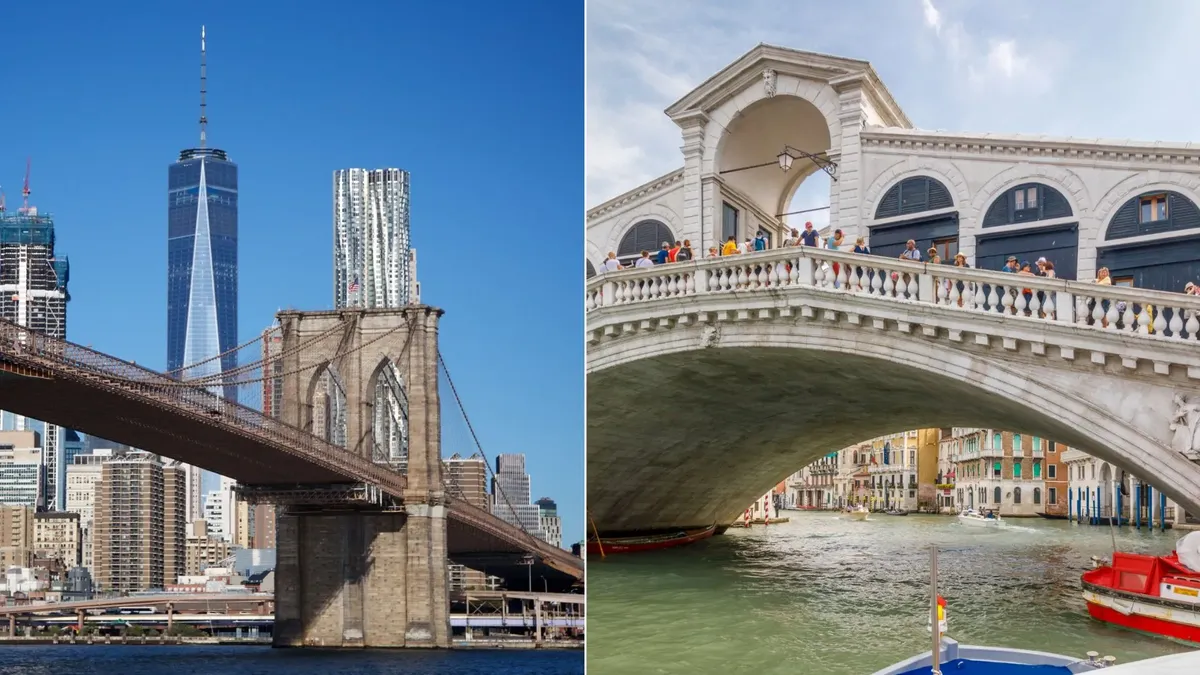
Venice's Grand Connector: Rialto Bridge – Italy
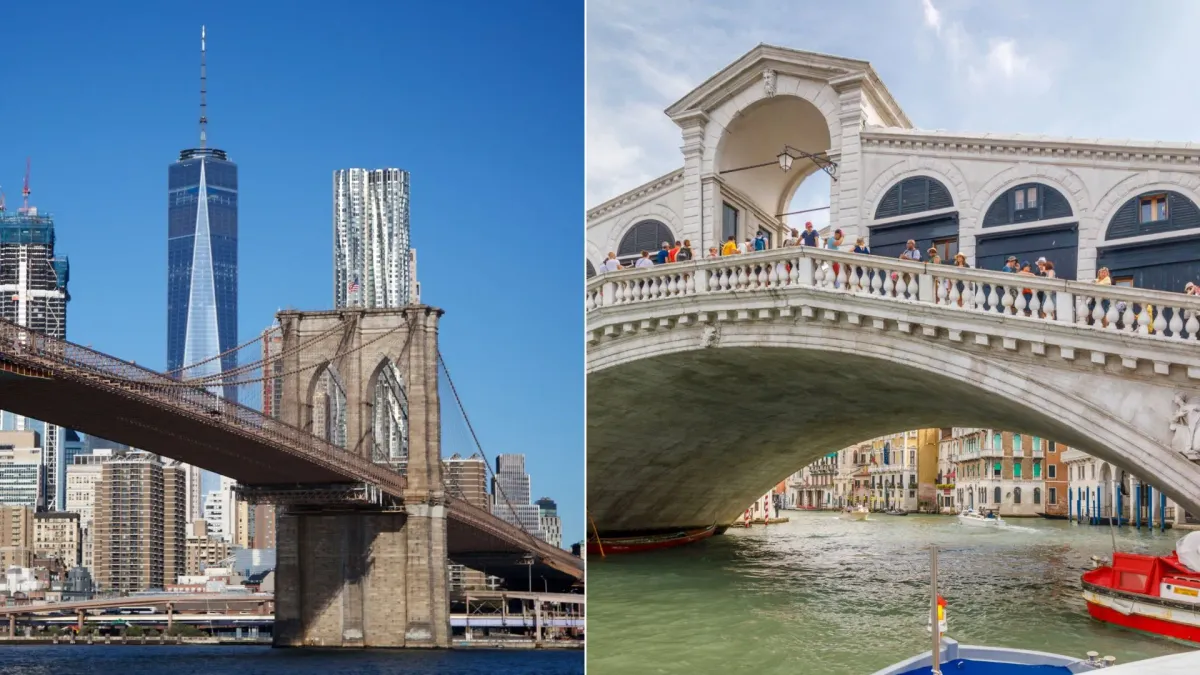
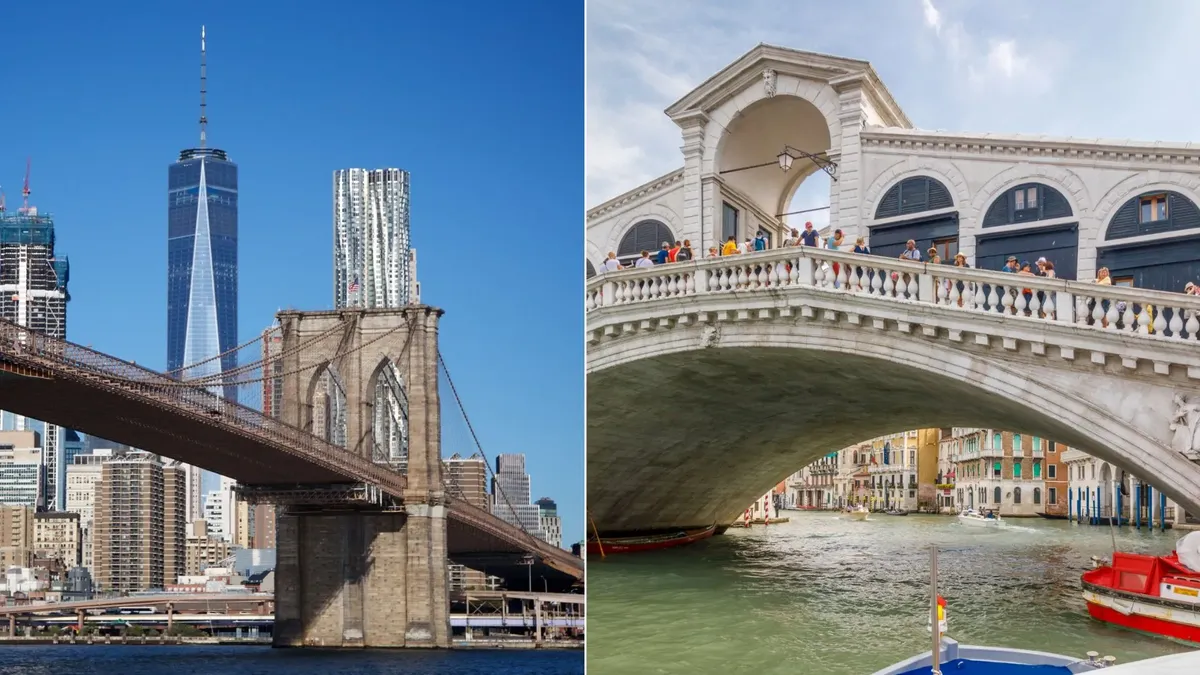
Venice’s Rialto Bridge, completed in 1591, was a bit of a show-off, replacing all those flimsy wooden crossings. For centuries, it was the only pedestrian link between the two sides of the Grand Canal. Its single stone arch sails over 28 meters, letting boats glide underneath, all supported by thousands of timber piles. It didn't just connect the city's political hub with its bustling commercial heart; it enabled the very pulse of one of Europe's greatest trading cities.
The Suspension Pioneer: Menai Suspension Bridge – Wales
When Thomas Telford’s Menai Suspension Bridge opened in 1826, it was a double-whammy: a massive leap for transportation and for suspension bridge design. Its 579-foot main span was the world's longest at the time, finally allowing the vital London-Holyhead road to cross the notoriously tricky Menai Strait. More importantly, it whispered (then shouted) to engineers: Suspension bridges can be affordable, long, and practical for roads. The design echoed through decades of bridge building.
NYC's Iconic Link: Brooklyn Bridge – US
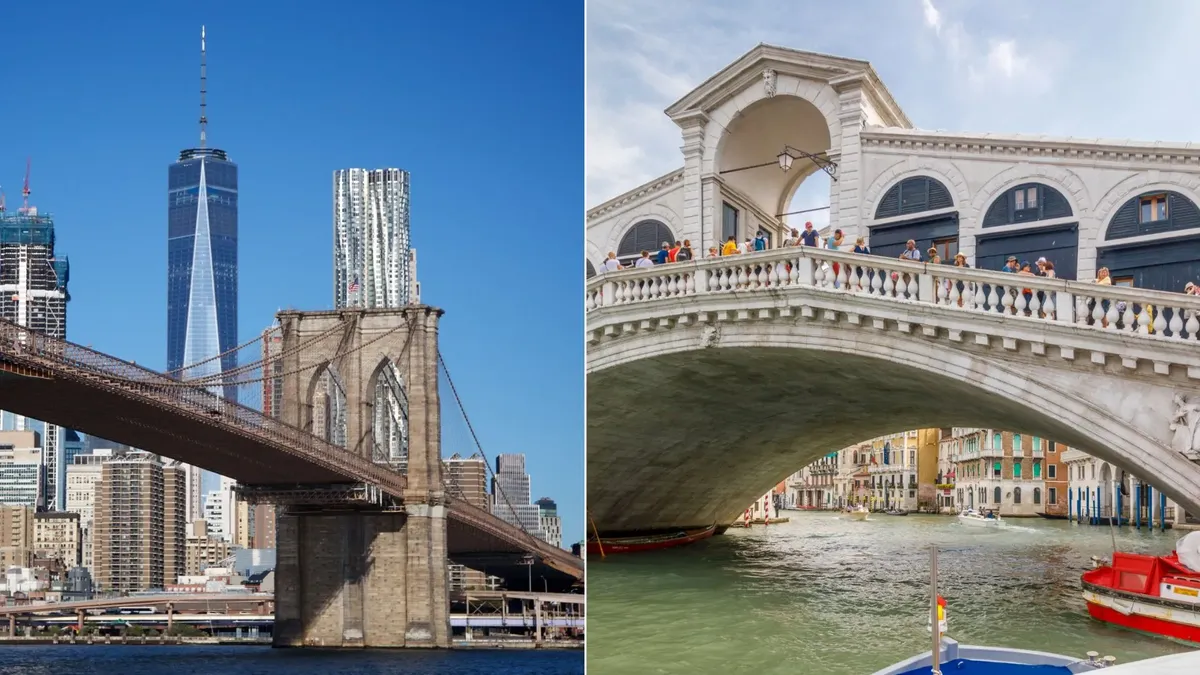
Opening in 1883, the Brooklyn Bridge was the 19th century's equivalent of a moonshot. John Roebling’s design was a marvel, blending suspension with steel cables and massive masonry towers. Its construction also pushed the boundaries of working underwater in pressurized caissons — basically, building in a giant, underwater air bubble. It physically stitched Manhattan and Brooklyn together, forming the future New York City. Its engineering impact? Proving that colossal urban suspension bridges weren't just dreams, but buildable realities.
Scotland's Steel Giant: Forth Bridge – Scotland
When Scotland’s Forth Bridge opened in 1890, it wasn't just big; it was the world’s first great multi-span cantilever bridge. Three enormous towers and cantilever arms created 521-meter spans, all built with about 54,000 tons of mild steel. This wasn't just a bridge; it was a testament to the shift from iron to steel, demonstrating that cantilever construction could handle the immense loads and distances required for railways. It's still hauling passengers and freight more than 135 years later. Let that satisfying number sink in.
The Double-Decker Visionary: George Washington Bridge – US
Opening in 1931, the George Washington Bridge didn't just break records; it shattered expectations. Its 3,500-foot main span was nearly double that of any previous bridge. Chief engineer Othmar Ammann came up with a lighter stiffening-truss method, saving roughly $10 million and adding flexibility. The real genius? Ammann designed it with a future lower deck in mind. That foresight allowed it to expand from six upper-level lanes to a whopping 14, becoming a masterclass in designing for tomorrow's needs.
San Francisco's Golden Icon: Golden Gate Bridge – US
When the Golden Gate Bridge opened in 1937, engineers had to contend with raging winds, deep water, powerful tides, and a 1.7-mile-wide strait. Its 4,200-foot main suspension span was the world’s longest, but it was more than just a record. It utterly transformed transportation around San Francisco Bay, freeing Marin County from its ferry dependence. It proved, definitively, that suspension bridges could conquer vast waterways, affordably and robustly.
Sydney's Steel Arch: Sydney Harbor Bridge – Australia
Completed in 1932, the Sydney Harbor Bridge became the very heart of an integrated road and rail system, connecting the city's northern and southern shores. Its colossal steel arch was built from both sides, meeting gloriously in the middle. Over 53,000 tonnes of steel and six million rivets went into this behemoth. It wasn't just an engineering feat; it literally reshaped modern Sydney, providing a permanent, high-capacity crossing where ferries once ruled the roost.
Japan's Earthquake-Proof Marvel: Akashi Kaikyo Bridge – Japan
Japan’s Akashi Kaikyo Bridge, opened in 1998, catapulted suspension engineering into a new epoch. Its 1,991-meter central span still holds the record for the longest. Engineers had to battle severe winds, earthquakes, fierce tidal currents, and deep-water foundations. It also became a shining example of monitoring technology in action: sensors, GPS, and anemometers constantly track its behavior. This bridge demonstrated how computer analysis, advanced materials, and continuous structural monitoring could converge on an unprecedented scale. Which, if you think about it, is both impressive and slightly terrifying.
France's Sky-High Symphony: Millau Viaduct – France
The Millau Viaduct, opened in 2004, is less a bridge and more a lesson in making a highway crossing look impossibly light. This cable-stayed structure gracefully stretches across France’s Tarn Valley, with its tallest mast soaring roughly 343 meters. Its slender deck and multiple towers allow the highway to glide over the deep valley without hugging the terrain below. It's a testament to how modern materials, aerodynamic design, pinpoint construction, and computer-assisted engineering can create high, long crossings that barely leave a footprint, visually or physically. A true architectural ballet, if bridges could dance.