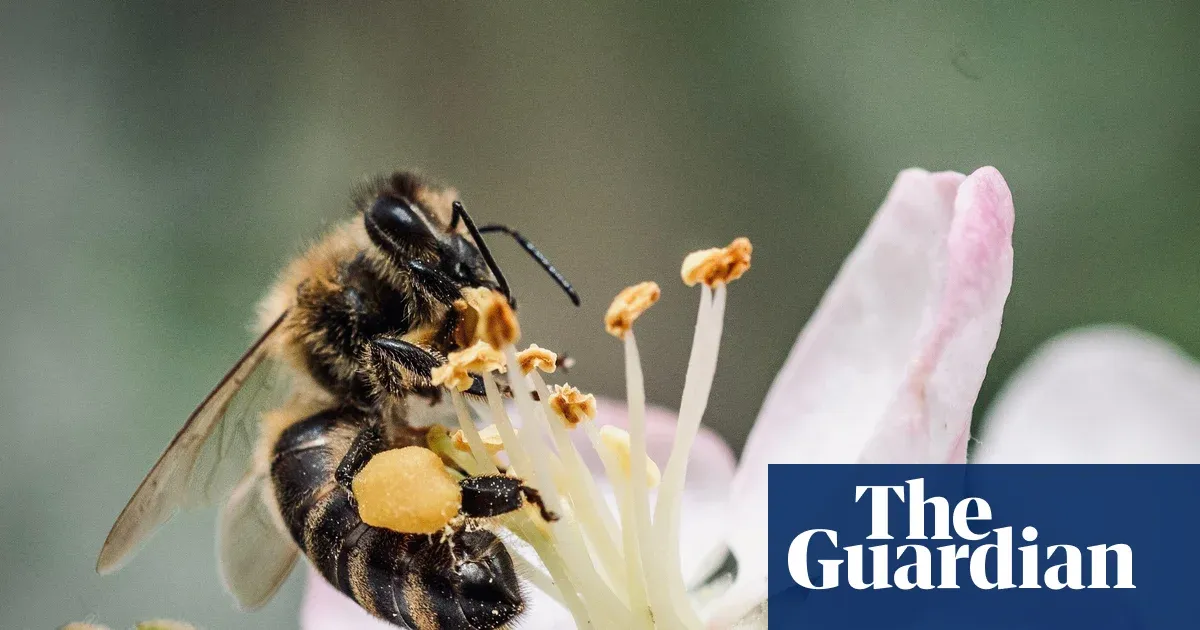
Every summer, one thousand virgin queens arrive in the Belgian town of Chimay for what beekeepers call the "wedding flight." It's a brutal affair: male bees mate with the females mid-air, their reproductive organs tearing off as they fall to the ground and die. But the genetic material they leave behind is exactly what Europe needs.
Beekeepers drive these fertilised queens back home—sometimes more than 300 kilometers away—to the Netherlands, France, Germany, and beyond. They're carrying the genes of the European dark bee, a subspecies that evolved over thousands of years to thrive in northern and central Europe's colder, humid climate. It's a deliberate act of restoration that began in 2000 and is quietly reshaping how beekeepers think about resilience.
A Subspecies Brought Back from the Brink
For millennia, dark bees were the only honeybees in Europe. Then, in the mid-20th century, beekeepers imported hybridized bees bred for maximum honey production. These foreign bees mated with the native population, fragmenting it so severely that dark bees nearly vanished. Today they cling on in scattered pockets across Scandinavia, France, and Spain. They were thought extinct in the UK until rediscovered just over a decade ago.
We're a new kind of news feed.
Regular news is designed to drain you. We're a non-profit built to restore you. Every story we publish is scored for impact, progress, and hope.
Start Your News DetoxHubert Guerriat, a Belgian beekeeper and biologist who has worked with dark bees for 40 years, saw what was being lost. In 1983, he created a beekeeping school in Chimay to train keepers in dark bee husbandry. His organization, Mellifica, now coordinates beekeepers across 30,000 hectares of protected zone, where only dark bees are permitted. He personally breeds hundreds of queens annually, and the annual Chimay gathering has become the heartbeat of Europe's dark bee revival.
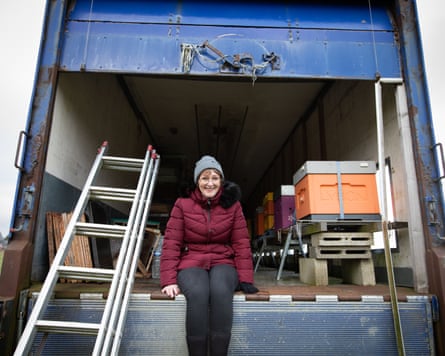
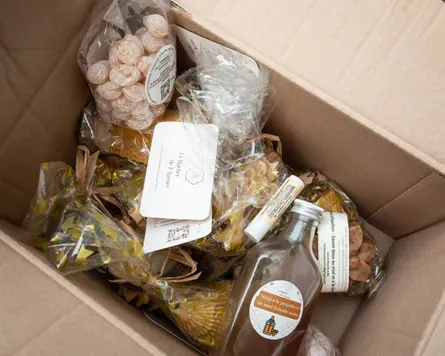
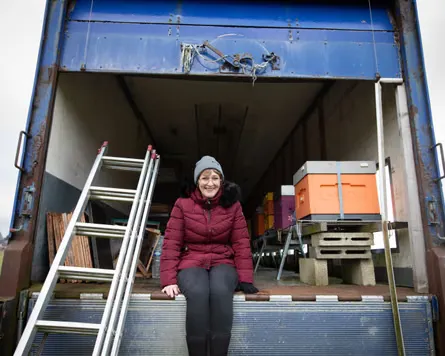
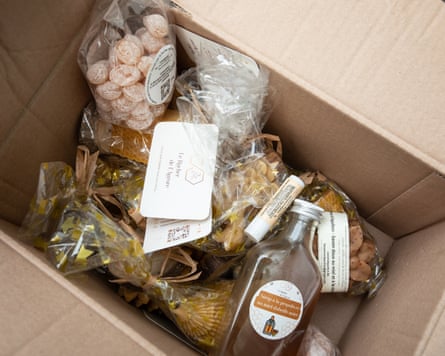
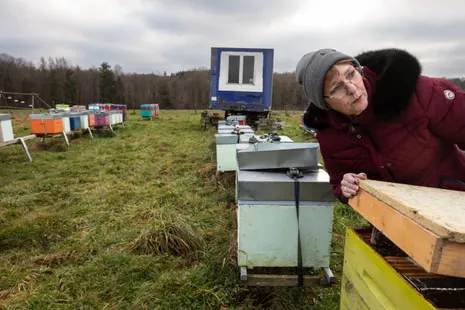
One of Guerriat's success stories is Isabelle Noé, a cheesemaker who started her dark bee colony in 2017 inside a retrofitted Aldi van. She now manages more than 100 hives. "It's addictive," she says. The economics work differently than industrial beekeeping: dark bees produce less honey and require fewer winter inputs, but their honey commands a premium price—€4.50 per 250-gram pot—and beekeepers sell value-added products like lip balm, candles, and throat syrup. Last year, Noé harvested a tonne of honey.
What makes dark bees worth this effort isn't sentiment. It's survival.
Built for a Changing Climate
Dark bees are fundamentally different animals from the hybrid honeybees that dominate modern beekeeping. The hybrid queen lays eggs constantly, even in winter, demanding constant feeding. The dark bee queen is more conservative—she lays fewer eggs, resulting in smaller hives that need less food. This frugality is a feature, not a limitation. Dark bees are more resistant to cold, humidity, and sudden weather shifts. Some populations survived the last ice age in France.
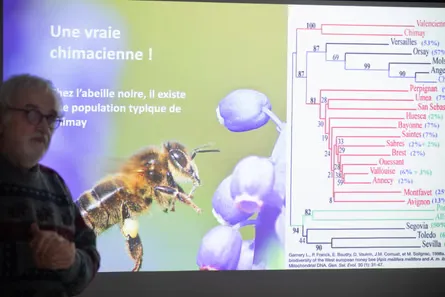
In 2024, when a rainy summer devastated hybrid honeybee colonies across Europe, dark bees weathered it with minimal losses. In the US, beekeepers are losing an average of 60% of their colonies annually, mostly to parasites and disease. Research shows that locally-adapted honeybees are more resilient against disease than imported ones—and dark bees have had thousands of years to adapt to European conditions.
There's also evidence they may handle Asian hornets better, which are now a major threat across the continent. Dark bees tend to remain inside their hives during September and October when hornets are most active, potentially protecting them from predation.
Guerriat describes dark bee beekeeping as "the only way to get closer to more sustainable apiculture." Conservationists are also restoring wild dark bee populations in European forests, installing log hives to replicate the tree cavities where they originally nested. This strengthens the wild gene pool, which in turn supports the farmed population. It's a closed loop—nature working with itself rather than against it.
"Nature is like a high-precision watch," Guerriat says. "You can't swap in one bee for another. Pollinators are not interchangeable."
As beekeepers across Europe face climate breakdown, invasive species, and disease, the dark bee represents a quiet truth: sometimes the most resilient solution isn't something new. It's something you already had, waiting to be restored.