Two years into China's sweeping fishing ban, the Yangtze River is showing signs of genuine recovery. Fish populations have more than doubled. Species diversity has jumped 13 percent. And a critically endangered porpoise that nearly vanished is coming back.
This isn't a projection or a hope. This is what researchers found when they compared data from before and after the 2021 ban, published recently in Science. For a river that spent decades being systematically drained by overfishing, pollution, and dam construction, the turnaround is striking.
"It is really fantastic news," said Sébastien Brosse, a biologist at the University of Toulouse who co-authored the study. "It is one of the first times that we can say that government measures have not just worked, but have really improved things."
We're a new kind of news feed.
Regular news is designed to drain you. We're a non-profit built to restore you. Every story we publish is scored for impact, progress, and hope.
Start Your News DetoxWhat the Yangtze lost—and what it's gaining back
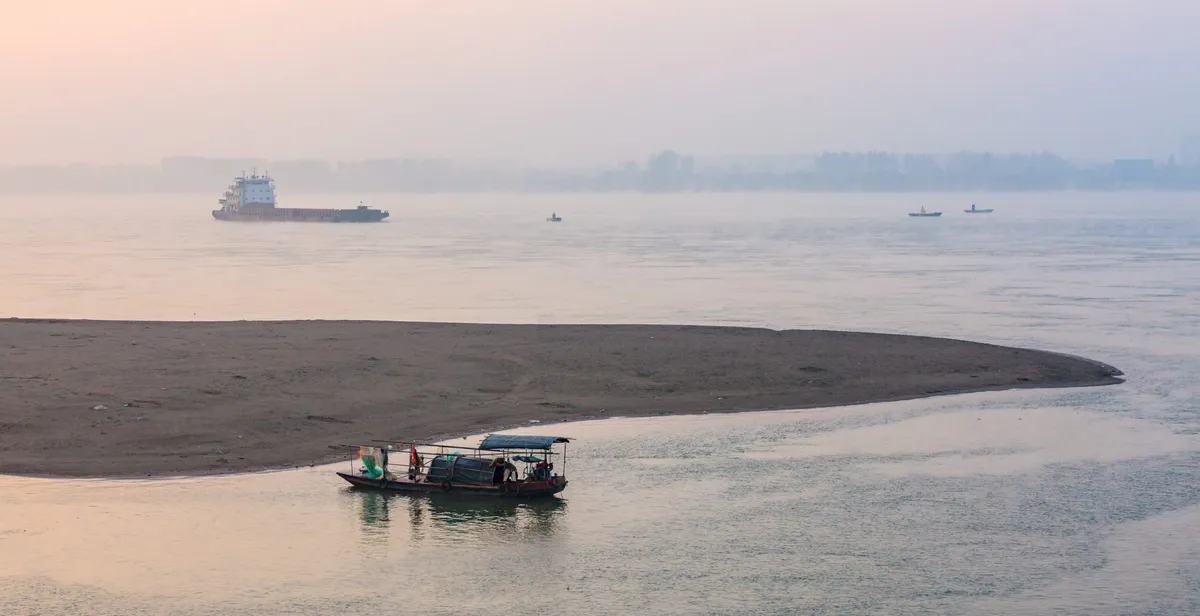
The Yangtze stretches nearly 4,000 miles from the Tibetan Plateau to Shanghai, supporting over 400 million people. For decades, it absorbed the weight of China's industrial rise: dynamite fishing, chemical runoff from factories, massive dams blocking migration routes, shipping traffic that turned the water into chaos.
The most visible casualty was the baiji, a freshwater dolphin revered in Chinese mythology. By 2006, it was functionally extinct—the first cetacean driven to extinction by human activity in modern times.
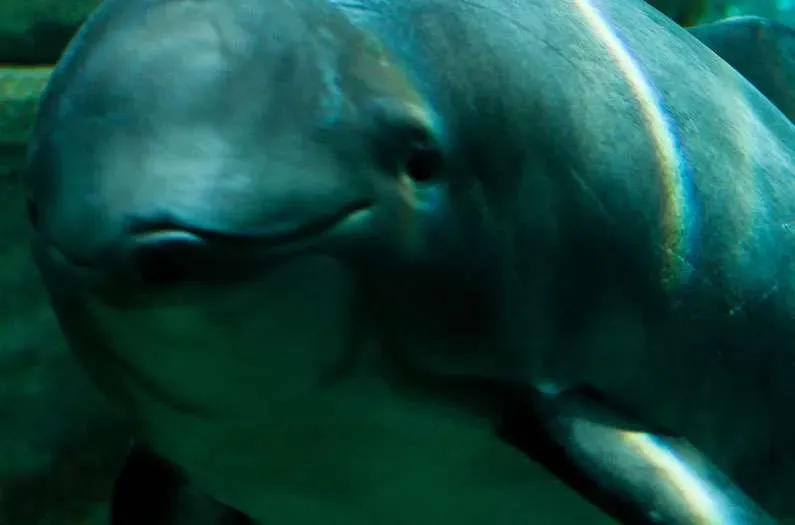
But there's a species that shows the ban is working: the Yangtze finless porpoise. In 2021, only about 400 remained. Today, researchers estimate the population has grown to 600. It's a small number in absolute terms, but the trajectory matters. The porpoise had been in freefall. Now it's climbing back.
The architecture of a real solution
What makes this recovery notable isn't just the policy—it's how the policy was designed. China's government used evolutionary game theory, a framework that accounts for how different groups respond to incentives and penalties over time. The goal was to balance ecological restoration with the needs of fishing communities.
Roughly 200,000 fishers were offered compensation and job transition support. About 100,000 fishing boats were decommissioned. The total government investment: roughly $3 billion. It's a substantial commitment, and it worked because it acknowledged that you can't ask people to stop fishing without giving them an alternative.
When researchers compared the two years before the ban (2019–2021) with the two years after (2021–2023), the numbers were unambiguous: fish biomass doubled. Species diversity rose 13 percent. Several endangered species showed recovery.
What still needs to happen
The gains are real, but the river remains under pressure. Illegal fishing continues, especially in tributaries like the Gan River. Pollution from factories still flows into the water. And massive hydropower dams still block migration routes for species like the Chinese sturgeon, which can't reach spawning grounds.
Brosse was clear about what this means: "The Yangtze is still under pressure. But it provides a rare example of hope—and a roadmap—for how governments around the world can bring rivers back from the brink."
The recovery won't sustain itself. Enforcement needs to stay strong. Pollution controls need to tighten. But the Yangtze has shown something that matters globally: a river can come back if you give it the chance. As other major waterways face similar threats—the Mekong in Southeast Asia, rivers worldwide under pressure from climate change and overexploitation—the Yangtze offers something rarer than fish: proof that large-scale restoration actually works.