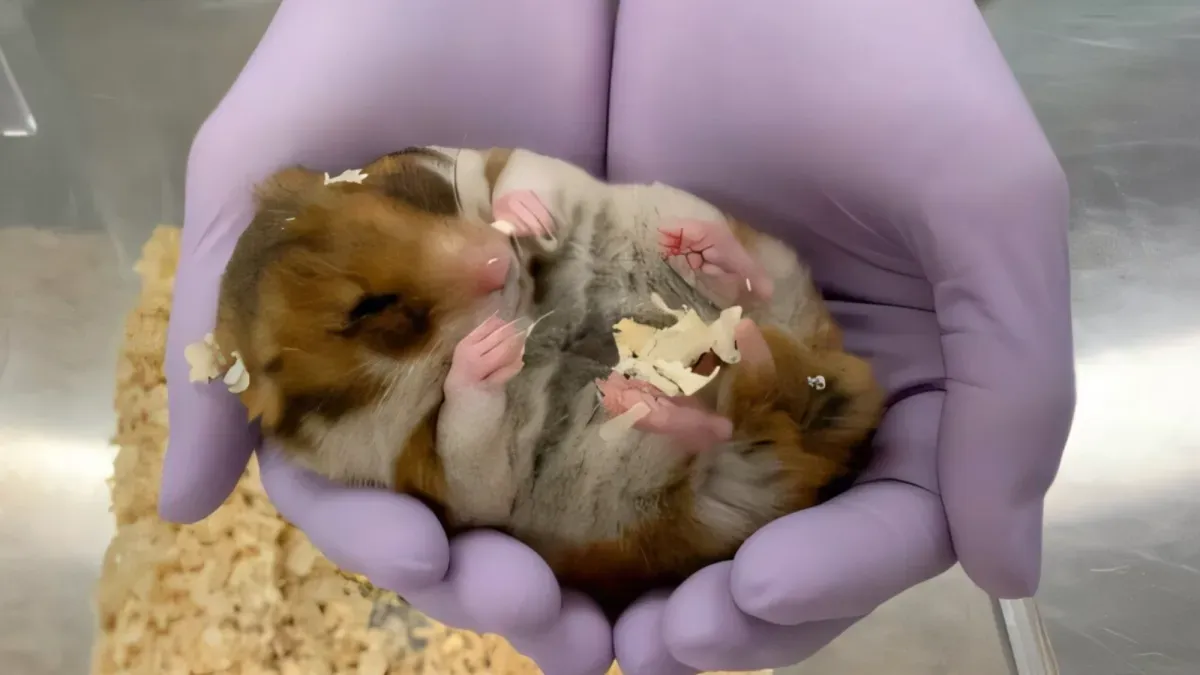
When a hamster curls up for winter, its muscles don't waste away. They pause. Scientists have just figured out how.
Researchers at Hiroshima University studied what happens inside muscle cells when animals hibernate through freezing temperatures and months of stillness. The answer, published in The FASEB Journal, is surprisingly elegant: the cells don't die or deteriorate. They simply switch off, entering a state of controlled inactivity that preserves both energy and muscle tissue.
"Hibernating animals do not simply tolerate muscle damage during winter," explains Mitsunori Miyazaki, the study's co-author. "Instead, they actively suppress muscle repair in a controlled and reversible way."
We're a new kind of news feed.
Regular news is designed to drain you. We're a non-profit built to restore you. Every story we publish is scored for impact, progress, and hope.
Start Your News DetoxThis matters because humans face the opposite problem. Astronauts in microgravity lose muscle mass rapidly—sometimes up to 20 percent on missions lasting several months. Bedridden patients experience similar deterioration. So do aging adults. In each case, inactivity combined with stress triggers muscle wasting that's difficult to reverse.
But if we could borrow the hamster's trick—deliberately putting muscle stem cells into a temporary holding pattern—we might preserve what would otherwise be lost. The cells would essentially pause their normal repair cycles, conserving resources while staying viable for reactivation later.
Miyazaki sees the potential clearly: "Understanding how muscle stem cells survive extreme cold while temporarily reducing their activity may provide useful insights for preventing muscle loss in humans, such as during aging, prolonged bed rest, or medical hypothermia. It may also offer clues for protecting muscle during long-term space flight."
The next phase is translating this from hamster biology to human application. That's the hard part. But the basic principle is now clear: sometimes the best way to preserve something isn't to fight for it. It's to let it rest.