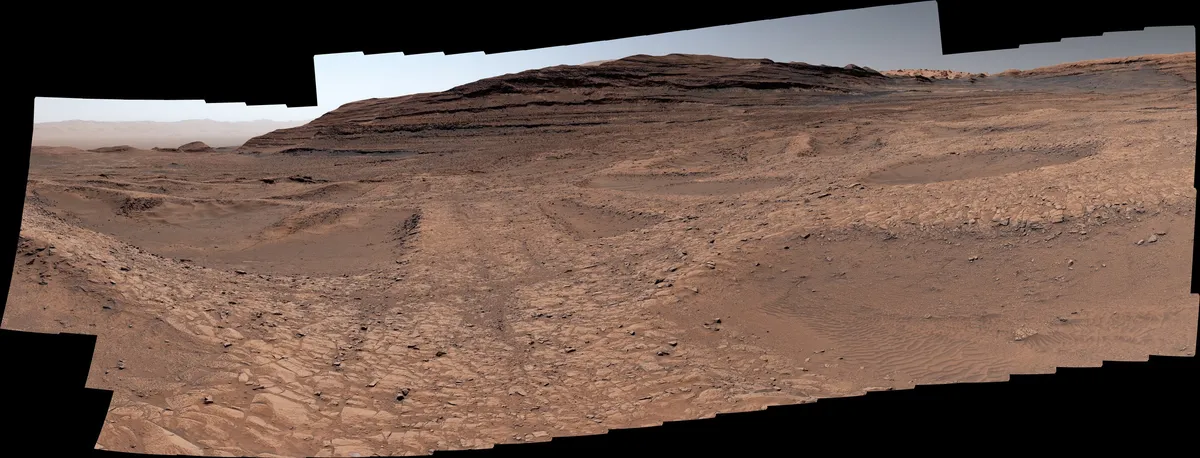
NASA's Curiosity rover has been wandering Mars for over a decade, but on September 26, 2025—its 4,671st day on the planet—it stumbled onto a landscape that reads like a geological memoir. The camera captured a vast panorama of boxwork formations: low ridges with hollows running between them, carved by a process that played out billions of years ago.
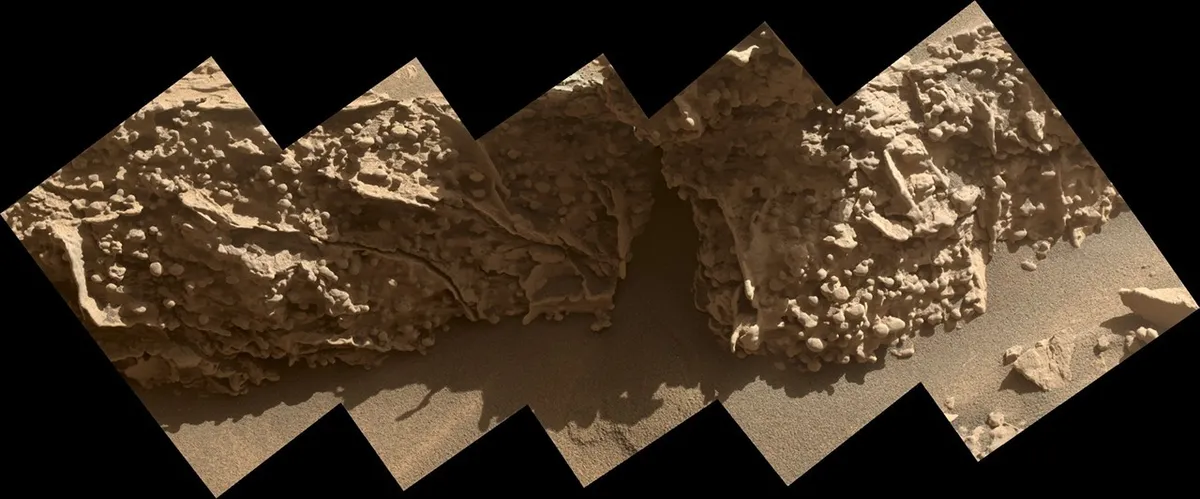
Here's what happened: water seeped through cracks in Martian rock when the planet was younger and wetter. Minerals dissolved in that water hardened inside the fractures, creating veins of resistant material. Then came the long erasure. Over billions of years, Martian winds wore away the softer surrounding rock, grain by grain, until only the mineral-filled ridges remained standing—like the skeleton of an ancient riverbed.
The panorama itself is a technical feat: 179 individual images stitched together after the rover beamed them back to Earth. The result approximates what a human would actually see standing on Mars, without the artificial color-correction that often makes space images feel alien (which, admittedly, they are).
We're a new kind of news feed.
Regular news is designed to drain you. We're a non-profit built to restore you. Every story we publish is scored for impact, progress, and hope.
Start Your News DetoxWhat makes this discovery matter isn't just that it's beautiful. Boxwork formations are geological signposts. They're evidence that Mars wasn't always the dry, dusty place we see today. Billions of years ago, this world had liquid water moving through its crust—one of the key ingredients for life as we understand it. The ridge patterns Curiosity photographed are a record of that transformation, written in stone.
Curiosity has been making these kinds of discoveries since it landed in 2012, slowly building a picture of Mars' shift from potentially habitable to barren. Each formation, each mineral sample, each layer of exposed rock adds another detail to the story. The rover still has work to do—it's climbing Mount Sharp, a 5.5-kilometer peak at the center of Gale Crater, and the higher it climbs, the older the rocks it encounters. That means more chapters of Mars' history waiting to be read.