NASA's Curiosity rover has been poking around the same Martian landscape for over a decade, and it just found something that shifts our understanding of when the planet might have been habitable.
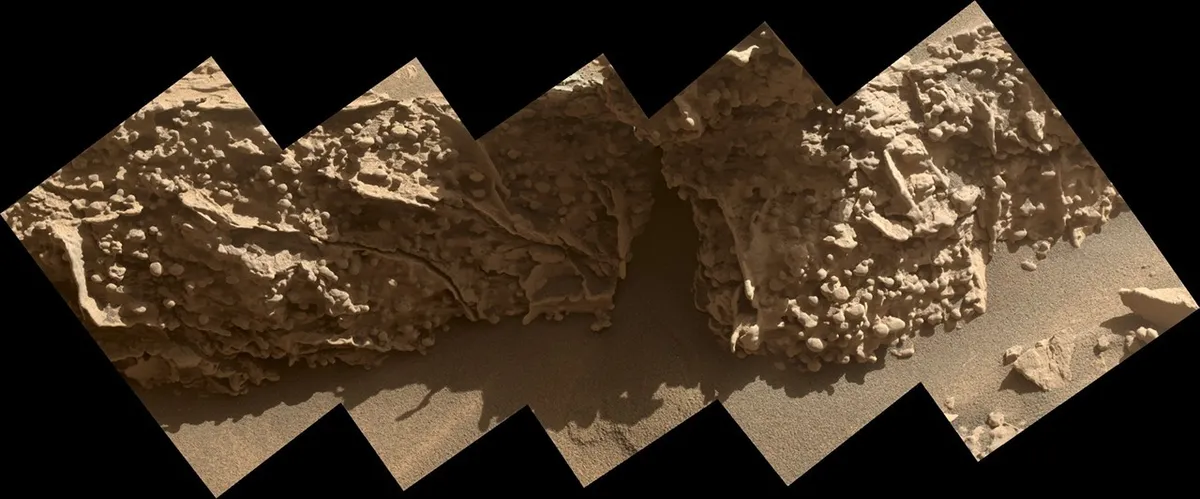
Back in August, Curiosity's camera — a lens mounted on its robotic arm — captured detailed images of pea-sized mineral nodules scattered across an unusual terrain. The rover was exploring a region of boxwork formations: low ridges (three to six feet tall) with sandy gaps between them, stretching for miles. These formations aren't random. They're the fossilized plumbing of an ancient water system.
Here's what matters: these nodules were created when groundwater seeped through cracks in rock billions of years ago, then evaporated, leaving minerals behind like a bathtub ring. We've seen nodules on Mars before. But the sheer scale and distribution of these boxwork formations tells a new story — one where water was flowing through this region much later in Mars' history than previous evidence suggested.
We're a new kind of news feed.
Regular news is designed to drain you. We're a non-profit built to restore you. Every story we publish is scored for impact, progress, and hope.
Start Your News DetoxWater's Fingerprints in Stone
The ridges themselves are made of calcium sulfate, another mineral deposit left by groundwater. But here's the puzzle the team is working through: the nodules weren't found along the main cracks where water originally seeped through (what researchers call "central fractures"). Instead, they clustered along the ridge walls and in the hollows between them. It's like finding the evidence scattered in unexpected places, which means the water's path through the rock was more complex than a simple crack-and-flow model.
Why does the timeline matter. If groundwater was still moving through Mars' subsurface relatively late in the planet's history — long after the surface rivers dried up — that opens a window for microbial life. Life on Earth survives in deep subsurface environments where we'd never expect it. Mars' underground water systems could have been habitable long after the planet lost its lakes and seas.
Curiosity has been rolling across Mars since 2012, and it keeps finding new ways to read the planet's geological autobiography. Each discovery doesn't solve the puzzle; it adds another piece and sometimes changes where we think the edges are.