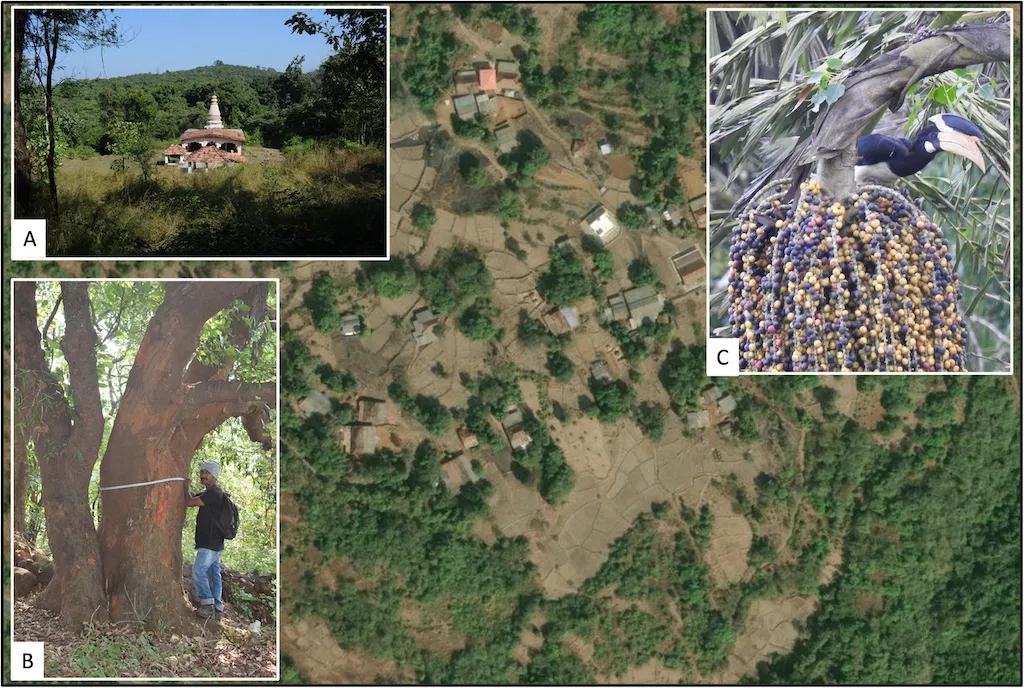
In India's Western Ghats, if you want to find the true giants of the forest — the oldest, the tallest, the ones that have seen a few centuries come and go — you don't head to a protected reserve. You look for the sacred groves. These aren't vast, sprawling wildernesses; they're often small, unassuming patches of trees, left entirely alone by local communities for generations. Why? Because the trees, they believe, belong to their deities and ancestors.
Turns out, this ancient respect for the arboreal is doing something pretty remarkable for the future. A new study in PLOS One discovered that young trees aren't just surviving in these groves; they're absolutely thriving. Seeds, dutifully dropped by fruit-eating birds, are far more likely to sprout and grow into saplings within these sacred spaces than in the surrounding farms and villages. It's like a natural, centuries-old nursery.

India is home to over 100,000 of these sacred groves, making them an unsung hero of community-based conservation. And the Western Ghats, a 1,600-kilometer mountain range snaking down India's west coast, is a prime example of their quiet power.
We're a new kind of news feed.
Regular news is designed to drain you. We're a non-profit built to restore you. Every story we publish is scored for impact, progress, and hope.
Start Your News DetoxThe Accidental Discovery
The study itself kicked off almost by accident. A team from the Applied Environmental Research Foundation (AERF), busy with a program to identify giant trees, stumbled upon a man in Vanzole village with a truly enormous Terminalia bellirica tree in his yard. But here's the kicker: everywhere they looked in Vanzole, there were more giants.
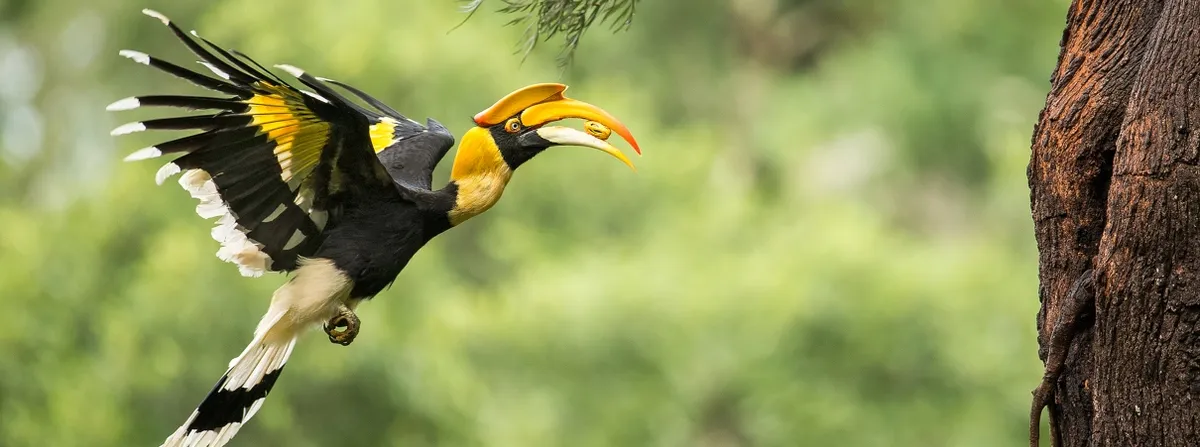
"It sparked a series of questions," said Kevin Matteson, a study co-author from Miami University. Questions like, how many more colossal trees were just… hidden in plain sight? And were birds, particularly fruit-guzzling hornbills, actually using these mighty trees in such populated areas? Because apparently that's where we are now: letting ancient beliefs quietly out-perform modern conservation efforts. Which, if you think about it, is both impressive and slightly terrifying.