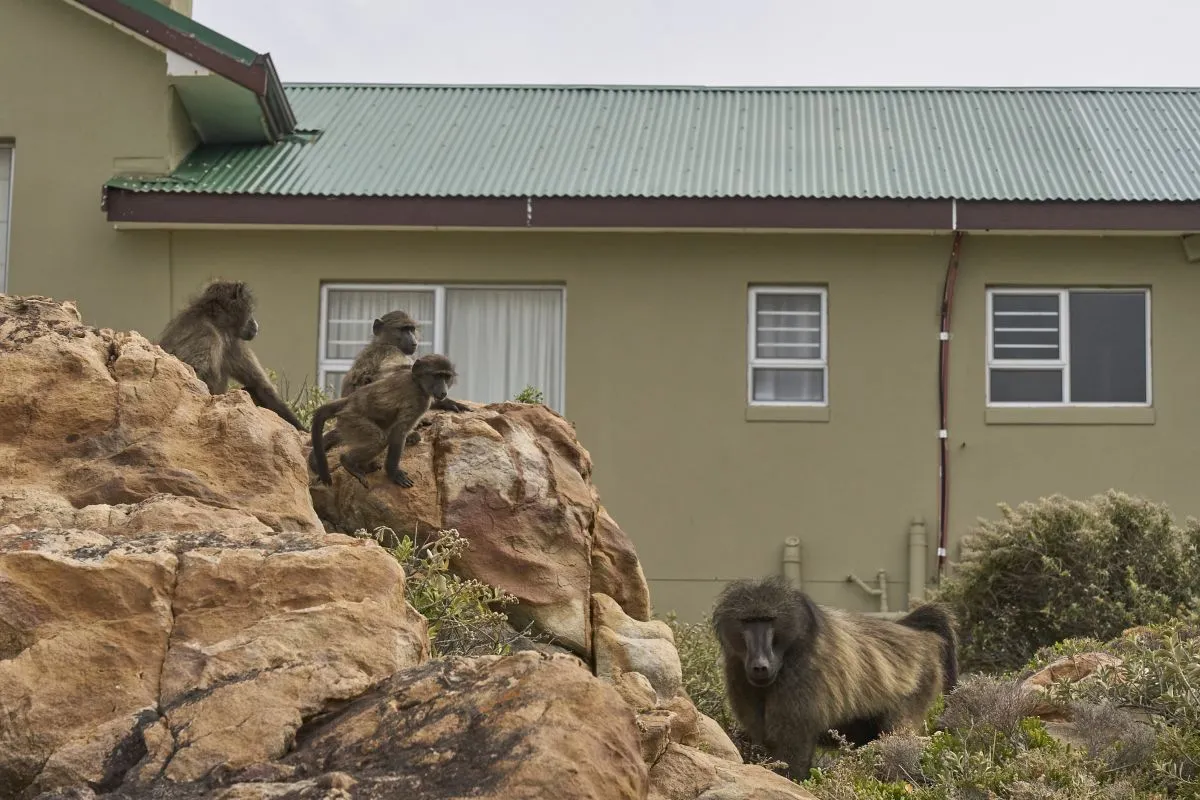
In the small South African village of Rooiels, just a stone's throw from Cape Town, residents have a morning ritual that involves shoelaces and a healthy dose of vigilance. It's not a secret society; it's just Gavin Lundie and his wife Leslie, securing their patio doors around 9 a.m. Because that's when the baboons show up.
Rooiels sits nestled within the Kogelberg Biosphere Reserve, a place so stunning it earned a UNESCO designation. The baboons, who call the Klein Hangklip mountain cliffs home (safe from leopards, at least), don't exactly have a five-star dining experience up there. Food and water are scarce, which explains their daily commute.

Down in the village, life is a bit more bountiful. The lower slopes are thick with fynbos plants, offering a smorgasbord of flowers, seeds, and berries when the weather's warm. Come winter, they switch to an all-you-can-eat kikuyu grass buffet from local lawns. And for a little surf-and-turf action, there are shellfish from the coast and fresh water from the Rooiels River.
We're a new kind of news feed.
Regular news is designed to drain you. We're a non-profit built to restore you. Every story we publish is scored for impact, progress, and hope.
Start Your News DetoxIt's a delicate balance, this cohabitation. Most villages might throw up their hands (or fences), but Rooiels seems to have mastered the art of sharing their space with a troop of incredibly intelligent, often mischievous, primates. Which, if you think about it, is both impressive and slightly terrifying. Imagine having to outsmart a baboon just to keep your breakfast. It certainly adds a certain je ne sais quoi to the morning coffee run.