
Turns out, if you want to build a truly efficient 3D camera, you might want to start by asking a jumping spider for advice. Because, apparently, their poppy-seed-sized brains are doing some seriously impressive spatial calculations.
Humans have one retina per eye, which is fine, but a little basic when you consider what our eight-legged friends are up to. Jumping spiders, those tiny acrobats of the insect world, have multiple retinal layers in each eye. Each layer sees the world at a slightly different focus. Think of it like having a built-in bifocal, but for depth perception.

One layer might see a leaf crisp and clear, while another sees it a bit fuzzy. Their minuscule brains then compare these differences in sharpness to instantly calculate how far away that leaf (or, more importantly, that lunch) is. All without breaking a sweat, or, you know, needing a supercomputer.
We're a new kind of news feed.
Regular news is designed to drain you. We're a non-profit built to restore you. Every story we publish is scored for impact, progress, and hope.
Start Your News DetoxEmma Alexander, a computer scientist at Northwestern University, and her team thought, "Why not steal that idea?" So they did. The result is SpiderCam, a 3D camera that sips power like it's going out of style.
Tiny Brains, Big Ideas
SpiderCam mimics the arachnid's multi-layered vision. It captures two versions of the same image, each with a distinct focus. Then, a specialized algorithm analyzes the blurriness differences between them to construct real-time 3D maps. Because that's where we are now: algorithms doing the work of spider brains.
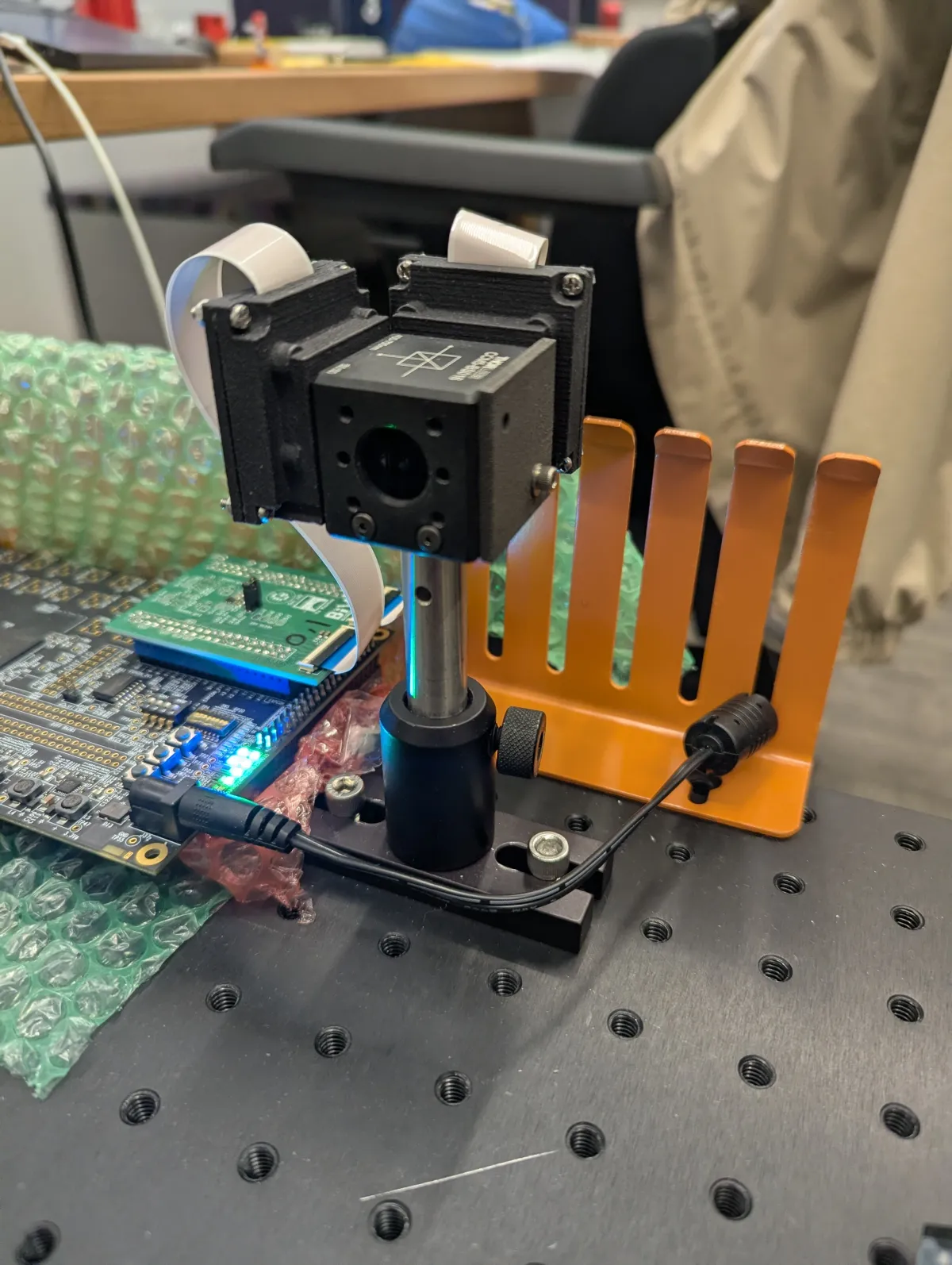
And the power consumption? Less than one watt. To put that into perspective, your average nightlight probably uses more juice. The prototype churns out depth maps at 32.5 frames per second, all while consuming a mere 624 milliwatts. Let that satisfyingly low number sink in.
Most 3D cameras on the market today demand hefty computing power, significant energy, and a price tag to match. SpiderCam, on the other hand, offers a refreshingly lean approach. Alexander envisions this tech in places where power is scarce: remote field operations, or perhaps future augmented reality devices that need to understand their surroundings without constantly needing a charge.
So, the next time you spot a jumping spider, give it a nod. Not only is it a tiny, fuzzy predator, but it's also a miniature engineering marvel inspiring the next generation of energy-efficient robots, drones, and wearable tech. Which, if you think about it, is both impressive and slightly terrifying.