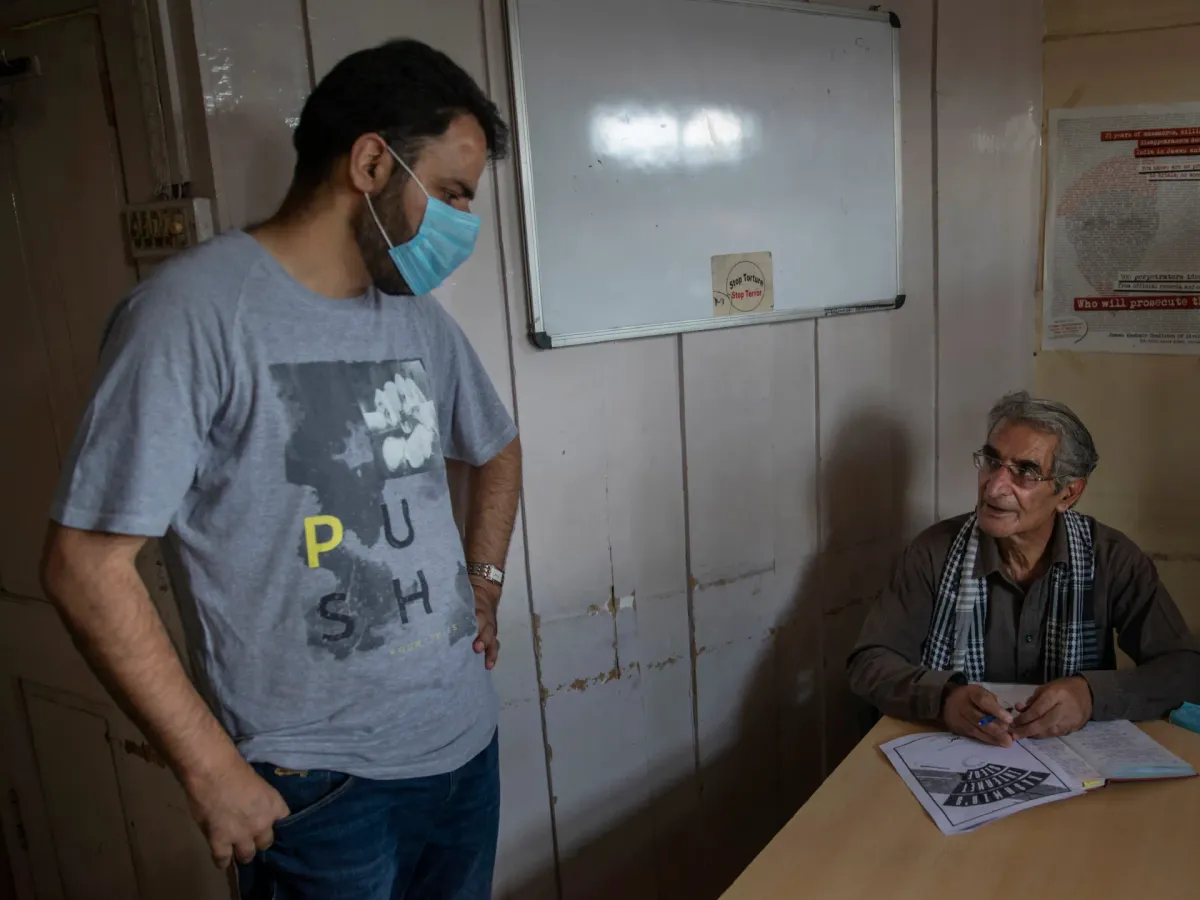
After years spent in a New Delhi jail on what many call "terrorism" financing charges, prominent Kashmiri human rights activist Khurram Parvez and journalist Irfan Mehraj are finally out on bail. The catch? They can't go home.
Freed Wednesday night, both men are now under strict court orders, including a ban on returning to Kashmir. India's National Investigation Agency (NIA) is, predictably, trying to reverse their bail, because apparently that's where we are now.
Rights groups are calling this part of a broader crackdown by New Delhi on anyone who dares to critique the government in Indian-administered Kashmir. This intensified after the region's special autonomy was revoked in 2019.
We're a new kind of news feed.
Regular news is designed to drain you. We're a non-profit built to restore you. Every story we publish is scored for impact, progress, and hope.
Start Your News DetoxParvez, who worked with the Jammu Kashmir Coalition of Civil Society (JKCCS), was arrested at his Srinagar home in 2021. Mehraj, a freelance journalist and researcher for the same group, followed in 2023. Their alleged crime? "Funding terrorism" and "spreading a secessionist agenda" under India's notoriously strict "antiterrorism" laws, which, for the record, allow for lengthy detentions without trial. Both men deny the claims. The NIA says they used JKCCS to fund militants and promote separatism. Because documenting human rights abuses is, you know, very sepapratist.
A lower court granted them bail last week, but the NIA quickly appealed. The Delhi High Court refused to block their release but did add some extra-tight restrictions on their movements and activities while the appeal grinds on. Which means staying in New Delhi for their trial, far from home.
Documenting the Undocumentable
For decades, JKCCS has been the inconvenient truth-teller, reporting on alleged human rights abuses by Indian forces in Kashmir, from torture to unlawful killings. They've also highlighted thousands of unmarked graves in border areas, believed to hold victims of "enforced disappearances." It's the kind of work that tends to make certain authorities uncomfortable.
International human rights groups, including the UN Human Rights Office, have repeatedly demanded their release, arguing the men were jailed simply for doing their jobs. In 2023, the UN Working Group on Arbitrary Detention called Parvez's arrest "an act of revenge for his human rights work," a transparent attempt to silence him and Kashmiri civil society.
After their release, the International Federation for Human Rights and the World Organisation Against Torture, both based in Paris, reiterated that the two were arrested on "false charges" and urged India to drop the "politically motivated" case. Because apparently, documenting abuses is now a political act.
Journalists in Indian-administered Kashmir have reported facing harassment and arrests since Prime Minister Narendra Modi's government ended the region's partial autonomy. From 2019 to 2023, over 3,600 people were arrested in Kashmir under "antiterrorism" laws. More than half of them are still in prison, according to government figures. Let that satisfying number sink in.
Kashmir, a Muslim-majority region, has been divided between India and Pakistan since 1947, with both countries claiming the whole thing. Rebel groups have been fighting the Indian government since 1989, leading to tens of thousands of deaths, mostly civilians. And now, two more people are out of jail, but still effectively in limbo, for daring to shine a light on it.