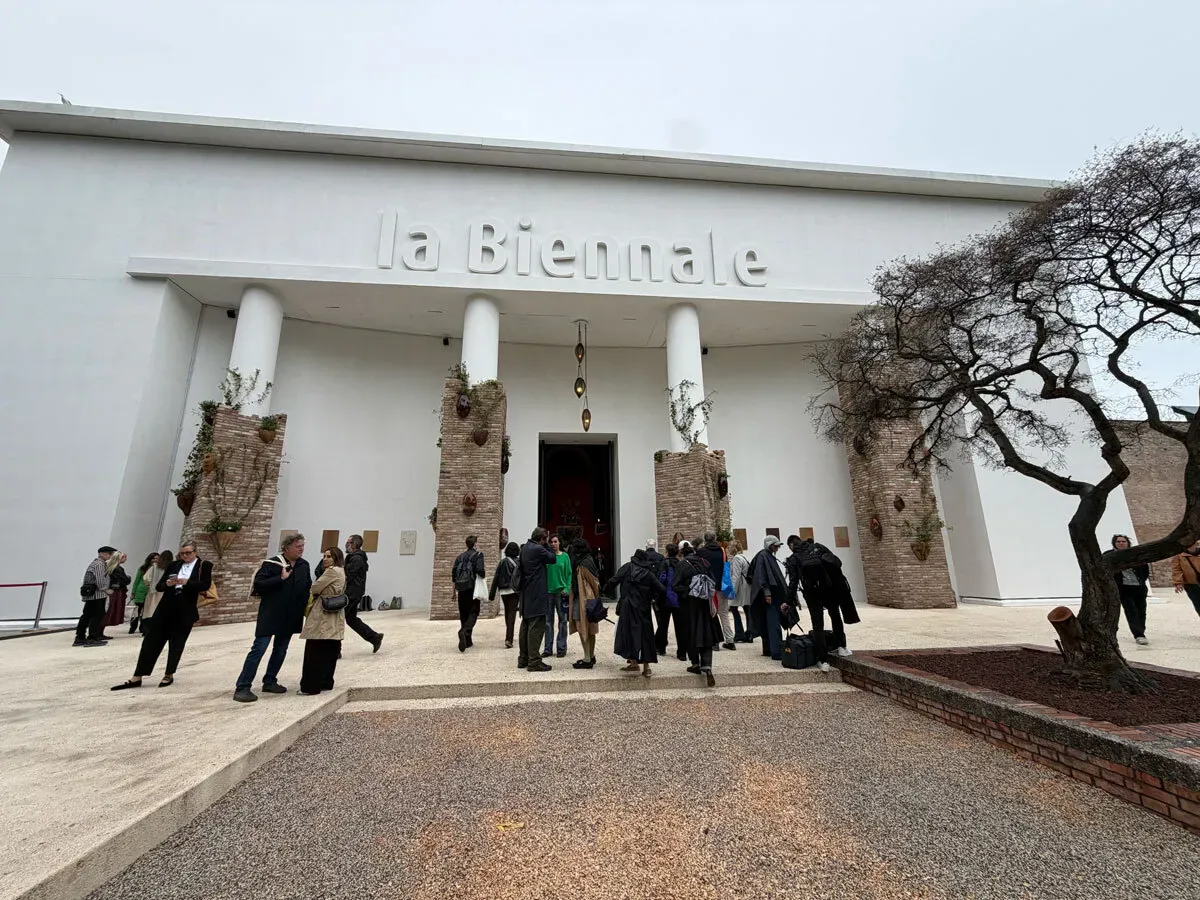
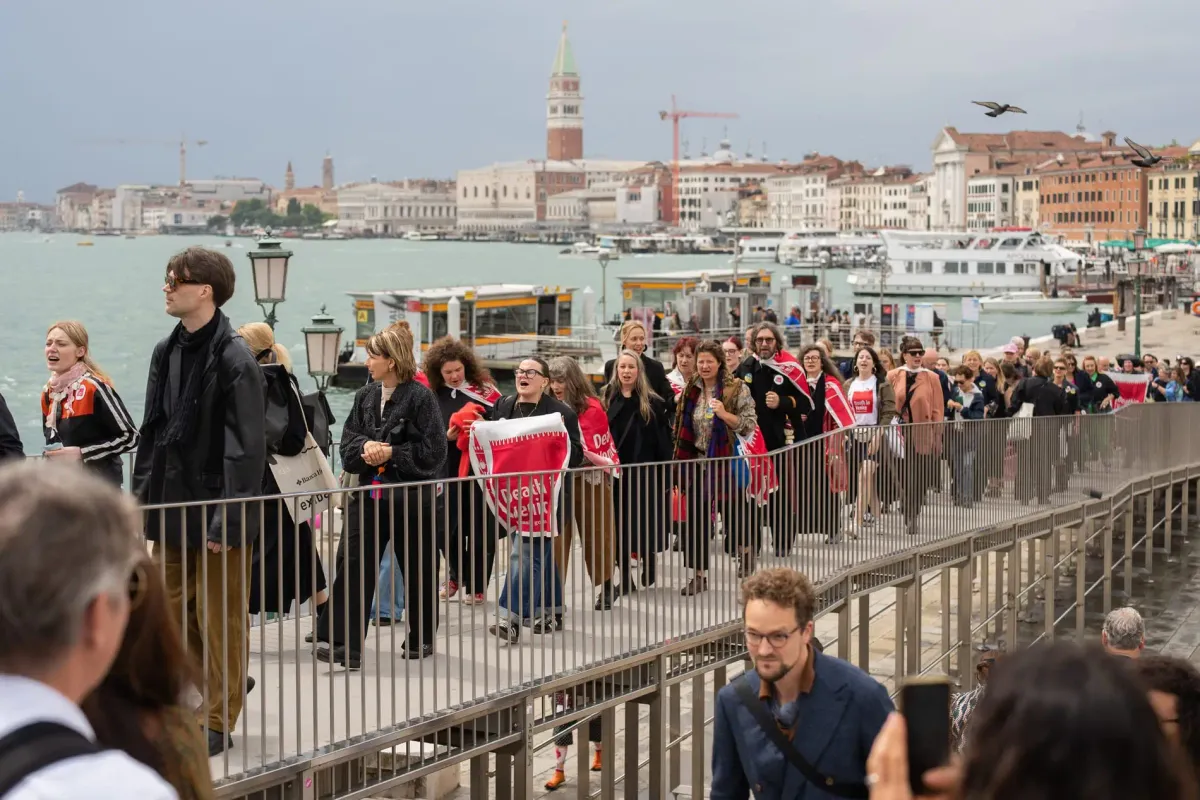
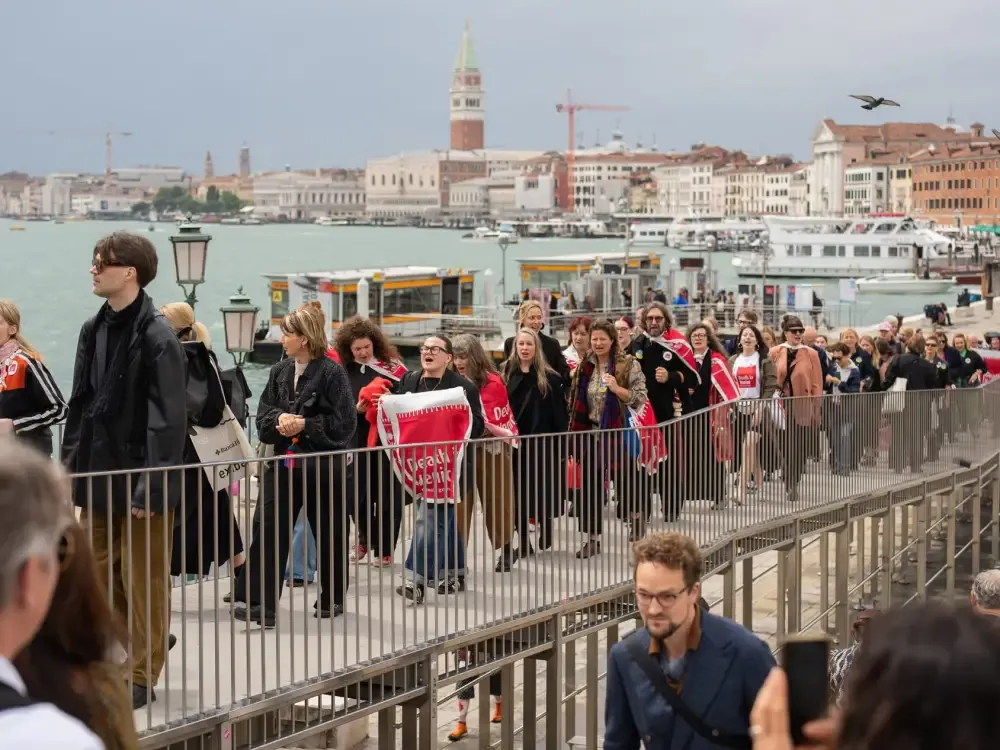
The Venice Biennale, usually a grand spectacle of art and the occasional celebrity sighting, just got a dose of very real-world solidarity. On one of its preview days, the Lithuanian, Latvian, and Estonian pavilions decided to turn their art exhibition into a protest, staging a procession for Ukraine.
This wasn't just a casual stroll. It was a deliberate, mile-and-a-half walk of remembrance and defiance, honoring Ukrainian cultural workers who are still creating amidst unimaginable conflict, and those who have tragically lost their lives. Because apparently, even in the rarefied air of international art, some things are more important than champagne and canapés.
The Art of Protest
The procession kicked off at the Lithuanian Pavilion, meandered through the Latvian display, and culminated at the Estonian Pavilion. A clear, physical statement that some lines simply shouldn't be crossed, especially when it comes to war and artistic freedom.
We're a new kind of news feed.
Regular news is designed to drain you. We're a non-profit built to restore you. Every story we publish is scored for impact, progress, and hope.
Start Your News DetoxThis act of solidarity wasn't an isolated incident at this year's Biennale. The whole event has been a hotbed of political statements, which, if you think about it, is both impressive and slightly terrifying for an art show. Pussy Riot and FEMEN have made their presence known at the Russian pavilion. Artists have gathered to protest Israel's inclusion in a collective action, and an entire jury resigned just days before the preview week, reportedly over their decision to exclude countries charged with crimes against humanity by the International Criminal Court (a list that includes both Russia and Israel).
Solvita Krese, director of the Latvian Centre for Contemporary Art, put it rather succinctly: freedom needs defending. She also pointedly questioned the Biennale's decision to allow Russia's participation, reminding everyone that cultural institutions have a responsibility beyond just hanging pretty pictures. Sometimes, the most powerful art isn't on a canvas, but in the streets.