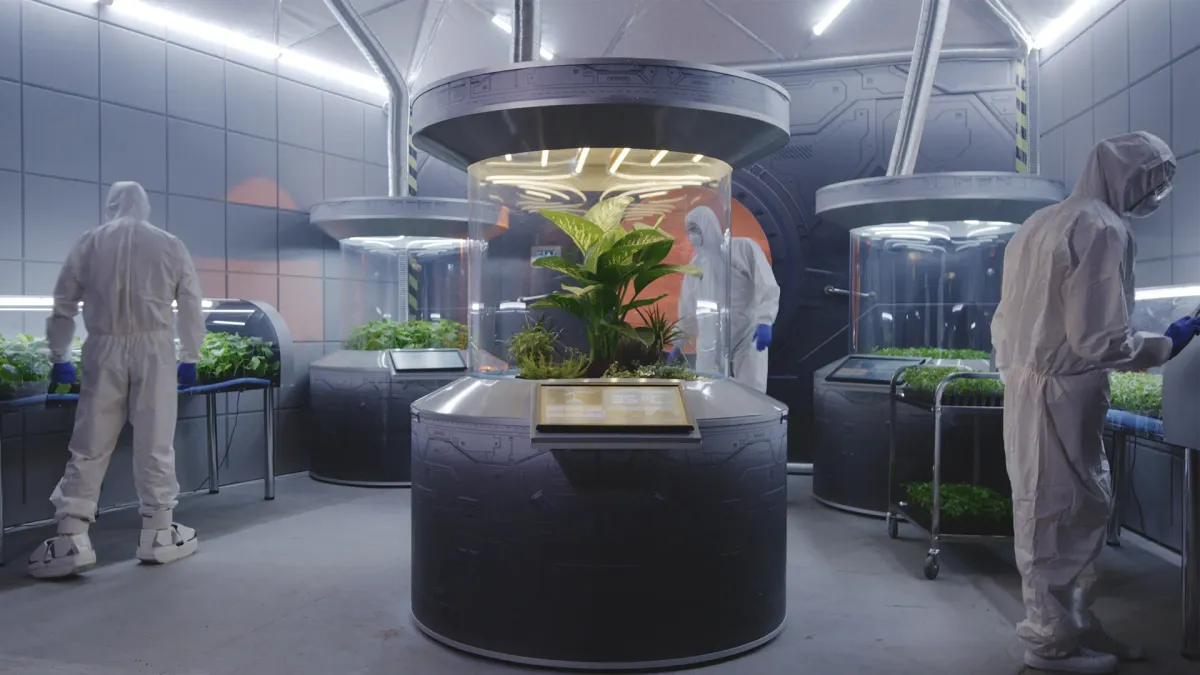
Imagine astronauts on Mars, thousands of miles from Earth, growing their own fresh lunch. Not with dirt from home, but with fertilizer made right there on the Red Planet, from nothing but dust and tiny microbes.
Sounds like sci-fi, right? Well, German researchers just made it seriously real. They’ve found a way to turn Mars-like dust and tough little organisms into working plant food. This could mean edible crops growing on Mars, making future missions way more self-sufficient.
The Clever Trick: Dust, Bugs, and Duckweed
The secret ingredient? Cyanobacteria, also known as blue-green algae. These tiny organisms are basically nature's super-survivors. They can pull carbon dioxide from Mars' thin air, create oxygen, and even snatch nutrients from mineral-rich dust.
We're a new kind of news feed.
Regular news is designed to drain you. We're a non-profit built to restore you. Every story we publish is scored for impact, progress, and hope.
Start Your News DetoxThe team started with a copy of Martian soil. They mixed it with carbon dioxide and cyanobacteria. The microbes got to work, building up their own living material using only what Mars would offer.
Once there was enough cyanobacteria, the next step was turning it into plant food. They used a process called anaerobic fermentation – basically, breaking down organic stuff without oxygen. This releases all the good nutrients.
They tweaked the process, heating the mixture to about 35°C (that’s 95°F) for the best results. They also found the perfect balance of cyanobacteria and ammonium to make sure the fertilizer had everything plants need.
Then came the taste test, well, the growth test: duckweed. This fast-growing plant is packed with protein and eaten in some parts of the world. The results were pretty wild: just one gram of dried cyanobacteria created enough nutrients to grow 27 grams of fresh, edible duckweed. That's like turning a tiny pinch of dust-fed algae into a decent-sized salad!
As a bonus, the fermentation also made methane. That's a gas rich in energy, which could be used as fuel for rockets or power for habitats. Talk about a multi-tasker!
Why This Matters for Mars and Beyond
This research gives us a serious peek into a future where astronauts don't have to rely on Earth for every single thing. By combining microbes, local dust, and simple biological processes, we could build closed-loop systems that produce food, oxygen, and energy on Mars.
Lead researcher Tiago Ramalho put it simply: "You can imagine a vegetable garden on Mars that is run entirely from local resources—without bringing soil, fertilizer, or water." That kind of self-sufficiency is what makes long-term Martian settlements even possible.
Of course, these tests happened here on Earth. Mars has its own challenges like radiation, low gravity, and extreme temperatures. But this is a huge step. The next move is to test this system with other life-support tech, bringing us closer to a truly self-sufficient space habitat. And get this: the same clever approach could even help farming in tough-soil areas right here on Earth.