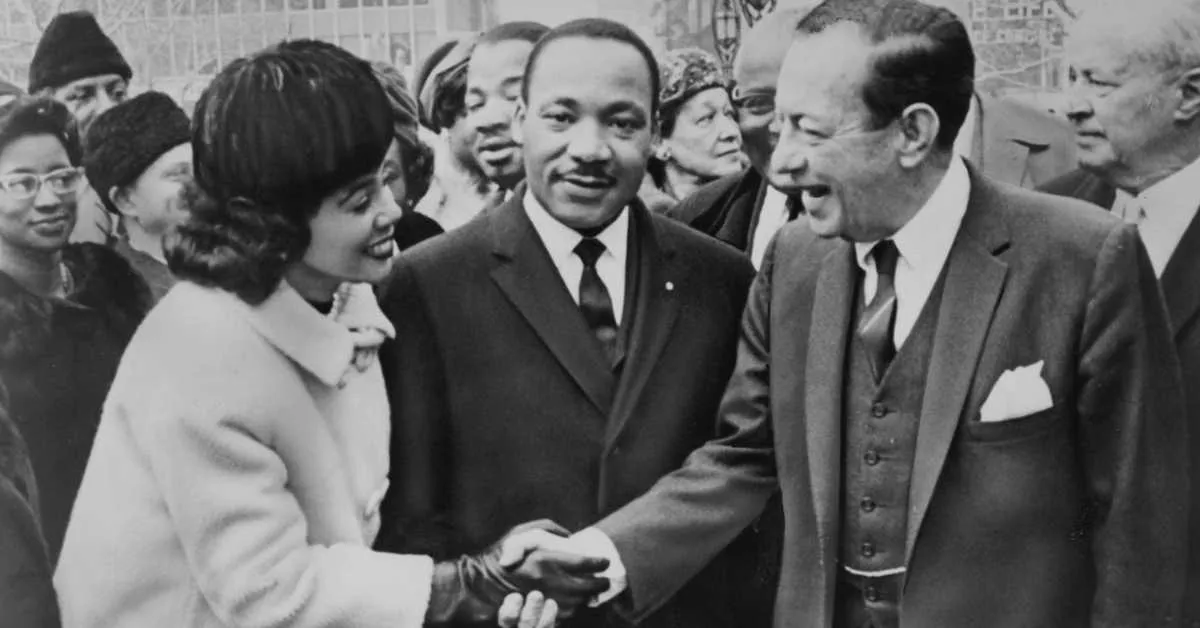
We remember Martin Luther King Jr. as a moral hero, his face on the national holiday, his dream speech anthologized in textbooks. But this sanitized version misses something crucial: by the end of his life, King wasn't asking America to reform itself. He was demanding it be remade.
A historian reading King's actual words across a decade—1957 to 1967—sees a man whose thinking didn't stay still. He started as a hopeful reformer who believed white southern ministers could lead their region toward equality. He ended as an economic radical who saw poverty, war, and racism as inseparable.
The evolution of a radical
In 1957, King spoke at Vanderbilt University with genuine optimism about white moderates. "There is in the white South more open-minded moderates than appears on the surface," he said. He urged them to guide their communities through the "necessary transition" to equal treatment. The tone was almost conciliatory—the goal, he assured listeners, was not to humiliate white people but to "win his friendship and understanding."
We're a new kind of news feed.
Regular news is designed to drain you. We're a non-profit built to restore you. Every story we publish is scored for impact, progress, and hope.
Start Your News DetoxBy 1963, something had shifted. King came to Birmingham, a city with a brutal history of racial violence, to lead a direct action campaign. In April, from a jail cell, he wrote a letter that reads like a repudiation of his earlier self. He turned his sharpest criticism not on the obvious segregationists, but on white moderates who preferred "order" to justice. "I am gravely disappointed with the white moderate," he wrote, "who paternalistically believes he can set the timetable for another man's freedom." He argued that oppressors never voluntarily surrendered power—it had to be seized by what he called "extremists for justice."
By 1967, King had moved further still. Speaking at Riverside Church in New York, he connected the dots between American violence in Vietnam and American poverty at home. "If America's soul becomes totally poisoned, part of the autopsy must read 'Vietnam'," he said. He was building a case that economic injustice and racial inequality were not separate problems but symptoms of the same disease. The system itself needed restructuring, not just reform.
It's telling where King was when he was assassinated in April 1968: Memphis, supporting a strike by garbage workers. Not at a symbolic march. Not giving a speech about dreams. Standing alongside workers demanding economic dignity.
What we've forgotten
The "I Have a Dream" speech has become the lens through which we view King's entire legacy. It's beautiful, and it matters. But it's also incomplete. That dream, King himself evolved to believe, couldn't be realized without fundamental economic redistribution. Without confronting who held wealth and power, and why.
Today, the wealth gap between Black and white Americans remains stark. Voting rights gains have been rolled back. The conditions King was addressing in his final years persist largely unaddressed. When we reduce his legacy to a message of nonviolent moral appeal, we miss what he actually concluded: that America needed more than persuasion. It needed structural change.
King's radicalism wasn't incidental to his legacy. It was where his thinking led him.