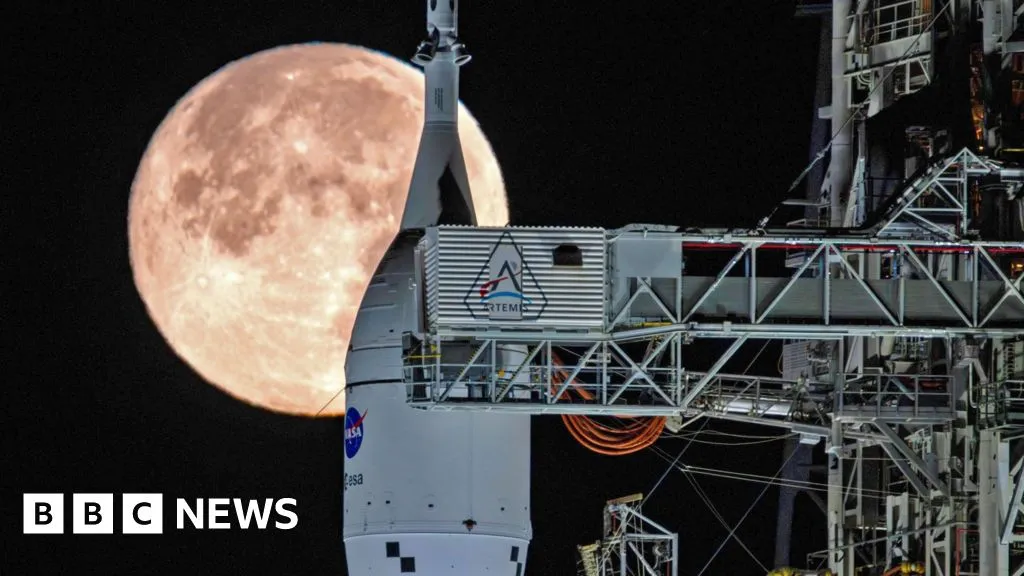
For the first time in more than 50 years, four astronauts will soon travel farther from Earth than any human has gone in decades. NASA's Artemis II mission is set to launch as early as March 6, sending a crew on a 10-day loop around the far side of the Moon and back—a journey that will test the systems and resolve needed before humans actually land on the lunar surface.
The target date comes after NASA successfully completed a critical "wet dress rehearsal" at Kennedy Space Center in Florida, where engineers filled the 98-meter Space Launch System rocket with fuel and ran through the full countdown sequence. This was the second attempt; the first, in early February, was cut short by a hydrogen leak. "We were able to fully tank the SLS rocket within the planned timeline and we also successfully demonstrated the launch countdown," NASA official Lori Glaze said at a Friday news conference. The team has since fixed issues with seals and filters that caused the earlier setback.
The Crew and the Journey
Three American astronauts—Reid Wiseman, Victor Glover, and Christina Koch—plus Canadian Jeremy Hansen will make up the crew. They'll ride in the Orion capsule, a spacecraft roughly the size of a minibus, where they'll live, eat, work, and sleep for the entire mission. After spending the first day in Earth orbit, they'll make the four-day voyage to the Moon, passing within 4,000 to 6,000 miles of the lunar surface and studying the far side—the hemisphere we never see from Earth. The return journey takes another four days, ending with a splashdown in the Pacific Ocean.
We're a new kind of news feed.
Regular news is designed to drain you. We're a non-profit built to restore you. Every story we publish is scored for impact, progress, and hope.
Start Your News Detox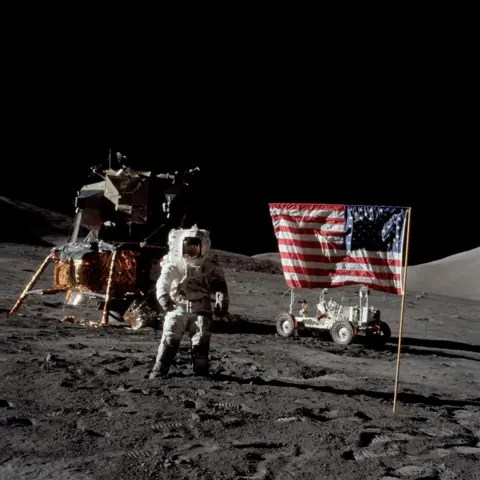
If Artemis II succeeds, it clears the path for Artemis III—the actual landing mission—which NASA aims to conduct by 2028. That's an ambitious timeline, and it's getting more complicated. SpaceX has the contract to build the lunar lander and will launch it on a Starship rocket, but delays to Starship have forced NASA to ask SpaceX for an accelerated plan. NASA has also brought in Blue Origin, owned by Jeff Bezos, to propose a competing accelerated lunar architecture.
The stakes feel higher because NASA isn't alone in this race anymore. China is targeting a lunar landing by 2030 and has been steadily advancing its program. Both nations are eyeing the Moon's south pole—a region rich in water ice and ideal for building permanent bases. The competition is real, but so is the progress: after a 52-year gap, humans are genuinely heading back to the Moon.