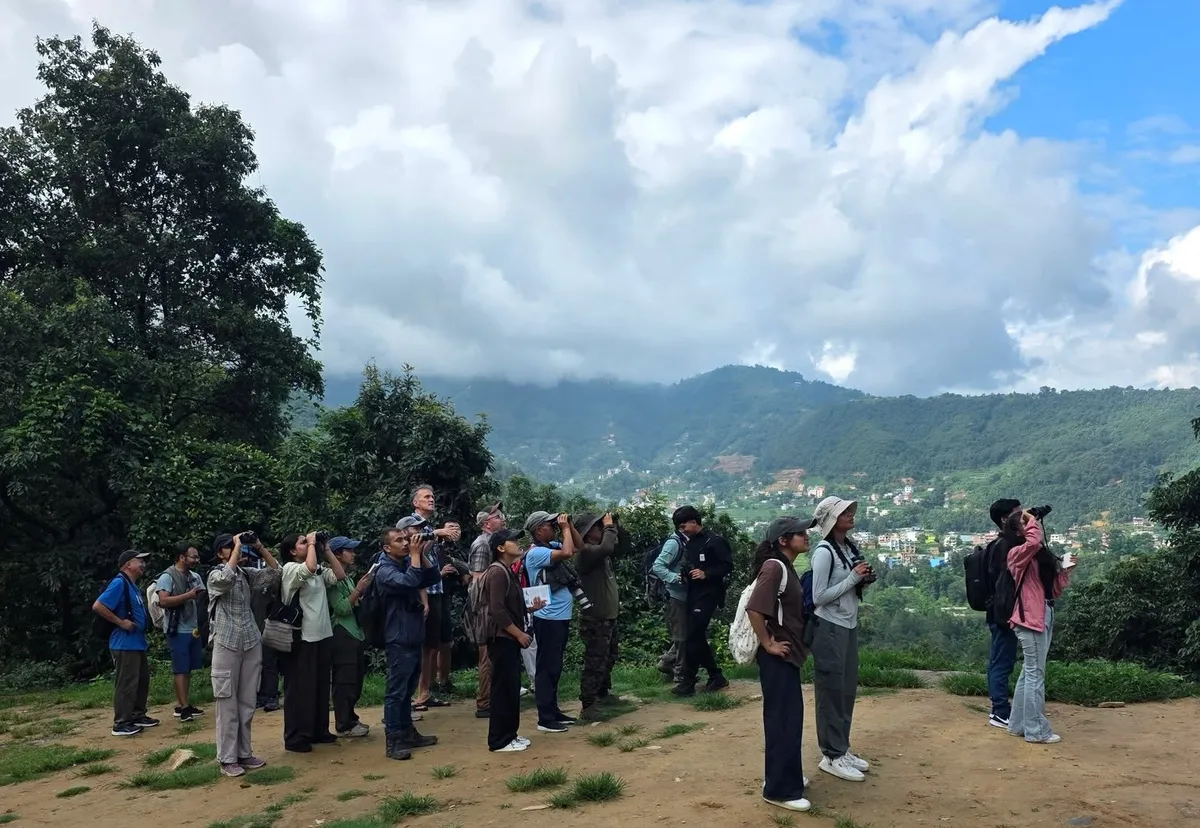
Nepal, a country that somehow manages to pack over 900 bird species into its borders (including the famously exclusive spiny babbler, found nowhere else), has a secret weapon in its conservation efforts: its birdwatchers. And apparently, they're multiplying.
A new study has peered into the binoculars of Nepal's growing birdwatching community, and what it found is a mix of untapped potential and crucial data gaps. Turns out, more people, especially the younger generation, are getting into the quiet art of spotting feathered friends. Which, if you think about it, is both impressive and slightly terrifying for the birds.

The Data That Flew the Coop
Here's the rub: while the birdwatchers are out there, eyes to the skies, only a measly 37% are actually sharing their sightings on platforms like eBird or with conservation groups. A whopping 46% are keeping their avian intel strictly to themselves, like it’s a secret treasure map to a rare robin. This means a mountain of valuable citizen science data is currently just... floating around in personal notebooks.
We're a new kind of news feed.
Regular news is designed to drain you. We're a non-profit built to restore you. Every story we publish is scored for impact, progress, and hope.
Start Your News DetoxHem Bahadur Katuwal, a co-author of the study, gently reminded everyone that knowing what you saw, how many, and where isn't just for bragging rights. That information is gold for researchers trying to understand bird populations, track habitats, and figure out which of Nepal's 172 threatened species need a superhero cape the most. It helps build the country's national Red Data List, which, let's be honest, sounds far more dramatic than it is.
A Perched Opportunity for Tourism
But it's not all about counting endangered species. Birdwatching also presents a rather juicy economic opportunity. Some dedicated birders are dropping up to 40,000 rupees (around $260) per trip. That's not pocket change for a country whose tourism usually revolves around trekking up mountains or spiritual pilgrimages.
Ishana Thapa, CEO of a related organization, pointed out this untapped potential, essentially saying, "Hey, we've got birds, people are willing to pay to see them, let's make this a thing." Because apparently, there's more to Nepal than just Everest and enlightenment. There are also tiny, colorful creatures that can help fill both ecological data gaps and tourism coffers. Someone just needs to convince the birdwatchers to share their notes.