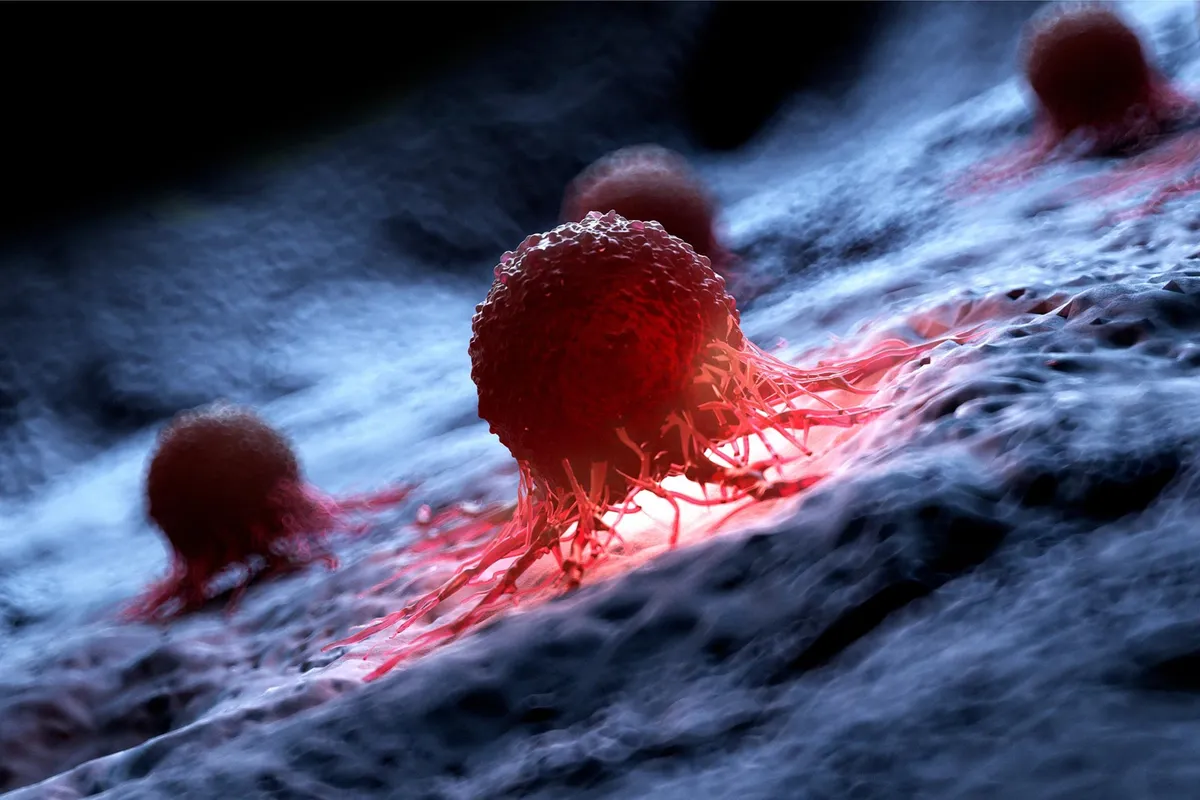
New research suggests that melanoma, a type of skin cancer, acts differently depending on a person's age. Immune defenses and tumor activity change in unexpected ways across youth, middle age, and advanced age.
Why Age Matters in Cancer Research
Cancer is more common and harder to treat in older adults. However, most lab studies use young mice, which are like humans in their early twenties. Less than 10% of experiments include older animals. This difference might explain why many cancer treatments that work in early tests fail in human trials, where patients are usually much older.
New findings from Fox Chase Cancer Center show that melanoma does not behave the same in different age groups. Researchers found that cancer spread was lowest in young mice. It was highest in middle-aged mice, and then it dropped again in very old mice.
We're a new kind of news feed.
Regular news is designed to drain you. We're a non-profit built to restore you. Every story we publish is scored for impact, progress, and hope.
Start Your News DetoxMitchell Fane, a cancer biologist specializing in aging and cancer, led the study. He noted that most studies use young mice with strong immune systems. He explained that understanding how treatments affect older patients would lead to better options.
The researchers identified gamma delta (γδ) T cells as a key factor. These immune cells act as early defenders against cancer spread. Young and very old mice had more γδ T cells. Their tumors were more likely to stay dormant or spread less.
Middle-aged mice had fewer γδ T cells. Their melanoma was much more likely to spread to organs like the lungs and liver.
How Tumors Evade the Immune System
The study also found that melanoma cells can weaken the immune system as animals age. In middle-aged mice, tumors released molecules that suppressed γδ T cells. This allowed inactive cancer cells to become active and spread more aggressively.
When scientists removed γδ T cells from young and very old mice, cancer spread increased. This suggests these immune cells normally help control tumor growth. In contrast, blocking immune-suppressing signals reduced cancer spread, but only in middle-aged mice.
Using older mice in research is often avoided due to cost and time. Young mice are cheaper and easier to get. Mice must be raised for about 18 to 24 months to be considered aged.
To solve this, Fane and his colleague Yash Chabra helped create an aged mouse facility at Fox Chase. This resource helps scientists study how cancer develops in older individuals. Fane said this facility lowers the cost and time barriers for aging research.
Rethinking Cancer Risk
Understanding how aging affects cancer is crucial for improving treatment for older patients. Fane's lab is also studying why cancer risk doesn't just keep going up with age.
Fane noted that while cancer risk increases steadily with age, it suddenly drops after ages 80-85. He aims to explain why very old patients get less cancer, but middle-aged patients get more.
Deep Dive & References
Abstract 2072: Role of the aging on the ᵧδ; T-cells in metastatic cutaneous melanoma progression. - Cancer Research, 2026