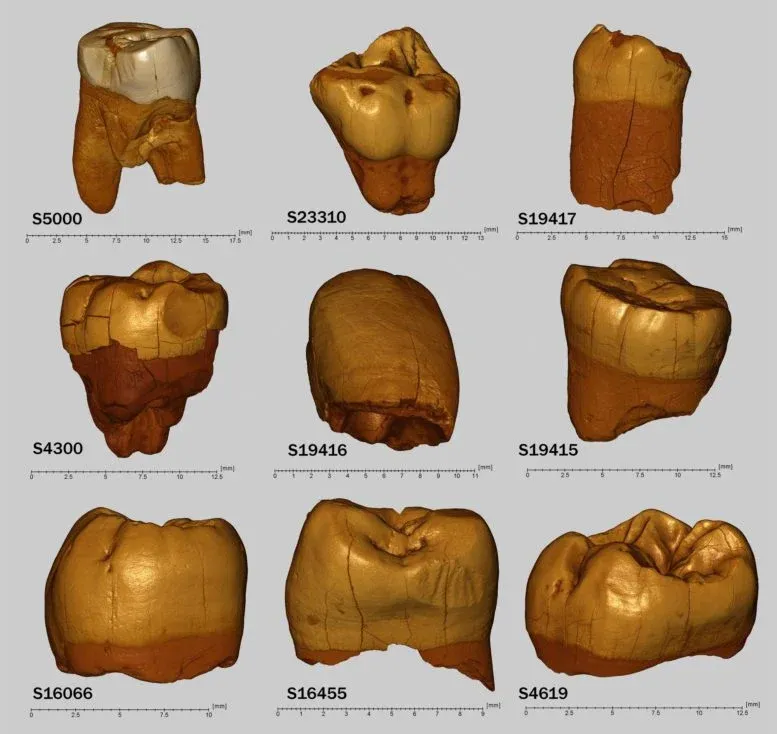
A new genetic study offers a rare look at a small group of Neanderthals who lived together about 100,000 years ago. Researchers analyzed ancient mitochondrial DNA from eight Neanderthal teeth found in Stajnia Cave in Poland.
The findings, published in Current Biology, provide a unique genetic snapshot of multiple individuals from the same time and place. This is uncommon in Neanderthal research.
The teeth belonged to at least seven Neanderthals. They lived north of the Carpathian Mountains.
We're a new kind of news feed.
Regular news is designed to drain you. We're a non-profit built to restore you. Every story we publish is scored for impact, progress, and hope.
Start Your News DetoxAndrea Picin, a professor at the University of Bologna and research coordinator, called the results "extraordinary." He noted that it's rare to reconstruct a small group of Neanderthals and get a clear genetic picture from this part of Europe.
Unexpected Connections Across Europe
The study also revealed how a specific Neanderthal maternal lineage spread across western Eurasia. The mitochondrial DNA from the Stajnia Neanderthals matches a branch found in individuals from the Iberian Peninsula, southeastern France, and the northern Caucasus.
This suggests that this genetic line was once widespread. Later, other genetic lines seen in more recent Neanderthals replaced it.
Mateja Hajdinjak, a co-author from the Max Planck Institute for Evolutionary Anthropology, pointed out a fascinating detail. Two teeth from young individuals and one from an adult shared the same mitochondrial DNA. This means they were likely closely related.
Rethinking Neanderthal History
The researchers compared these remains to a Neanderthal fossil named Thorin from Mandrin Cave in France. Thorin, dated to about 50,000 years ago, has a similar mitochondrial genome to the Stajnia group.
Sahra Talamo, a professor at the University of Bologna and study co-coordinator, stressed caution with old timelines. She noted that when radiocarbon dating reaches its limits, comparing archaeology, dating, and genetics is crucial.
From an archaeological view, the findings show Central Eastern Europe was important in Neanderthal history. It was not just a side region. Stajnia Cave and southern Poland offer key insights into how Neanderthals moved, interacted, and shared tools across Europe.
Deep Dive & References
First multi-individual Neanderthal mitogenomes from north of the Carpathians - Current Biology, 2026