Archaeologists at Pompeii have used artificial intelligence (AI) to recreate the face of a man killed in the AD 79 eruption of Mount Vesuvius. This digital reconstruction offers a new way to understand the famous natural disaster.
Reconstructing a Pompeii Victim
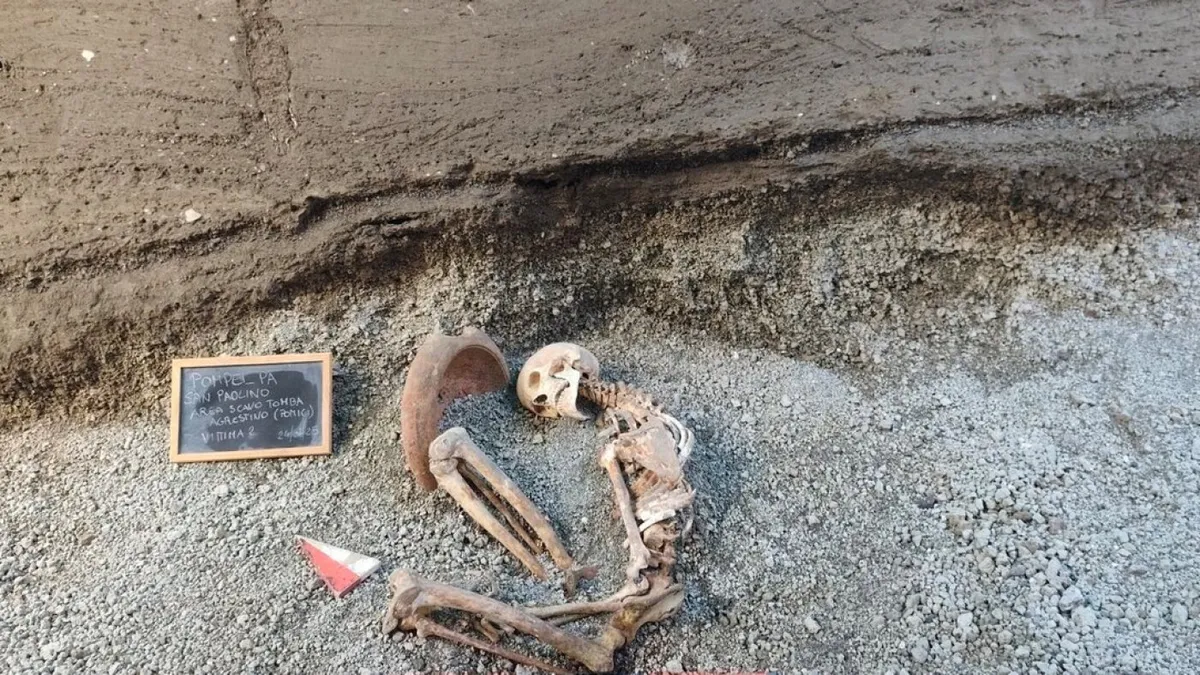
The digital portrait shows a man whose remains were found with another person. They were trying to escape Pompeii towards the coast when the volcano erupted. Researchers believe the man died early in the disaster from heavy volcanic debris.
The Pompeii Archaeological Park worked with the University of Padua to create the reconstruction. They used archaeological data from excavations near the Porta Stabia necropolis, just outside the ancient city walls.
We're a new kind of news feed.
Regular news is designed to drain you. We're a non-profit built to restore you. Every story we publish is scored for impact, progress, and hope.
Start Your News DetoxThe AI-generated image shows the man running on a debris-covered road. He holds a large, shallow bowl over his head like a shield. Mount Vesuvius is erupting in the background.
Pompeii was buried under ash and pumice almost 2,000 years ago. This preserved the city and its inhabitants in great detail.
Insights from the Past
Archaeologists found the man holding a terracotta mortar. They think he used it to shield his head from falling volcanic stones. Ancient writings, like those from Roman writer Pliny the Younger, describe Pompeii residents using objects for protection.
The man also carried an oil lamp, a small iron ring, and ten bronze coins. These personal items give clues about his final moments and daily life in Pompeii before the eruption.
AI and photo-editing techniques were used to turn skeletal and archaeological data into a realistic human face.
Gabriel Zuchtriegel, director of the Pompeii park, said AI can help protect and improve archaeological data. He believes AI can help renew classical studies if used well.
This project aims to make archaeological research more engaging for the public. It also keeps a strong scientific basis.