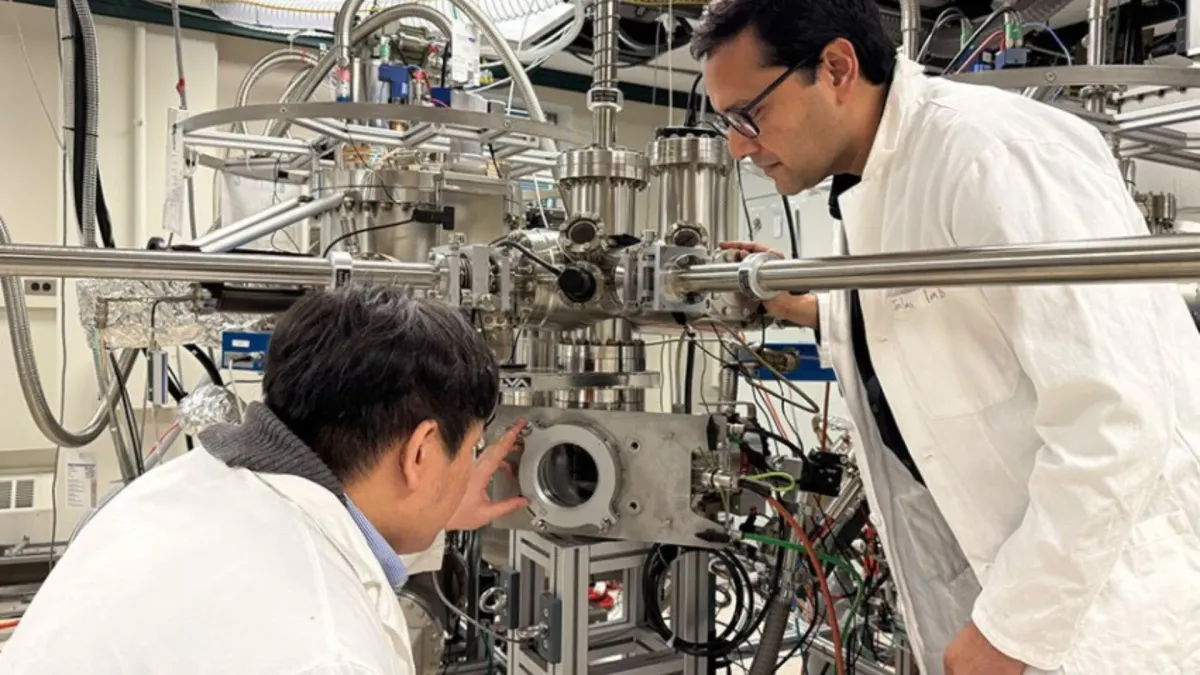
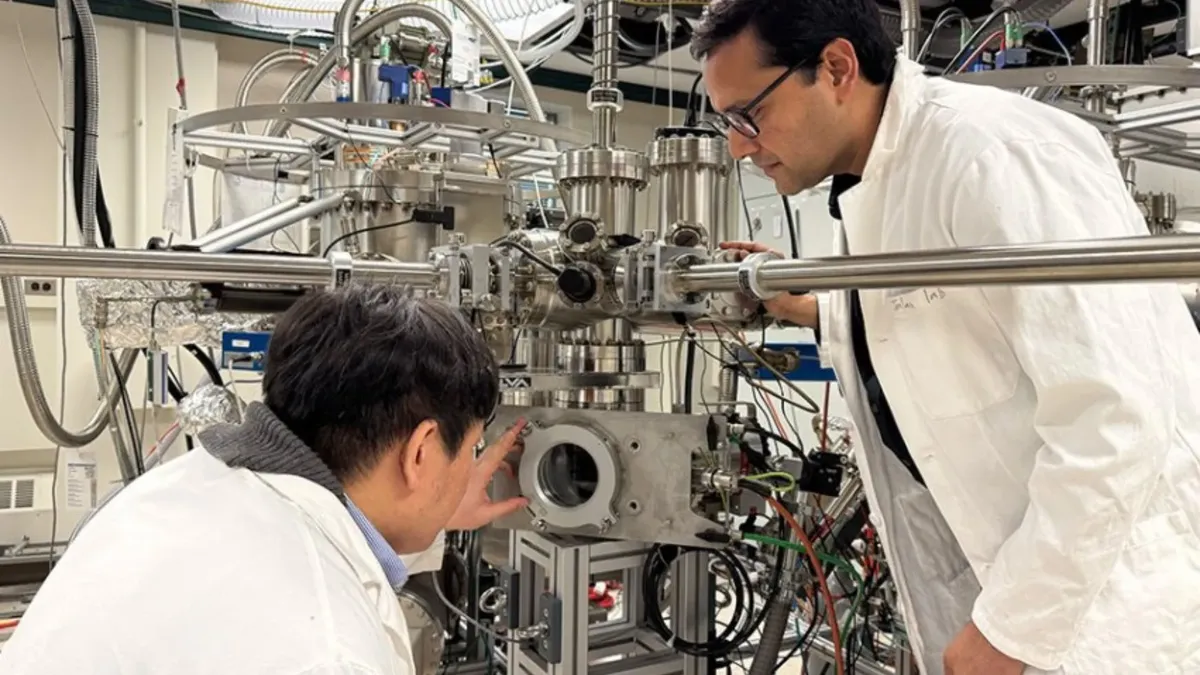
For ages, engineers treated metals like stubborn teenagers: what you see is what you get, and don't even think about changing them. Turns out, scientists at the University of Minnesota Twin Cities are the new cool parents. They've figured out how to tweak metals at the atomic level, unlocking a whole new world of electronic possibilities.
This isn't about bending steel with your mind. It's about the microscopic battlegrounds where different materials meet — the interfaces. These tiny seams, it turns out, are electron highways, and scientists just installed a traffic light.
The Atomic "Knob" You Didn't Know You Needed
The team zeroed in on these boundaries and made a startling discovery: even in metals, something called polarization can occur. Usually, that's an insulator's trick, like a shy kid at a party. But here, it means they can subtly influence how electrons zip across a surface.
We're a new kind of news feed.
Regular news is designed to drain you. We're a non-profit built to restore you. Every story we publish is scored for impact, progress, and hope.
Start Your News DetoxThey did this by playing with the thickness of a ruthenium dioxide film, shrinking it down to mere nanometers. That's roughly the width of a single strand of DNA. By making it thinner, they adjusted its surface work function — essentially, how much energy you need to kick an electron off the surface. They shifted it by more than 1 electron volt, which, in the world of tiny electrons, is like turning the volume up to eleven.
Bharat Jalan, a professor on the team, put it best: they've created a "knob" to tune electronic properties. It's a way to change how a material behaves without messing with its chemical makeup. Your metal, but better, and without a single new ingredient. Take that, old ideas about metals being electronically rigid.
The Thinner, The Wackier
The magic number for this atomic alchemy? About four nanometers. At that specific, incredibly small scale, the metal film transitions from a stretched state to a more relaxed one. This structural shift is the secret sauce, directly impacting how electrons dance on the surface. Who knew atomic packing could be such a mood ring for electrons?
Seung Gyo Jeong, the lead author, admitted he was surprised. He expected minor interface effects, not a full-blown, controllable electronic makeover. But seeing the atomic distortions directly linked to electronic measurements? That's the kind of discovery that makes scientists do a little happy dance.
Future Tech's New Best Friend
This isn't just a lab curiosity. This atomic-level control could be a game-changer for U.S. industries, from making better semiconductors (hello, faster phones) to developing clean energy systems and advancing quantum computing. All these fields live and die by how precisely we can control electrons.
Traditional methods often involve chemical changes or complex manufacturing steps. This new approach? Simpler, more scalable. Instead of changing what a metal is, you change how it's structured. It’s a bit like tuning a guitar by adjusting the strings, not by swapping out the wood.
The research was a tag-team effort, with brainpower from MIT, Texas A&M, and international partners, all backed by the U.S. Department of Energy and the Air Force. Because apparently, even the military wants metals that can be precisely tweaked. Which, if you think about it, is both impressive and slightly terrifying. Now, go tell someone about the metal knob.