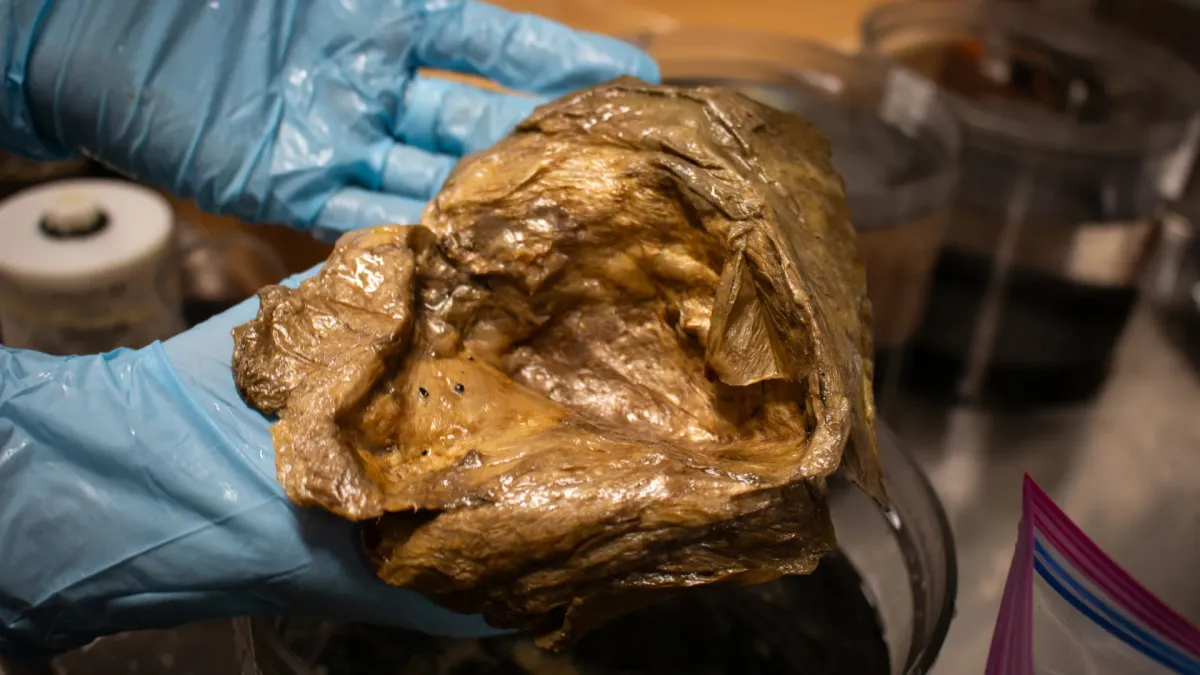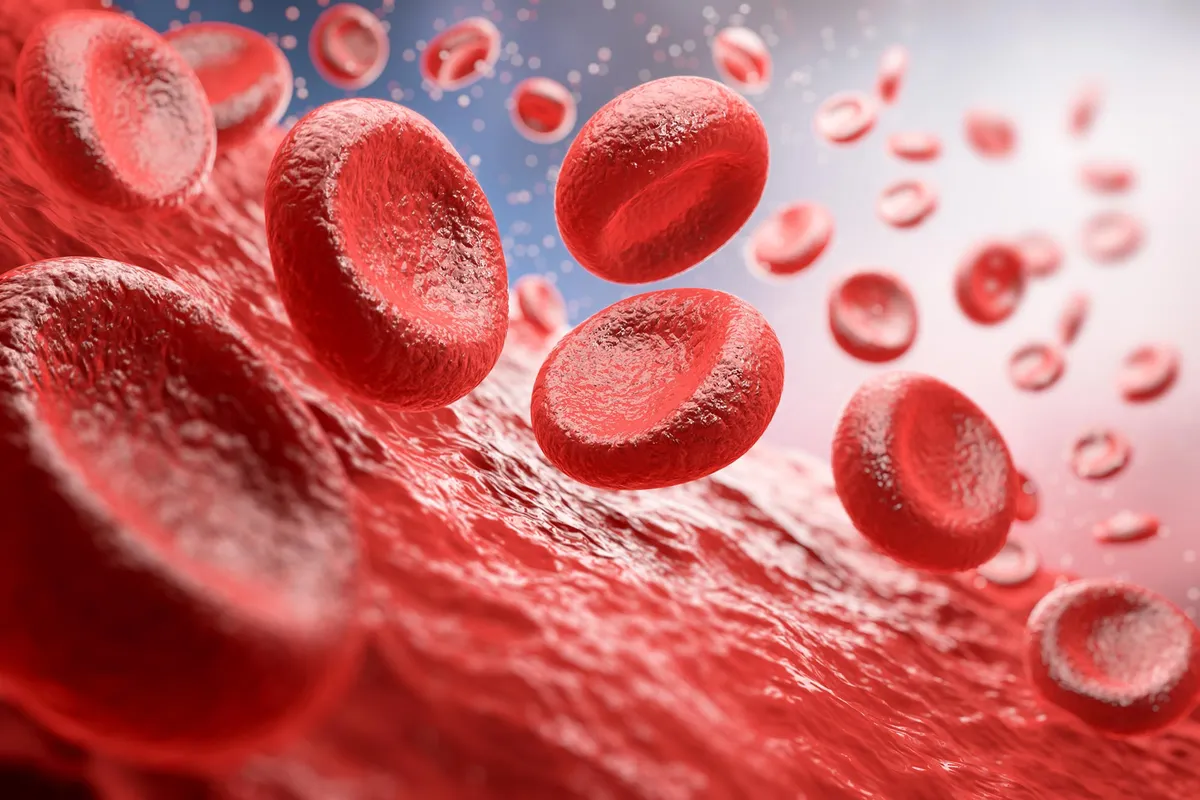
Researchers have found a new way that genes control blood types. This discovery solves a 50-year-old mystery and could make blood transfusions safer. It also helps us understand how our bodies fight diseases.
Scientists at Lund University in Sweden learned why people with the same blood type can have very different amounts of key molecules on their red blood cells. Their findings, published in Nature Communications in 2023, reveal hidden genetic controls that standard tests often miss.
Understanding Blood Types Better
Blood types are more complex than just A, B, AB, or O. They also depend on the number of special molecules, called antigens, on the surface of red blood cells. These antigens help the immune system tell the difference between its own cells and foreign ones. This is why careful matching is vital during transfusions.
We're a new kind of news feed.
Regular news is designed to drain you. We're a non-profit built to restore you. Every story we publish is scored for impact, progress, and hope.
Start Your News DetoxFor a long time, scientists knew which genes made these antigens. But they didn't know why the levels of these antigens varied so much among people with the same blood type.
Martin L Olsson, a professor at Lund University who led the study, explained that if someone has only a few hundred blood group molecules per cell instead of thousands or millions, standard blood compatibility tests might miss them. This could affect how safe a blood transfusion is.
How Genetic Switches Work
To solve this puzzle, the team looked at how genes are controlled, not just the genes themselves. They focused on transcription factors. These are proteins that act like switches, binding to specific DNA areas and controlling how strongly a gene works.
PhD student Gloria Wu developed a new computer method. Using this, researchers mapped nearly 200 binding sites across 33 blood group genes. This method helped them predict where gene activity might change, which traditional genetic tests often miss.
They tested their method on the Helgeson blood group, a puzzling case in transfusion medicine. About 1% of people have this rare variant, which means they have very low levels of Complement Receptor 1 (CR1), a protein important for immune defense. For years, no one knew the genetic cause, and even DNA tests couldn't find it.
Jill Storry, a co-author of the study, shared the story of Margaret Helgeson. In the 1970s, Helgeson, a medical technologist, couldn't find matching blood for a patient. She tested her own blood and found it was a match.
The new analysis showed that the Helgeson variant comes from a tiny change in a DNA sequence where a transcription factor should bind. Because the protein can't attach correctly, the CR1 gene is only weakly active. This leads to fewer CR1 molecules on red blood cells.
Evolution and Disease Protection
Olsson noted that this genetic variant is more common in Thai blood donors than in Swedish donors. This makes sense because lower CR1 levels protect against malaria.
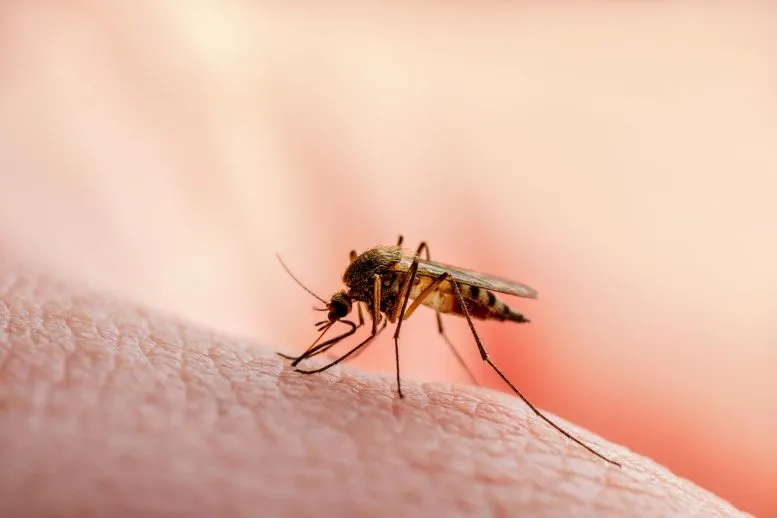
Lower CR1 levels make it harder for malaria parasites to enter red blood cells. This might explain why the variant is more common in places like Southeast Asia, where malaria is widespread. So, a trait that makes transfusion testing harder can also help people survive.
Gloria Wu said that this new knowledge can improve lab tests. The goal is to update the DNA-based chip used for blood group tests with this new variant, making diagnostics safer.
The team believes their data-driven approach can be used for many other blood groups and diseases where gene regulation is important. Follow-up studies are already showing this potential.
Expanding the Genetic Understanding
In 2024, one follow-up study in Transfusion Medicine and Hemotherapy showed that similar hidden regulatory changes can affect the important RhD blood group. It found a new mutation that disrupts a GATA1 binding site, leading to very low RhD expression.
Another study in Transfusion improved the researchers' computer method. It combined transcription factor binding data with other genetic markers. This revealed 814 possible regulatory sites across 47 blood group genes. It confirmed that combinations of factors like GATA1 and KLF1 help control gene activity.
Olsson concluded that much of their blood group research now uses predictive tools to guide lab experiments. The next step is to better understand what blood groups do by connecting information from large databases about how diseases affect people differently based on their blood group.
Deep Dive & References
- Elucidation of the low-expressing erythroid CR1 phenotype by bioinformatic mining of the GATA1-driven blood-group regulome - Nature Communications, 2023
- A Bioinformatically Initiated Approach to Evaluate GATA1 Regulatory Regions in Samples with Weak D, Del, or D– Phenotypes Despite Normal RHD Exons - Transfusion Medicine and Hemotherapy, 2024
- Epigenetic dissection of human blood group genes reveals regulatory elements and detailed characteristics of KEL and four other loci - Transfusion, 2024