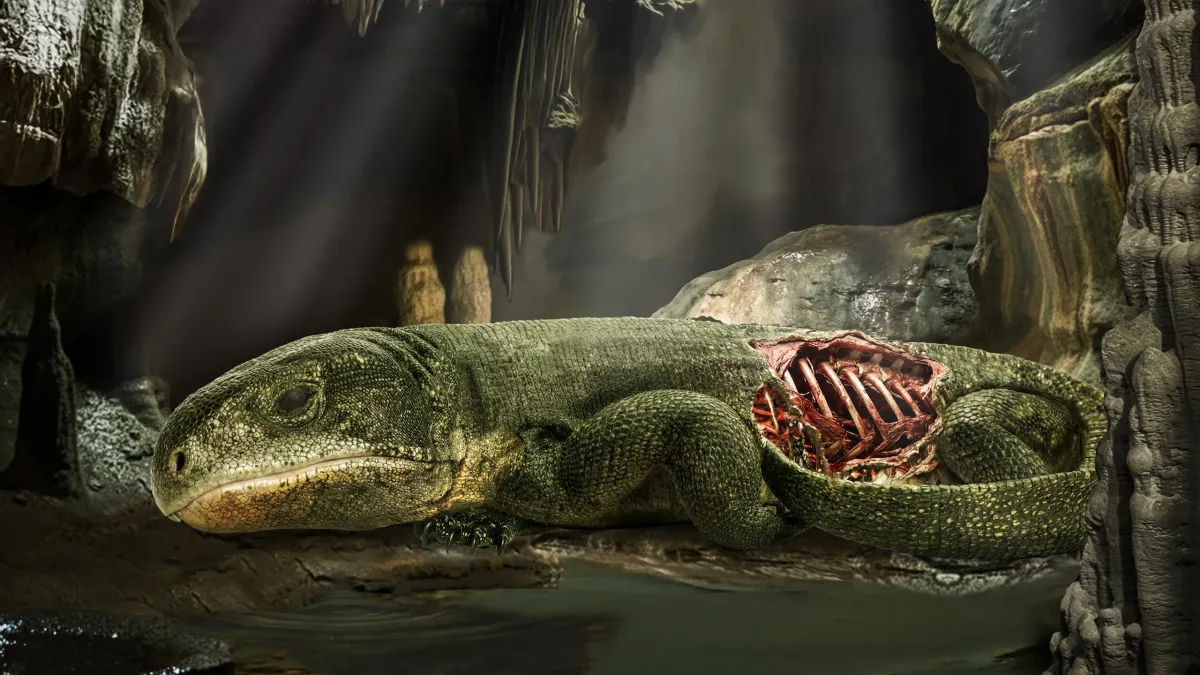
A 289-million-year-old mummified reptile fossil has revealed the oldest known example of rib-driven breathing. This system is still used by humans today.
This small reptile, Captorhinus aguti, died in an Oklahoma cave. Its fossil shows how breathing, as we know it, began in amniotes. This group includes reptiles, birds, and mammals.
Ancient Fossil Reveals Early Breathing System
Researchers described the fossil in a study published in Nature. The reptile is from the early Permian period and is only a few inches long.
We're a new kind of news feed.
Regular news is designed to drain you. We're a non-profit built to restore you. Every story we publish is scored for impact, progress, and hope.
Start Your News DetoxThe fossil is remarkably preserved. It contains three-dimensional skin, calcified cartilage, and even traces of proteins. These protein remnants are nearly 100 million years older than any previously found in fossils.
Ethan Mooney, who co-led the study, noted that Captorhinus is important for understanding early amniote evolution. These early reptiles were among the first to live fully on land.
Rare Soft Tissue Preservation
The fossil was found in cave systems near Richards Spur, Oklahoma. This site is known for its excellent record of late Paleozoic life.
Unusual conditions helped preserve delicate tissues. Oil-seep hydrocarbons and oxygen-free mud protected the bones, skin, and cartilage.
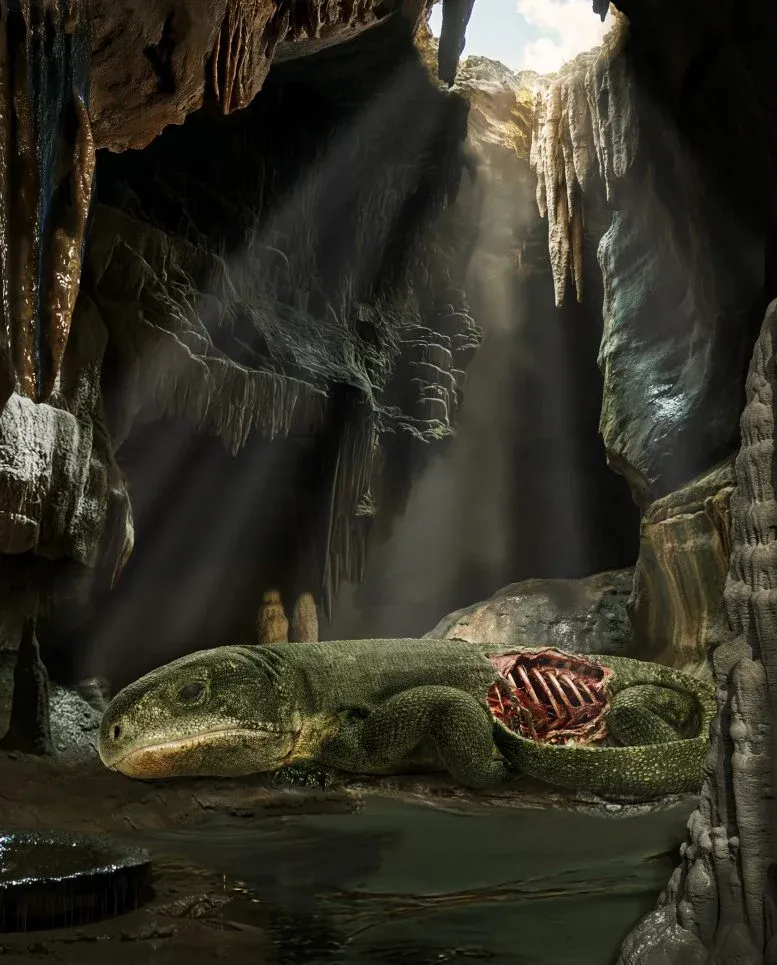
The specimen is a three-dimensional mummified fossil. It was preserved in its final position with one arm tucked under its body. This detail gives a complete view of an ancient reptile.
Advanced Scanning Reveals Anatomy
Researchers used neutron computed tomography (nCT) to examine the fossil without damaging it. This technique allowed them to see internal structures hidden within the rock.
Mooney saw unexpected structures. He noted thin, textured structures wrapped around the bones, including skin around the torso. The scaly skin had an accordion-like texture, similar to modern worm lizards.
Reconstructing Rib-Based Breathing
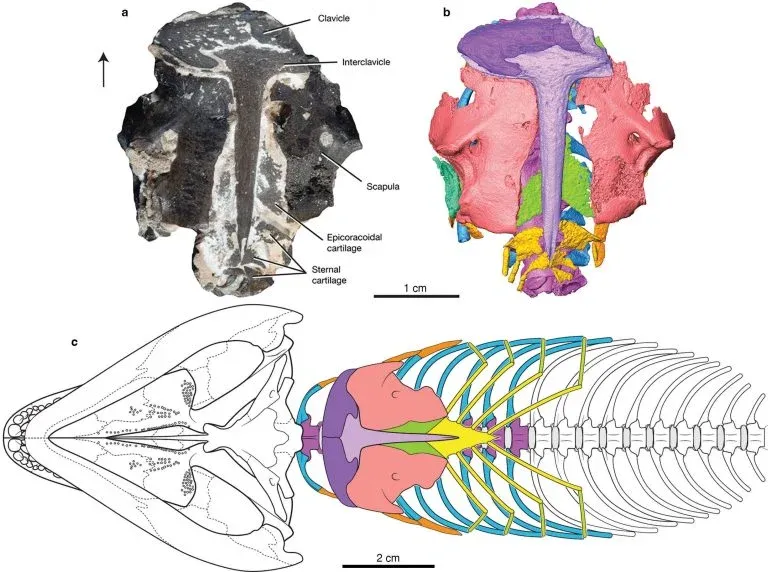
By studying three Captorhinus specimens, researchers reconstructed how the animal breathed. One specimen showed a segmented cartilaginous sternum, sternal ribs, intermediate ribs, and connections to the shoulder girdle.
This allowed scientists to see these structures in an early reptile for the first time. They could rebuild a complete breathing system in an early amniote. This system is called costal aspiration breathing. It uses muscles between the ribs to expand and compress the chest, drawing air into the lungs.
Amphibians before this used skin breathing and mouth movements. Rib-based breathing is more efficient, delivering more oxygen and removing carbon dioxide better.
Robert R. Reisz, a co-author, said this system in Captorhinus likely represents the ancestral condition for rib-assisted breathing in living reptiles, birds, and mammals.
Breakthrough for Active Life
Using the ribcage for breathing was a major evolutionary step. It allowed early amniotes to be more active and better suited for land. This change likely helped them diversify and succeed.
Mooney called it a "game changer" that allowed these animals to adopt a more active lifestyle.
Ancient Protein Discovery
The fossil also contained traces of original proteins in the bone, cartilage, and skin. These are the oldest such molecules ever identified, dating back nearly 100 million years earlier than previous examples.
Mooney said this finding dramatically pushes our understanding of soft tissue preservation in the fossil record.
The fossils are now at the Royal Ontario Museum in Toronto for further study. Mooney continues his research on early reptiles and their evolution.
Deep Dive & References
Mummified early Permian reptile reveals ancient amniote breathing apparatus - Nature, 2026