Adolescence is a key time for brain development. It's when skills like planning and problem-solving get much better. Scientists have long thought that during this period, the brain mainly "prunes" away extra connections between neurons. This process, called synaptic pruning, was believed to make brain circuits more efficient.
New research from Kyushu University challenges this idea. Their study suggests that the adolescent brain doesn't just cut connections. It also builds new ones in specific areas.
A New Look at Brain Wiring
For many years, the common belief was that the number of synapses (connections between brain cells) goes up in childhood and then drops during the teenage years. This drop was seen as the brain getting rid of weaker links to strengthen important ones. Some researchers even thought too much pruning might be linked to disorders like schizophrenia.
We're a new kind of news feed.
Regular news is designed to drain you. We're a non-profit built to restore you. Every story we publish is scored for impact, progress, and hope.
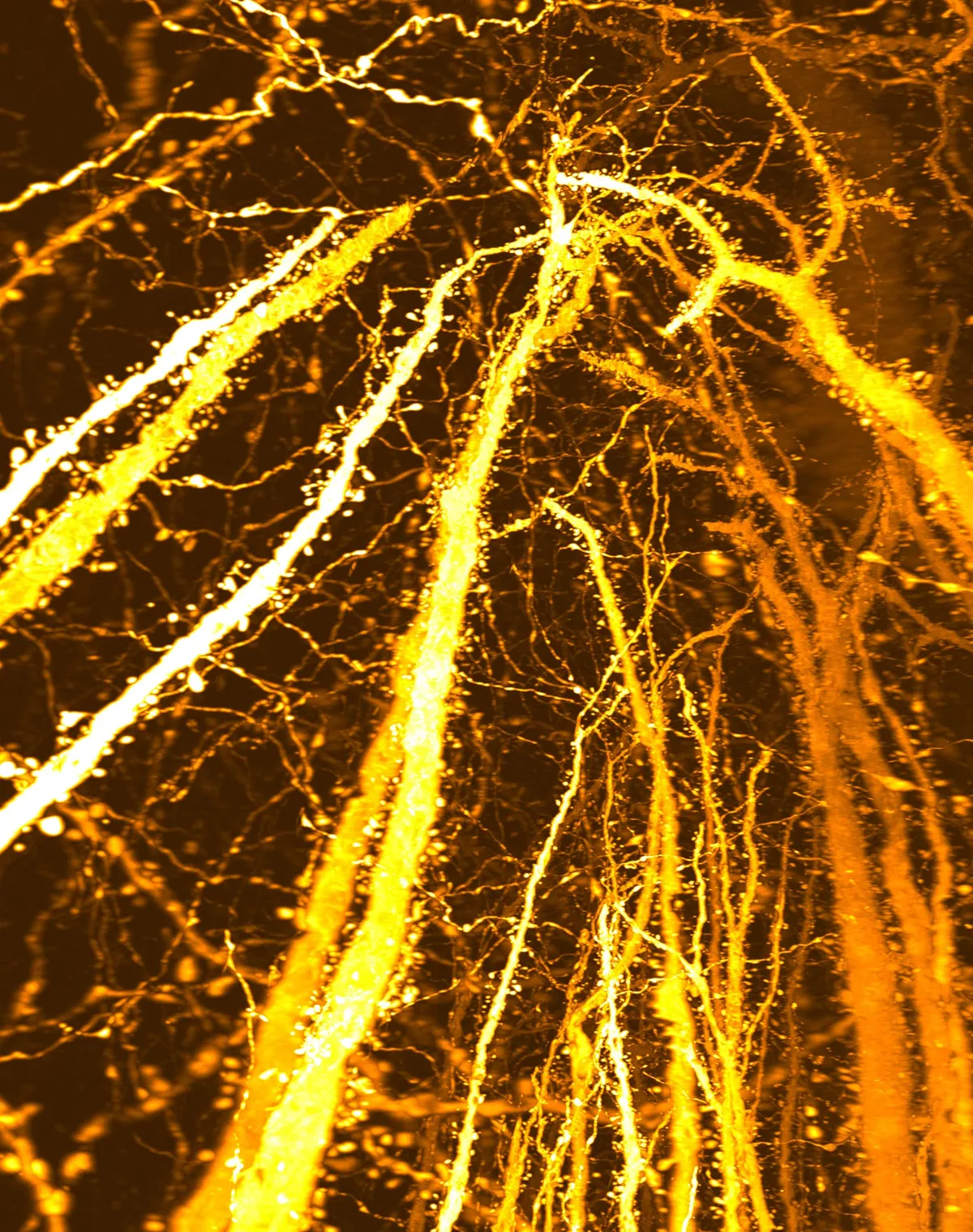
Start Your News DetoxHowever, Professor Takeshi Imai's team found something different. They discovered dense clusters of new synapses forming on parts of neurons called dendrites during adolescence. These "hotspots" were previously unknown.
Professor Imai explained that they found these hotspots by chance while studying the mouse brain with a new high-resolution tool. They focused on Layer 5 neurons in the cerebral cortex, which is important for thinking and behavior. These neurons gather information and send signals out, making them crucial for how the brain processes information.
Mapping New Connections
To see these tiny structures, the researchers used super-resolution microscopy combined with a special tissue-clearing agent called SeeDB2. This made the brain tissue transparent, allowing them to map all the dendritic spines on individual neurons.
They found an unexpected area with a very high density of spines on the apical dendrite. This dense cluster didn't appear early in life. Instead, it formed specifically during adolescence.
The team tracked these changes over time in mice. At two weeks old, spines were spread out. But between three and eight weeks (the adolescent period for mice), spine numbers grew sharply in one specific section of the apical dendrite. This led to the formation of the concentrated synaptic hotspot.
Rethinking Schizophrenia
These findings suggest that the idea of "adolescent synaptic pruning" needs to be updated. While some pruning happens, new synapses are also forming in specific areas during this time.
Ryo Egashira, the study's lead author, noted that problems with this new synapse formation might be key to some types of schizophrenia. The disorder has often been linked to too much pruning.
To test this, the team looked at mice with gene mutations linked to schizophrenia. They found that while spine density was normal early on, spine formation during adolescence was impaired in these mice. This meant the hotspots didn't form correctly.
This new perspective suggests that problems with forming synapses during adolescence could play a role in schizophrenia. However, this study was done in mice, and more research is needed to see if the same processes happen in humans.
What's Next
Professor Imai hopes to identify which brain regions are forming these new synaptic connections during adolescence. This will help scientists understand which circuits are being built during this important developmental stage. Understanding these connections could lead to new insights into brain development and neuropsychiatric disorders.
Deep Dive & References: Dendritic compartment-specific spine formation in layer 5 neurons underlies cortical circuit maturation during adolescence - Science Advances, 2026