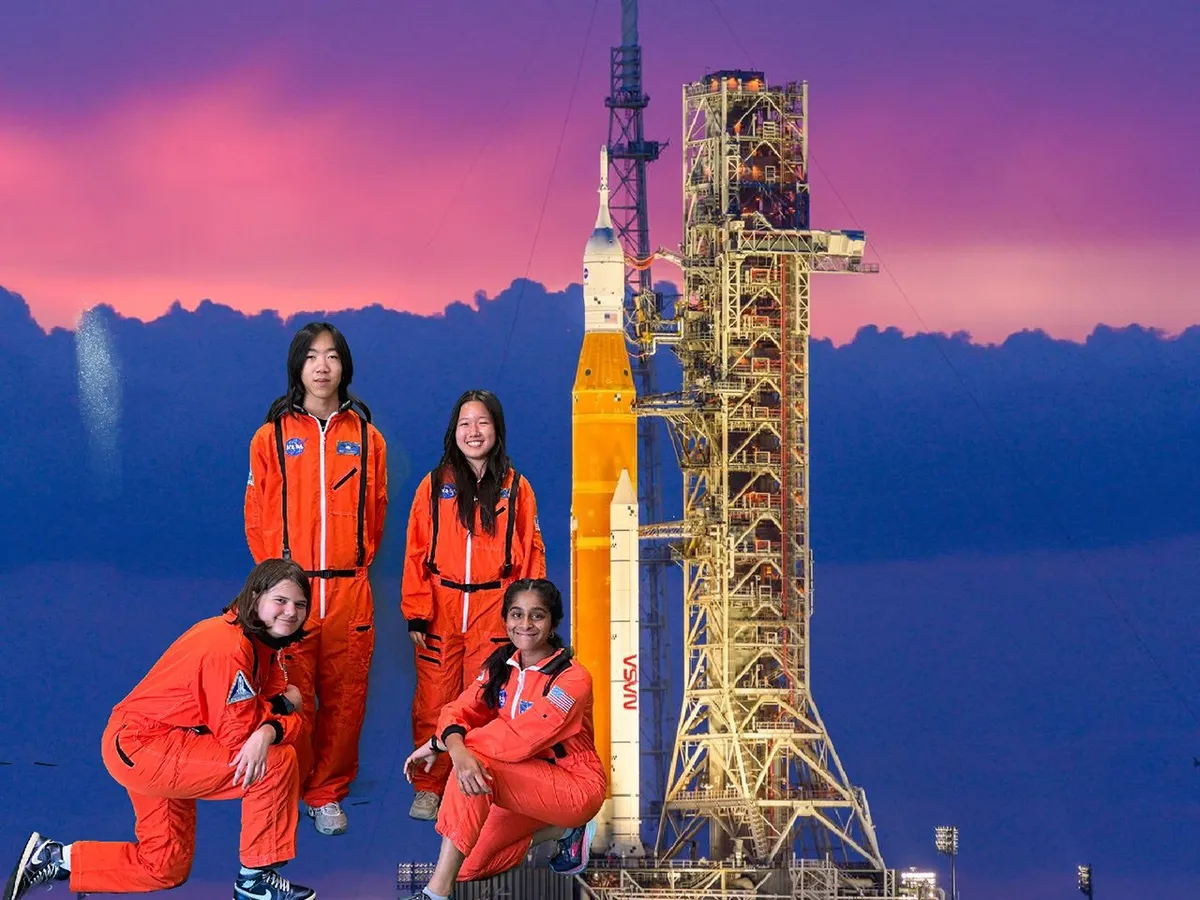
Turns out, you don't need to be a rocket scientist to explore Venus. You just need to be a student with a penchant for programming rovers and a healthy disregard for extreme atmospheric pressure. Over 500 of them, to be precise, making up 120 teams from eight states, just wrapped up the 2025–2026 ROADS (Rover Observation And Discoveries in Space) from Earth to Venus National Challenge.
This isn't your average science fair. This is a NASA Science Activation program where kids get to flex real science and engineering muscles, all inspired by the planet known for its hellish surface and runaway greenhouse effect. Because, apparently, that's where we are now: elementary schoolers are modeling carbon cycles on Venus.

The Young Explorers Who Braved the (Simulated) Inferno
The Northwest Earth and Space Science Pathways (NESSP) project, run by Central Washington University, is behind this whole wild endeavor. They challenged students from upper elementary to high school to tackle a series of eight "Mission Objectives." Think of it as a NASA mission, but with more pizza and fewer multi-billion dollar budget constraints.
We're a new kind of news feed.
Regular news is designed to drain you. We're a non-profit built to restore you. Every story we publish is scored for impact, progress, and hope.
Start Your News DetoxTeams kept detailed Mission Development Logs, designed their own mission patches (because aesthetics matter, even in space exploration), and delved into the nitty-gritty of carbon movement on Earth and Venus. They even studied the greenhouse effect (timely!) and collected remote sensing data using cameras mounted on kites. Yes, kites. All while programming robotic rovers to navigate Venus-like terrain and exploring potential NASA careers. Which, if you think about it, is both impressive and slightly terrifying.
Dr. Darci Snowden, Director of NESSP, summed it up perfectly: these students aren't just learning about NASA missions; they're "becoming part of the mission." Which, let's be honest, is a pretty compelling bullet point for a college application.
And the Winners Are...
NESSP didn't just hand out participation trophies. They recognized top teams for their stellar work and "excellent Mission Development Logs." Because even future astronauts need to document their findings properly.
Elementary School Division:
- The Evil Twins (Silverdale, Washington)
- The Acid Clouds (Silverdale, Washington)
- Flaming Asteroid Nebulas (Silverdale, Washington)
- The NASA Intelligence (Silverdale, Washington)
Middle School Division:
- Venus Ascenders (Mukilteo, Washington)
- Project Fuego Venus (Safford, Arizona)
- Galaxy Dragons (Sequim, Washington)
- The Four Folds (Hardin, Montana)
- Crater Lake Crusaders (Medford, Oregon)
High School Division:
- Laborantem (Columbus, Montana)
- Velocity to Venus (Sequim, Washington)
- Puget Sound Propulsion (Mukilteo, Washington)
- Evergreen Explorers (Mukilteo, Washington)
If you want to see these young masterminds in action, highlights and student presentations are available on the ROADS from Earth to Venus Virtual Recognition Ceremony on the NESSP YouTube channel, @nwessp. Because who doesn't love watching kids explain complex planetary science with infectious enthusiasm? You can also find resources and activities from this and past challenges on the NESSP website at www.nwessp.org. Just in case you're suddenly inspired to build your own Venus rover.