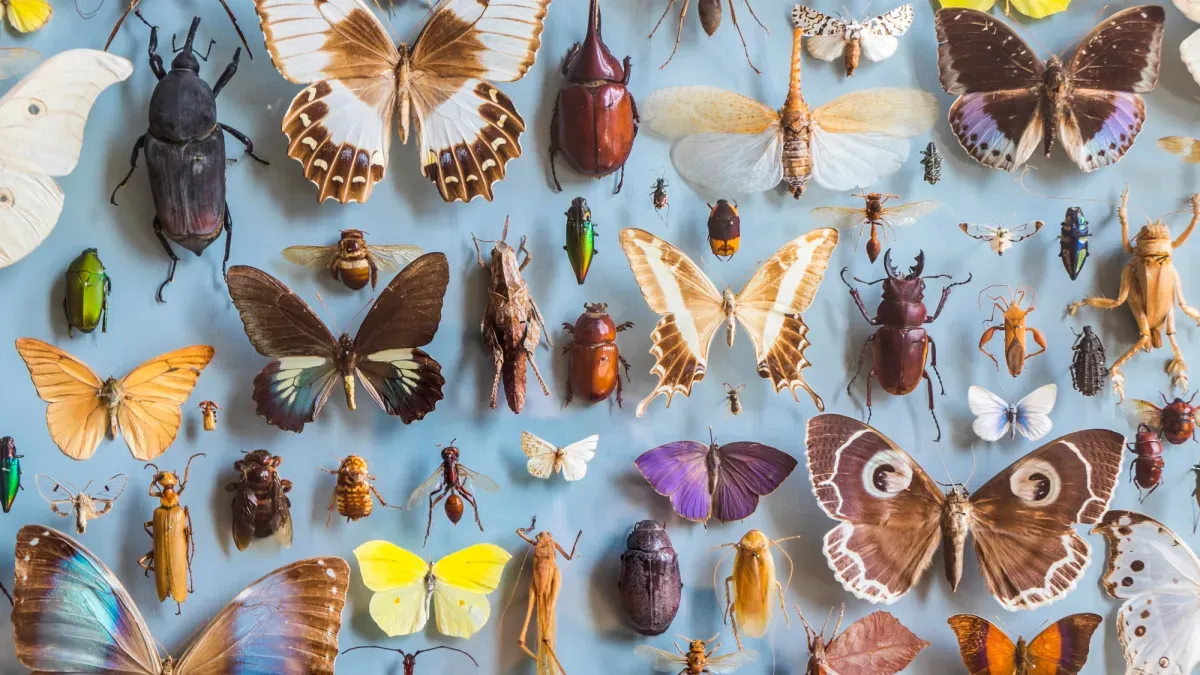
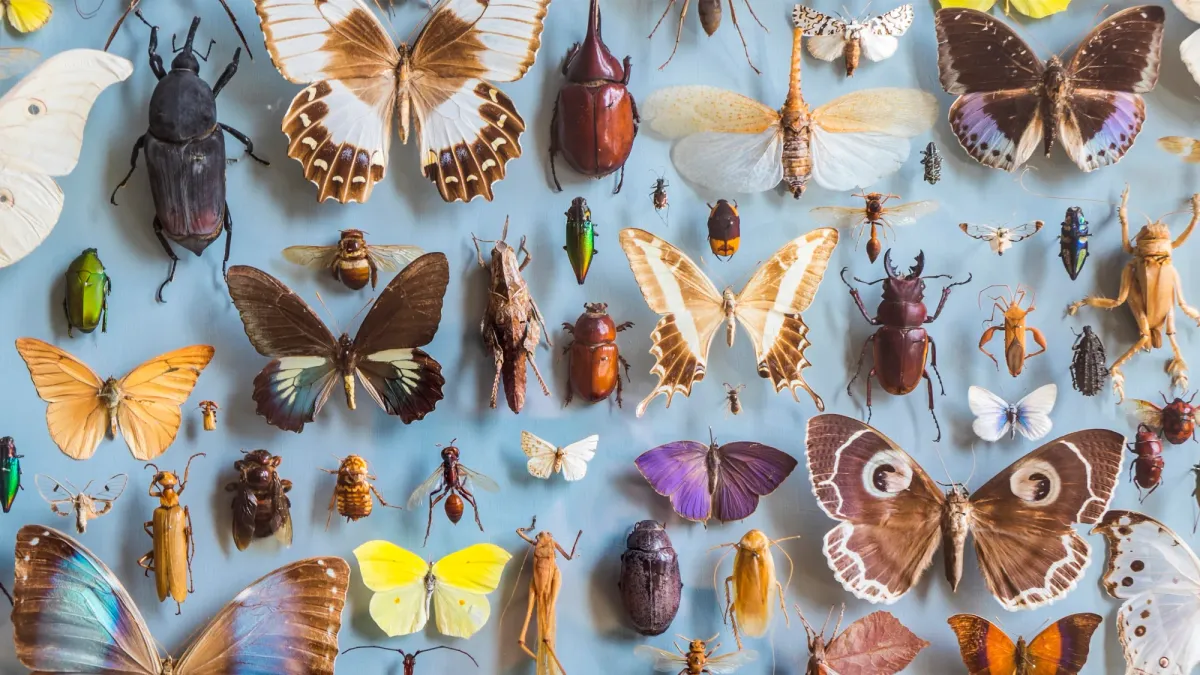
Good news, arachnophobes: Earth is even more teeming with creepy crawlies than we thought. A new study suggests our planet hosts a staggering 14 to 20 million insect species, which is a significant jump from the six million estimate we've been clinging to for the last four decades. Yes, decades. Apparently, we've been undercounting.
Published in Proceedings of the National Academy of Sciences (PNAS), this research essentially says: most of these tiny, six-legged residents are still playing a very effective game of hide-and-seek. And winning.
Why We're So Bad at Counting Bugs
Turns out, insects are remarkably good at being elusive for a few key reasons. For starters, many of them pull a complete identity swap during their lives. A hungry caterpillar munching on leaves today might be a delicate butterfly sipping nectar tomorrow. Different life stages, different hangouts.
We're a new kind of news feed.
Regular news is designed to drain you. We're a non-profit built to restore you. Every story we publish is scored for impact, progress, and hope.
Start Your News DetoxThen there's the size factor. Most insects are tiny, which means they can squeeze into nooks and crannies that are, let's be honest, not exactly prime real estate for human scientists. Think hidden crevices, the undersides of leaves, or the very top of a towering tree canopy. That last one, by the way, is barely sampled, according to the researchers.
Robert Colwell, an entomologist and co-author, put it best: "Most insects are rare. Even with huge samples, you keep finding new species." His team once collected 1.6 million insects in Costa Rica and still knew they hadn't seen everything. The goal wasn't just to see what was there, but to figure out what they missed.

The Wasps Who Blew Up the Census
To crack this code, Colwell teamed up with Michael Sharkey and Laura Melissa Guzman. Their secret weapon? A group of parasitic wasps called Microgastrinae. These wasps have a rather dramatic life cycle: they lay their eggs inside caterpillars, and when the larvae hatch, well, they eat their host from the inside out before emerging. Cheerful stuff.
The team studied these particular wasps in Costa Rica's Área de Conservación Guanacaste, using them as a kind of biological yardstick to measure just how incomplete their broader insect surveys were. They deployed tent-like Malaise traps and also collected caterpillars to see which wasp species emerged.
Using some fancy statistical models, they figured out a ratio of known wasps to undetected ones. The result? There might be eight to 14 million more species out there. Guzman noted that most of these undiscovered species are probably small, rare, and highly specialized, meaning they're not exactly throwing themselves into every trap.

In fact, 75% of the parasitic wasp species they found were only caught by one of their three collection methods. Which means if you're only using one type of trap, you're missing a whole lot of very specific, very hidden, very tiny life. Many, Guzman suspects, are parasitoids — insects living inside other insects, forming complex food webs we're only just beginning to grasp.
This isn't just an academic exercise. Doubling or tripling our estimate of insect species fundamentally reshapes our understanding of Earth's biodiversity. And with global insect populations declining due to human activities, knowing what's out there is step one to protecting it. As Guzman succinctly put it: "We cannot protect species if we don’t know that they exist." Fair point. Now, if you'll excuse us, we'll be checking under the couch for any previously uncataloged residents.