Scientists have found a way to get DNA from old parchment manuscripts without damaging them. This new method could help us learn about trade routes, farming, and the animals used to make these documents up to 1,300 years ago.
Parchment is made from animal skins. It was used for thousands of years in Europe, the Middle East, and parts of Africa for many types of records, like legal texts and maps.
Hidden Clues in Parchment
Tim Stinson, an English professor at North Carolina State University, explained that because parchments are made from animal skins, they often contain genetic information. This information can tell us when and where a manuscript was made.
We're a new kind of news feed.
Regular news is designed to drain you. We're a non-profit built to restore you. Every story we publish is scored for impact, progress, and hope.
Start Your News DetoxMatthew Breen, a professor at NC State's College of Veterinary Medicine, added that the genetic data can also show how farm animals evolved, how breeds developed, and even details about livestock diseases.
Stinson noted that getting access to historical parchments has been a big challenge. This is because people worry that taking samples might harm these important artifacts. The new method shows that samples can be collected safely.
Gentle Brushes Protect Old Documents
For the study, scientists used a gentle method to collect cellular samples from 91 manuscripts. These documents were from Duke University’s Rubenstein Library. They came from places like England and Ethiopia and were written between the late eighth century and the early 20th century.
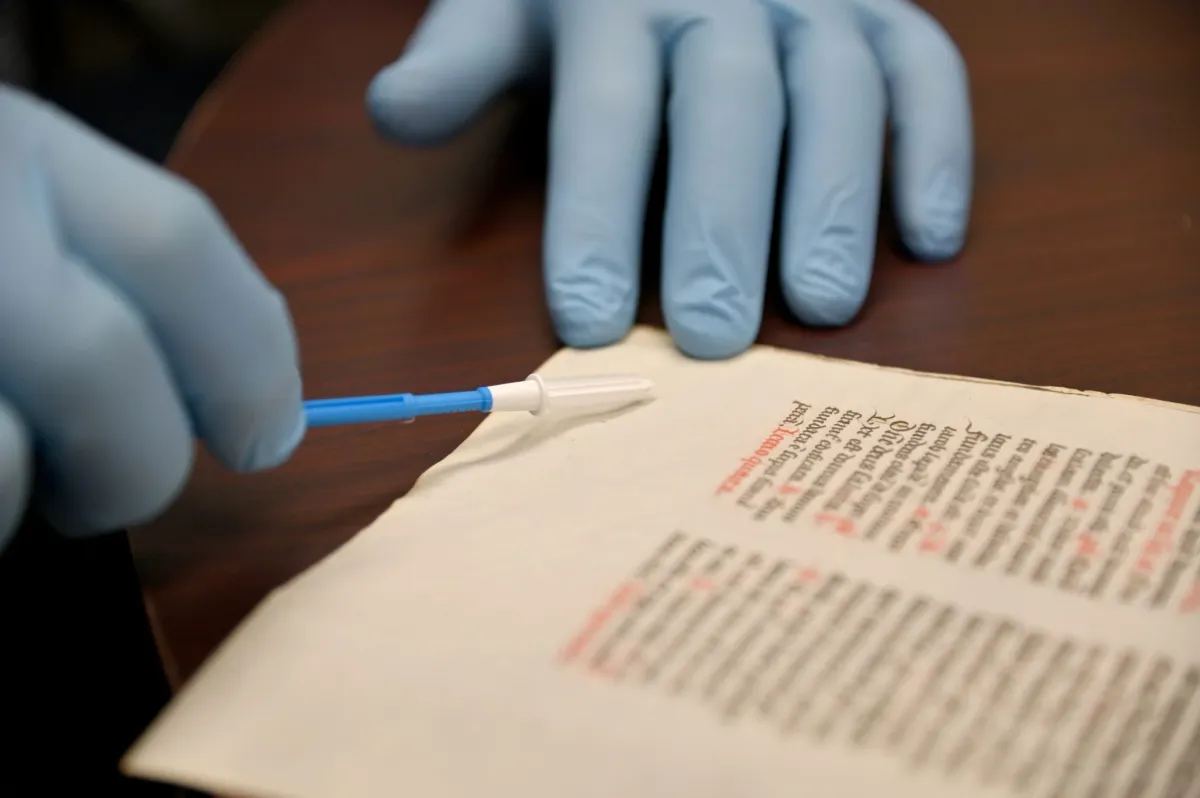
The technique involves lightly rubbing the parchment with a cytology brush. This is the same type of brush used for Pap smears.
Breen said that cytology brushes work well when dry. They collect cellular material without damaging the artifact.
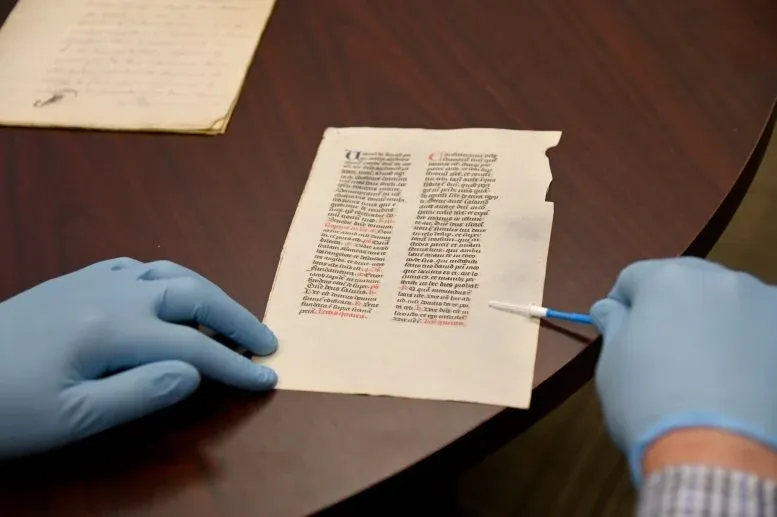 A new nondestructive DNA sampling method lets scientists analyze ancient parchment manuscripts. Credit: Nash Dunn, NC State University
After collecting the material, scientists extract the cells. Then, they use advanced sequencing tools to find and copy genetic sequences.
Stinson explained that they are using modern technology to get new, factual information about historical, cultural, and agricultural practices.
Breen believes they can extract a lot of new information from these parchments without harming them. This should build trust with organizations that preserve these historical documents.
Stinson is excited about the potential of this field and hopes to get funding to continue this pioneering work. He sees it as a huge, untapped source of historical information.
Breen added that this is a new field that brings together experts from genetics to medieval history.
Deep Dive & References
Adventures in the Animal Archive: New Techniques for the Genetic Analysis of Parchment Manuscripts - Manuscript Studies: A Journal of the Schoenberg Institute for Manuscript Studies, 2026