For ages, scientists thought they had the definitive answer to why some plants form those cool little nitrogen-fixing root nodules (looking at you, legumes) and others just… don't. The prevailing wisdom? If a plant couldn't nodulate, it must have lost the crucial "nodule inception" (NIN) gene.
Basically, no NIN gene, no nitrogen party with bacteria. Seemed pretty straightforward.
But then, researchers at the University of Tsukuba decided to poke around a bit more, specifically in a group of plants called Fagales. And what they found, published in New Phytologist, is a delightful little wrench in the gears of botanical certainty.
We're a new kind of news feed.
Regular news is designed to drain you. We're a non-profit built to restore you. Every story we publish is scored for impact, progress, and hope.
Start Your News DetoxThe Gene That Just Sits There
Turns out, some Fagales species are walking around with a perfectly functional NIN gene, just… not using it. They don't form nodules, they don't invite bacteria over for nitrogen-fixing fun, they just keep that gene in their back pocket, apparently for a rainy day.
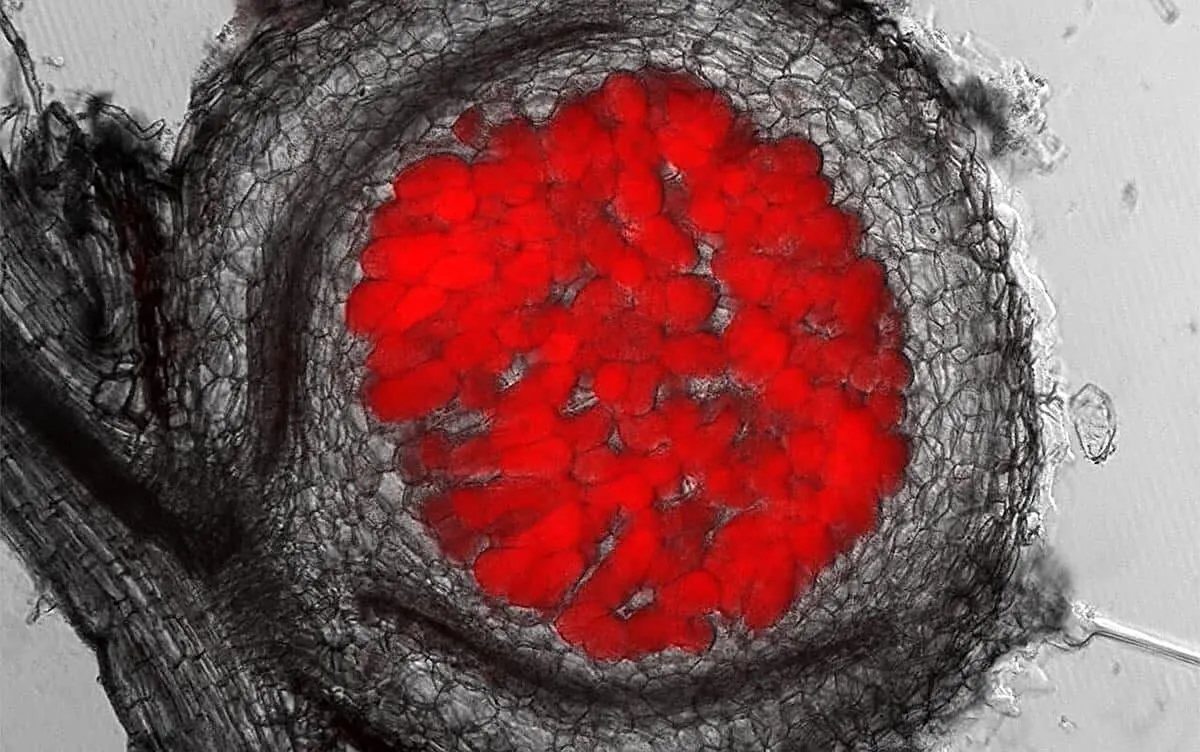
To prove it, the team took the NIN gene from European hazel (Corylus avellana) — a plant that definitely does not nodulate. They then popped this hazel gene into a mutant Lotus japonicus that couldn't form nodules. And what do you know? The mutant suddenly remembered how to party. It started forming nodules, getting infected by bacteria, and even fixing nitrogen.
Which means the NIN protein itself is still perfectly capable of orchestrating the whole root nodule symbiosis. It's just that in some plants, it's like a perfectly good chef with no kitchen to cook in.
This discovery shakes up the old narrative quite a bit. It suggests plants might lose their nodulation habit for reasons far more complex than a missing gene. Perhaps it's a problem with other genes further down the line, maybe something that directs bacteria to the roots, or even a simple lack of ambition. (We kid, mostly.)
Understanding these evolutionary quirks could be a quiet revolution for agriculture. The more we learn about how plants used to fix their own nitrogen, the better equipped we are to help them do it again, reducing our reliance on those chemical fertilizers that frankly, the planet could do with less of. It's a reminder that evolution often takes the scenic route, and sometimes, the answers are hiding in plain sight, just waiting for someone to ask the right question.