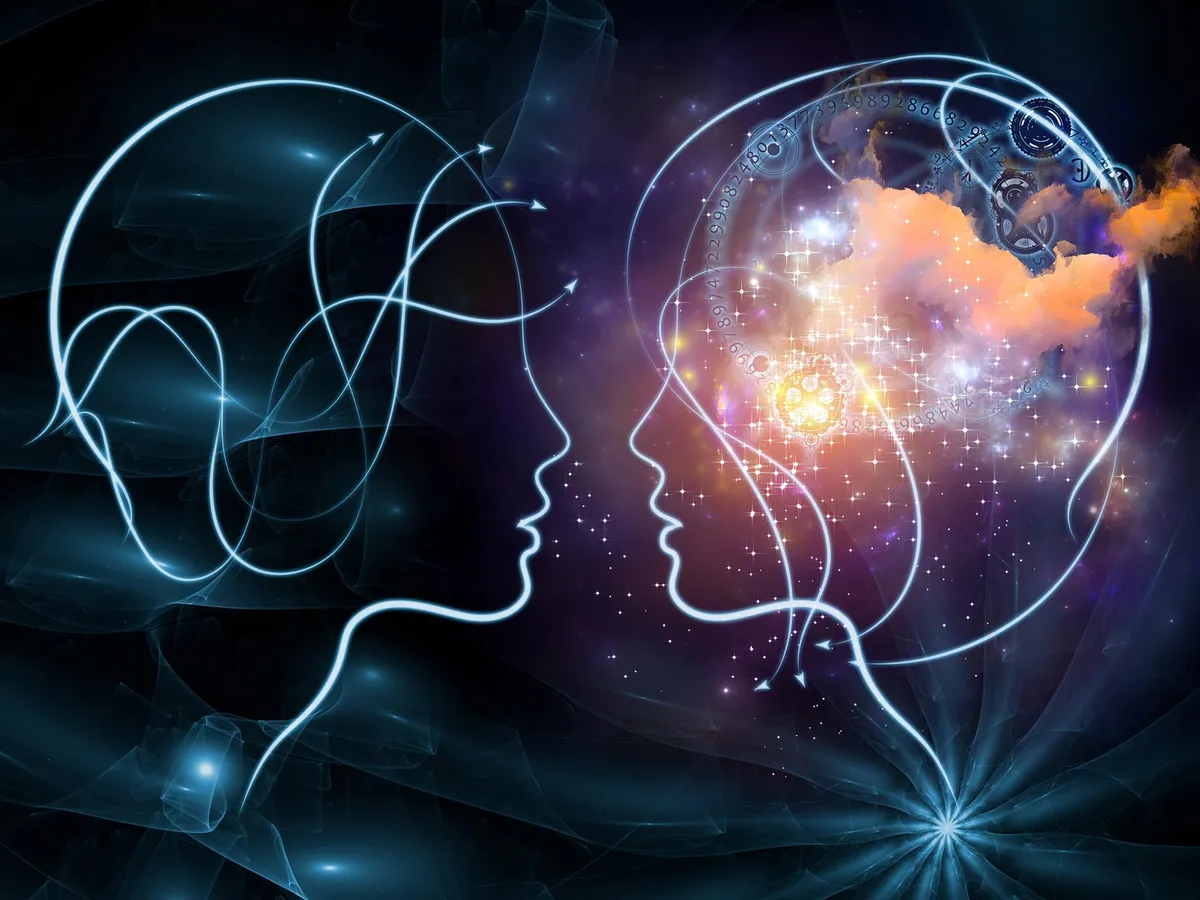
Philosophers at the University of California, Riverside, are challenging a core idea about consciousness. They suggest that consciousness might not be limited to brains like ours. Instead, it could appear in very different forms of life, given the right conditions.
Consciousness Beyond Earth's Biology
Eric Schwitzgebel, a philosophy professor, and Jeremy Pober, a postdoctoral researcher, argue that consciousness isn't just for carbon-based life. They believe it could emerge wherever evolution creates a complex system.
The researchers assume consciousness is real. Then, they ask if it must depend on Earth's biology or if it could take entirely new forms.
We're a new kind of news feed.
Regular news is designed to drain you. We're a non-profit built to restore you. Every story we publish is scored for impact, progress, and hope.
Start Your News DetoxTheir work comes as discussions about conscious AI become more urgent. Schwitzgebel and Pober briefly touch on AI, but they don't offer a single conclusion. They even have different views. However, their argument suggests that AI could become conscious one day, even if current systems aren't.
The main idea is "substrate flexibility." This means a property can be made from different materials. For example, a cup can be glass or plastic. Schwitzgebel and Pober think consciousness might be similar.
Schwitzgebel noted that "The universe may contain minds stranger than we can imagine."
The Vastness of Life
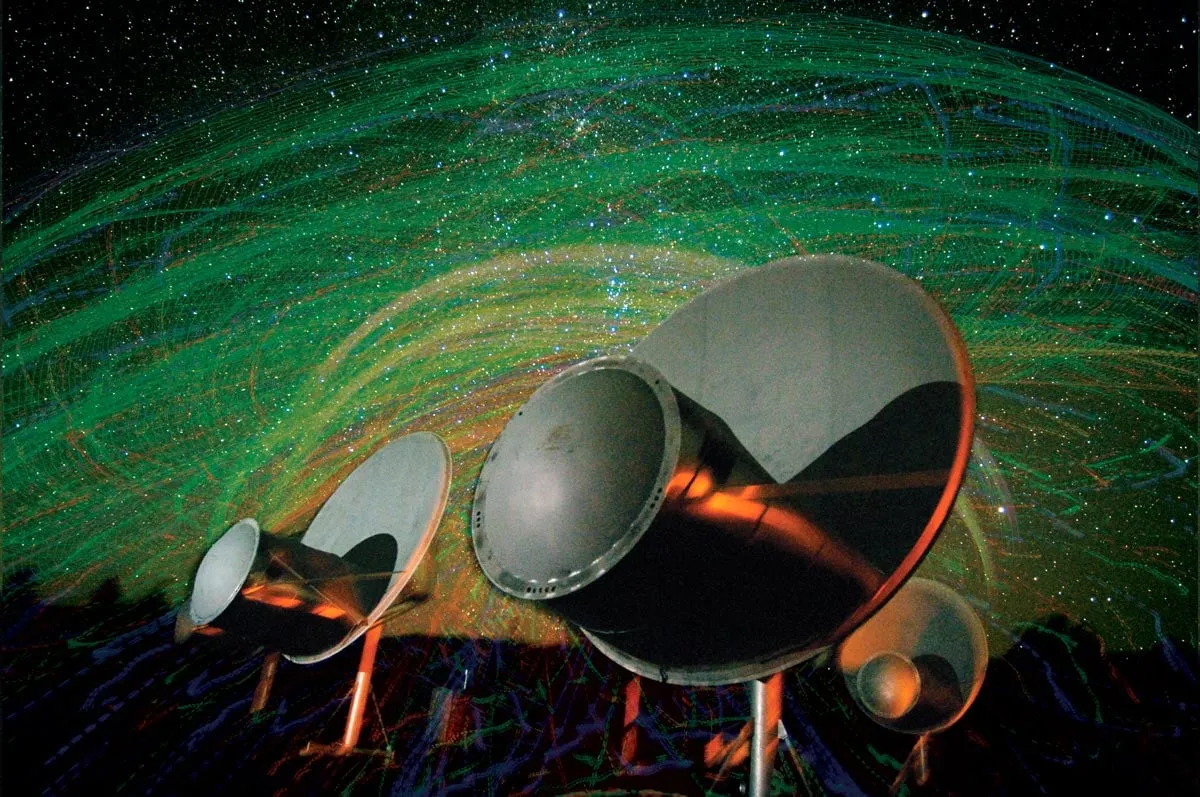
The observable universe has about 1 trillion galaxies. Planets are common, and many have environments very different from Earth's.
Schwitzgebel and Pober estimate that at least 1,000 advanced alien civilizations have existed. This is a conservative number, as some surveys suggest more than one civilization per galaxy.
Astrobiologists also consider life made from different materials than Earth organisms. This includes alternative amino acids or different chemical structures.
Author Andy Weir, in "Project Hail Mary," imagined an alien with a shell of oxidized minerals, mercury blood, and a crystal brain. This being came from a hot planet with ammonia.
Schwitzgebel and Pober don't claim such life exists. They argue that if life can emerge in various chemical conditions, and the universe offers many chances for life, it would be surprising if all successful life used the same ingredients.
They also point to the diverse nervous systems on Earth, like those of octopuses, bees, and dogs. Nature hasn't chosen just one design here. They suggest evolution elsewhere could be even more creative.
The Copernican Principle of Consciousness
Their main argument uses the Copernican tradition. Nicolaus Copernicus showed Earth isn't the center of the solar system. This made humanity seem less special.
Schwitzgebel and Pober apply this to consciousness. They believe consciousness is probably not unique to humans.
If the universe has many advanced species with different biologies, they argue it would be "terrocentrism" to assume only Earth-like organisms can be conscious. This means treating Earth life as uniquely special without enough reason. They call this "the Copernican principle of consciousness."
They aren't saying every advanced life form must be conscious. Instead, if consciousness exists among complex beings, it would be odd to think only organisms with our specific biology could have it.
Humans have repeatedly learned that we are less central and unique than once thought. Schwitzgebel and Pober suggest consciousness follows this pattern. It might not be a rare gift for one type of biological machine. Instead, it could be a phenomenon that arises wherever evolution creates the right kind of complexity.
Implications for AI
This paper brings up questions about AI. Schwitzgebel and Pober don't claim current AI systems are conscious.
Pober believes we shouldn't assume today's computer hardware can support consciousness. Just because consciousness can exist in different materials doesn't mean it can exist in every material.
Schwitzgebel is more open. If consciousness doesn't need human biology, it's harder to rule out silicon-based systems just because they are made of silicon.
Schwitzgebel thinks this philosophical discussion has been too narrow. He said it has focused too much on whether silicon can copy a human brain, rather than what kinds of systems can be conscious.
The paper distinguishes between specific and general properties. Asking if human consciousness can exist in another material is specific, as it depends on many details of human biology. Consciousness in general is a broader idea.
They compare this to asking if another animal can fly exactly like an eagle versus asking if flight can take different forms. Hummingbirds, bats, and insects all fly, but in different ways. Schwitzgebel and Pober suggest consciousness might also appear in many forms without exactly matching human consciousness.
Deep Dive & References
Substrate Flexibility and the Copernican Principle of Consciousness - Jeremy Pober and Eric Schwitzgebel, 2026