Humans permanently lose amputated limbs and digits. But some animals, like worms, amphibians, fish, and echinoderms, can regrow body parts. New research suggests mammals might have a similar ability.
Unlocking Mammalian Regeneration
Researchers at Texas A&M University experimented with mice. They found a healing process in mammals that rebuilds lost bone structure. The results weren't perfect, but they showed potential.
This discovery might not help us regrow whole limbs soon. However, it offers clues about how our bodies recover from severe injuries.
We're a new kind of news feed.
Regular news is designed to drain you. We're a non-profit built to restore you. Every story we publish is scored for impact, progress, and hope.
Start Your News DetoxKen Muneoka, a developmental biologist, said people should consider using these signals during healing. He believes even a small shift away from scarring could be very helpful.
When mammalian tissues are damaged, the body usually responds with immune and repair systems. Blood platelets form clots, white cells clear dead cells, and chemical signals call in fibroblasts. These specialized cells multiply to close wounds quickly, reducing infection risk. They create a scar using collagen and fibronectin for support.
This fast scarring process sacrifices regenerative ability. It prevents the formation of a blastema, which is a nub of tissue that can regrow body parts.
Muneoka explained that these cells can either form a scar or a blastema. His team focused on changing how fibroblasts behave at the injury site.
Encouraging New Growth
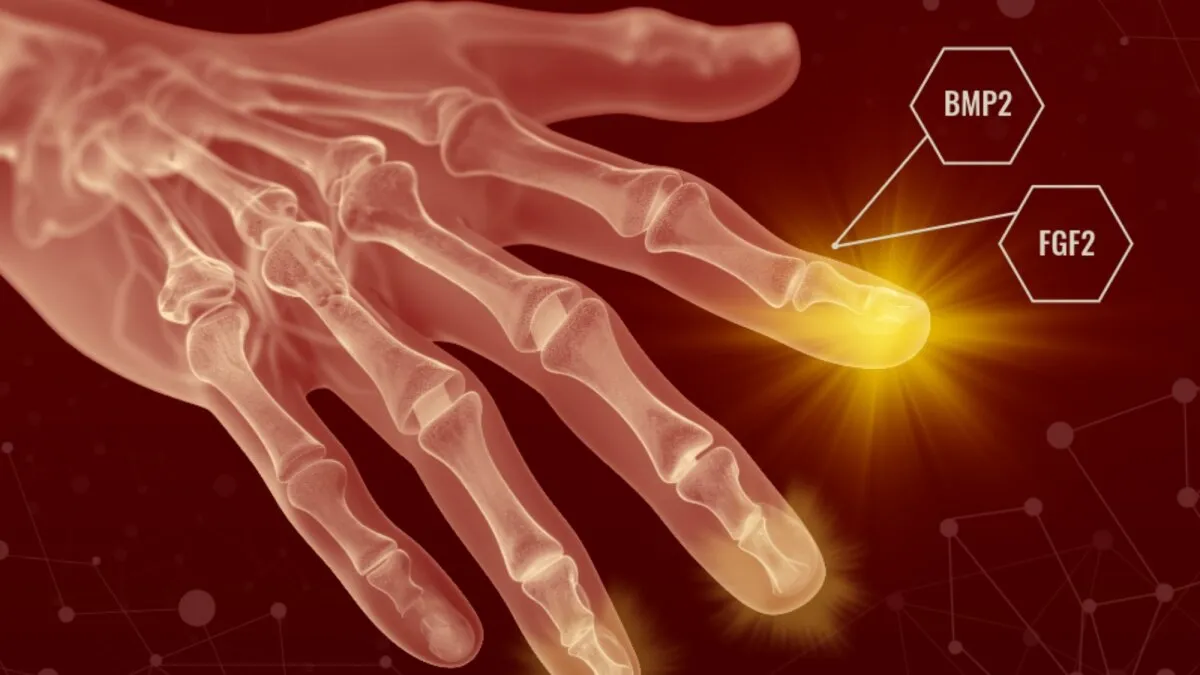
To see if a healing wound could produce a blastema in mammals, Muneoka's team applied fibroblast growth factor 2 (FGF2) to amputated mouse digits. A blastema-like tissue formed. While these cells didn't become new skin and bone, it showed that regeneration isn't impossible in mammals.
Next, the researchers added a tiny bead with bone morphogenetic protein 2 (BMP2). This made the blastema produce new bone, ligament, and tendon tissue.
This isn't the same as growing a whole new digit. A lot of coordinated growth is needed to create a functional finger or toe. But it suggests that with the right chemical signals, existing tissues can act like the regenerative structures found in animals like salamanders or sea stars.
Muneoka has spent his career trying to understand why some animals can regenerate and humans cannot. Even if this research doesn't lead to regrowing arms and legs, it's a key piece in understanding wound healing. It could help reduce scarring and improve function after traumatic injuries.
Deep Dive & References
Experiment on mice - Nature Communications, 2026