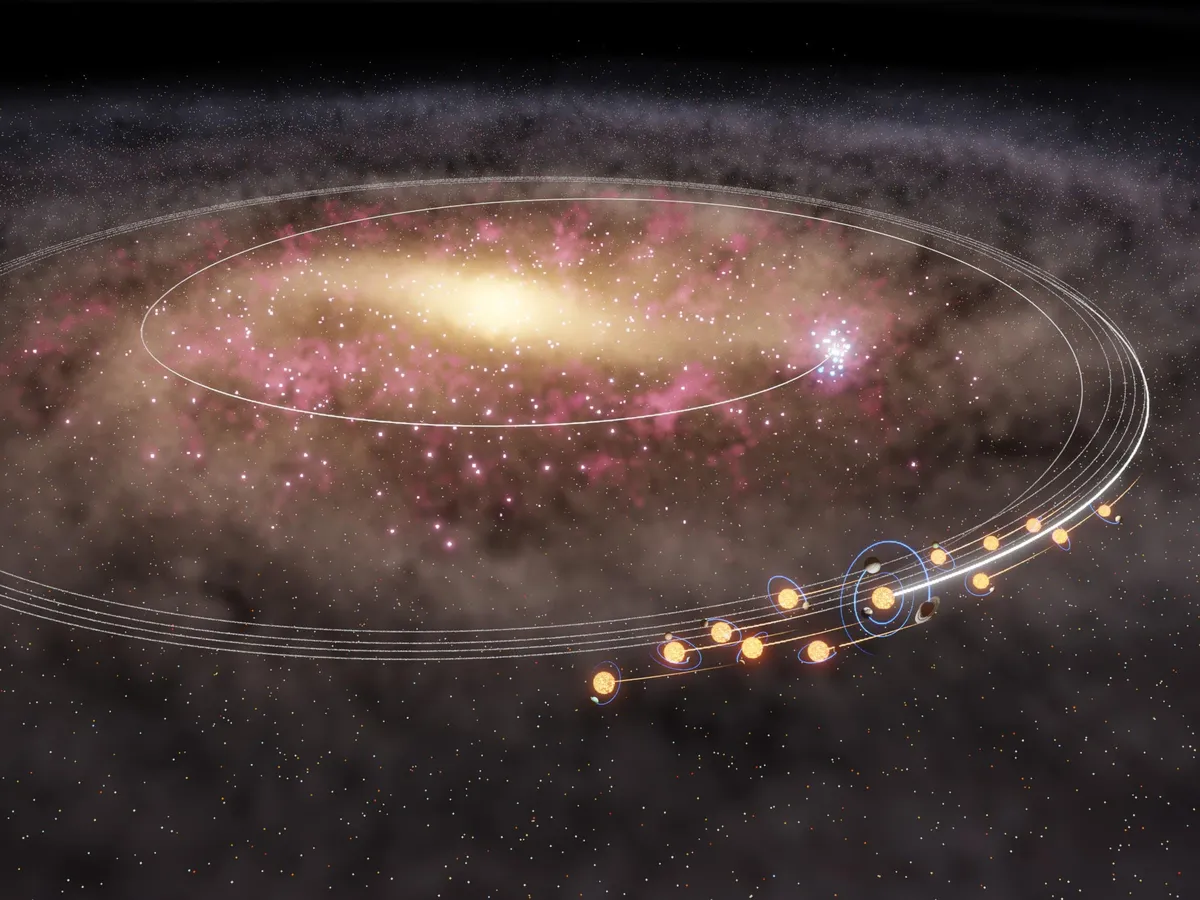
Your Sun had a lucky escape. About four to six billion years ago, it was part of a massive exodus — thousands of Sun-like stars moving outward from the Milky Way's turbulent center, away from radiation and stellar collisions that would have made life on Earth nearly impossible.
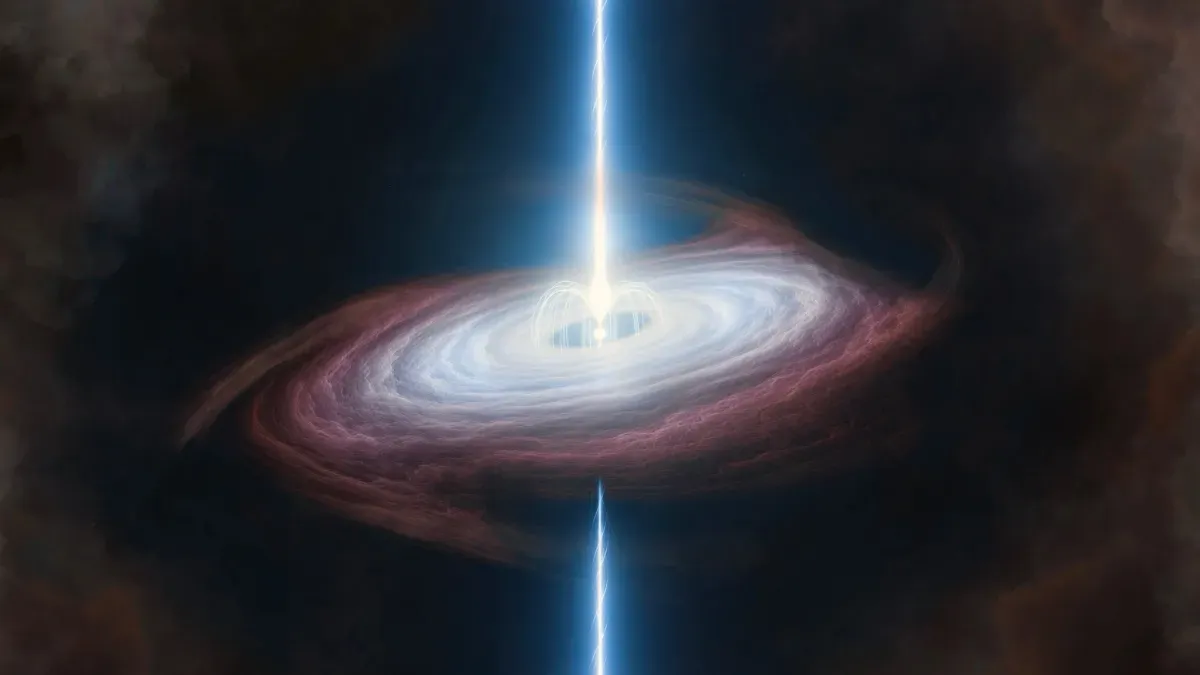
We've known for a while that the Sun formed much closer to the galactic core than it is now. But how it actually got here has been a puzzle. The galaxy's central bar — a rotating, bar-shaped structure at the heart of the Milky Way — creates a gravitational trap that should have kept those stars locked in place. Now, new research using data from the European Space Agency's Gaia satellite suggests the Sun didn't break free by accident. It rode a wave.
A team led by researchers from Tokyo Metropolitan University and Japan's National Astronomical Observatory analyzed over 6,500 solar twins — stars that match our Sun in temperature, gravity, and chemical makeup. This is about 30 times larger than any previous study of its kind. When they mapped the ages of these stars, a striking pattern emerged: a huge cluster of them formed between four and six billion years ago, and most occupy similar distances from the galactic center today. The Sun sits right in the middle of that group.
We're a new kind of news feed.
Regular news is designed to drain you. We're a non-profit built to restore you. Every story we publish is scored for impact, progress, and hope.
Start Your News DetoxThe galactic neighborhood that made us possible
The inner Milky Way is genuinely hostile. Radiation is intense. Stars collide more frequently. It's the kind of environment where planetary systems struggle to form and develop stable conditions for life. The outer regions — where our solar system eventually settled — are quieter, safer. That difference matters.
The migration itself reveals something about how our galaxy was built. The central bar shouldn't have allowed such a large-scale outward movement, unless something unusual was happening. The researchers believe the bar was still forming during this period. The same gravitational shifts that created the bar's structure may have actually funneled these stars outward, like a cosmic conveyor belt.
It's a reminder that Earth's existence isn't just about luck — it's about timing and galactic geography. Our Sun needed to be born in the right era, in the right part of the galaxy, during a moment when the Milky Way's own architecture was still taking shape. All of that aligned, and the result is the relatively stable neighborhood where life had billions of years to emerge and evolve.
The next step is understanding exactly how this migration happened and whether other galaxies show similar patterns. It's the kind of question that turns our solar system from a random dot in space into part of a much larger story.