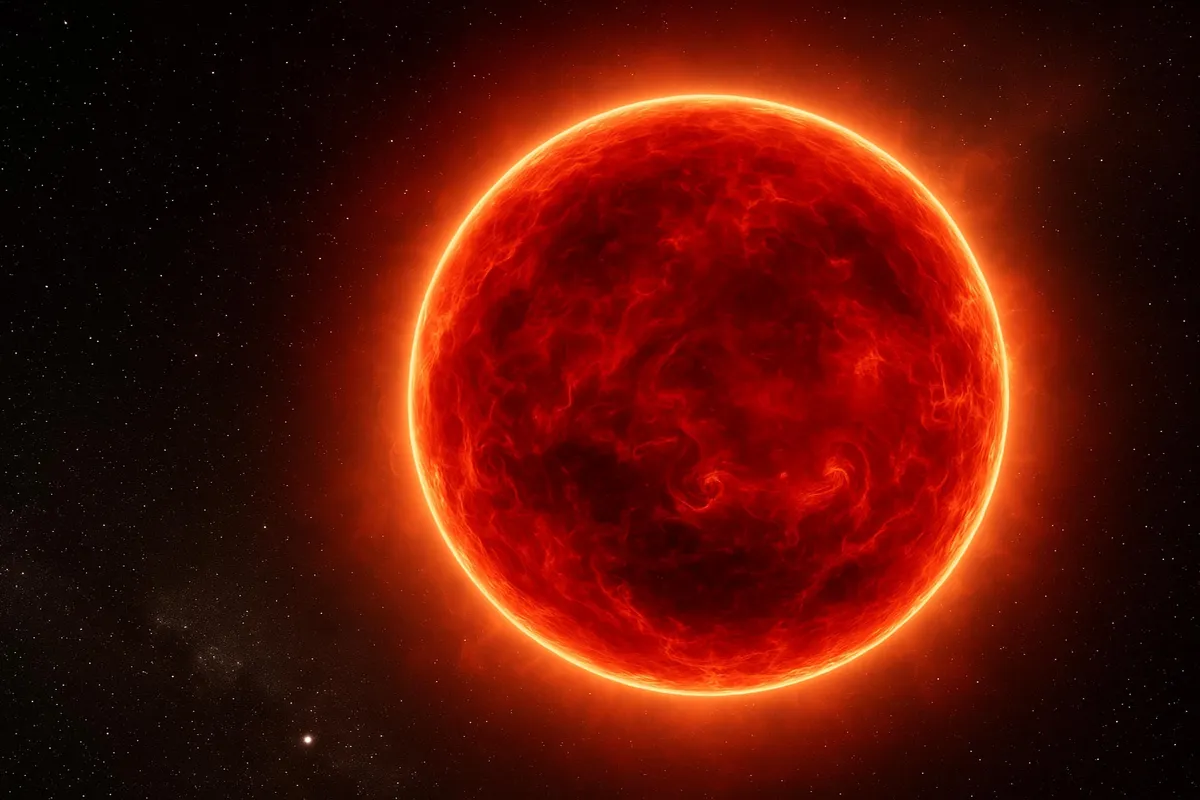
In December 2024, astronomers watched a star 25 times the size of our sun explode. This event, called SN 2024afav, was a superluminous supernova. It was at least ten times brighter than a typical large star explosion.
Researchers used the Las Cumbres Observatory's network of 27 telescopes to observe the supernova for over 200 days. While its brightness peaked around Day 50, something unusual happened. Instead of slowly fading, the light flickered downward, and the time between each flicker got shorter. Other superluminous supernovae had one or two such flickers, but SN 2024afav had four.
After months of calculations and using Albert Einstein's theory of general relativity, scientists believe they have an answer. For the first time, astronomers saw the birth of a magnetar. A magnetar is a fast-spinning neutron star with an incredibly strong magnetic field. The findings, published in Nature, suggest that these powerful objects fuel some of the universe's brightest supernovae.
We're a new kind of news feed.
Regular news is designed to drain you. We're a non-profit built to restore you. Every story we publish is scored for impact, progress, and hope.
Start Your News DetoxThe Role of the Magnetar
These findings support a theory from 16 years ago by theoretical astrophysicist Dan Kasen. He and his team proposed that magnetars power some superluminous supernovae. This is one of several ways a star can end its life.
A star's mass determines how it dies. If it's not quite massive enough to become a black hole, it collapses into a neutron star. However, stars with strong magnetic fields become magnetars. Their magnetic fields are 100 to 1,000 times stronger than those of spinning neutron stars, also known as pulsars. Both magnetars and pulsars are only about ten miles wide and can spin over 1,000 times per second when they form.
Kasen's team theorized that a spinning magnetar accelerates charged particles very quickly. These particles then crash into the expanding debris from the supernova. This collision, they believed, makes some supernovae much brighter than others.
Kasen, who was not part of the new study, said this idea felt like a "theorist's magic trick." He noted it was a natural way to explain the extreme brightness, but they couldn't see it directly.
The latest study, led by UC Santa Barbara astrophysicist Joseph Farah, explains this "magic trick." It took some trial and error to figure out. Farah explained they tested several ideas, including basic Newtonian physics.
Wobbly Disks

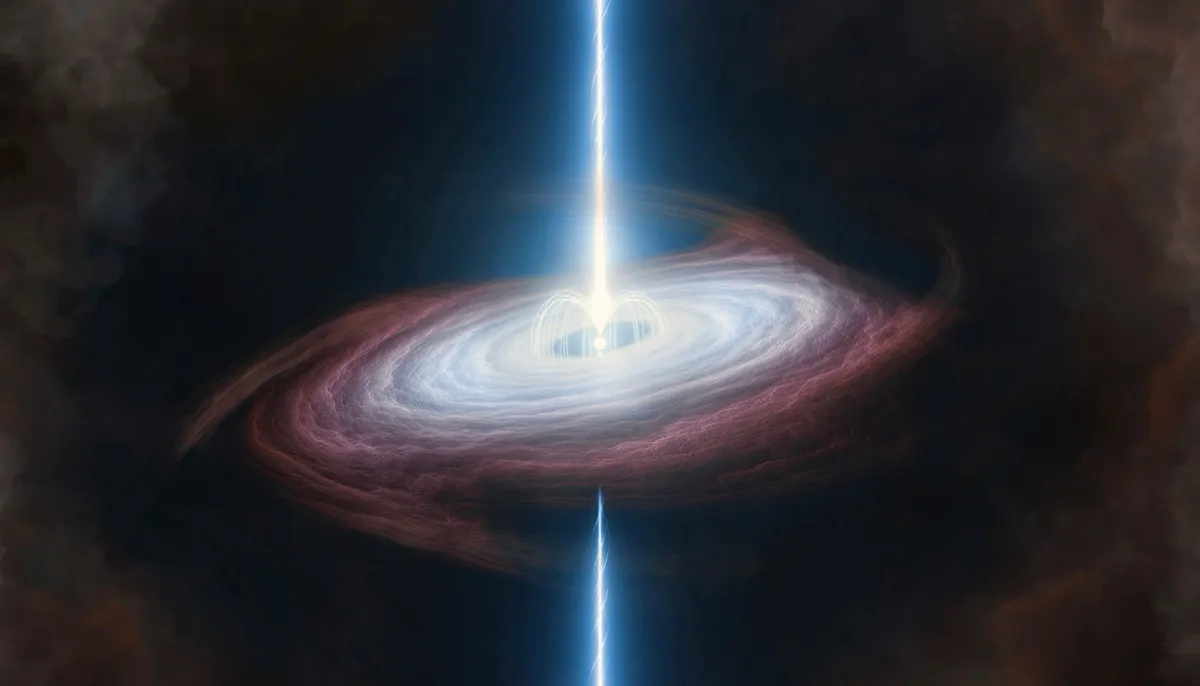
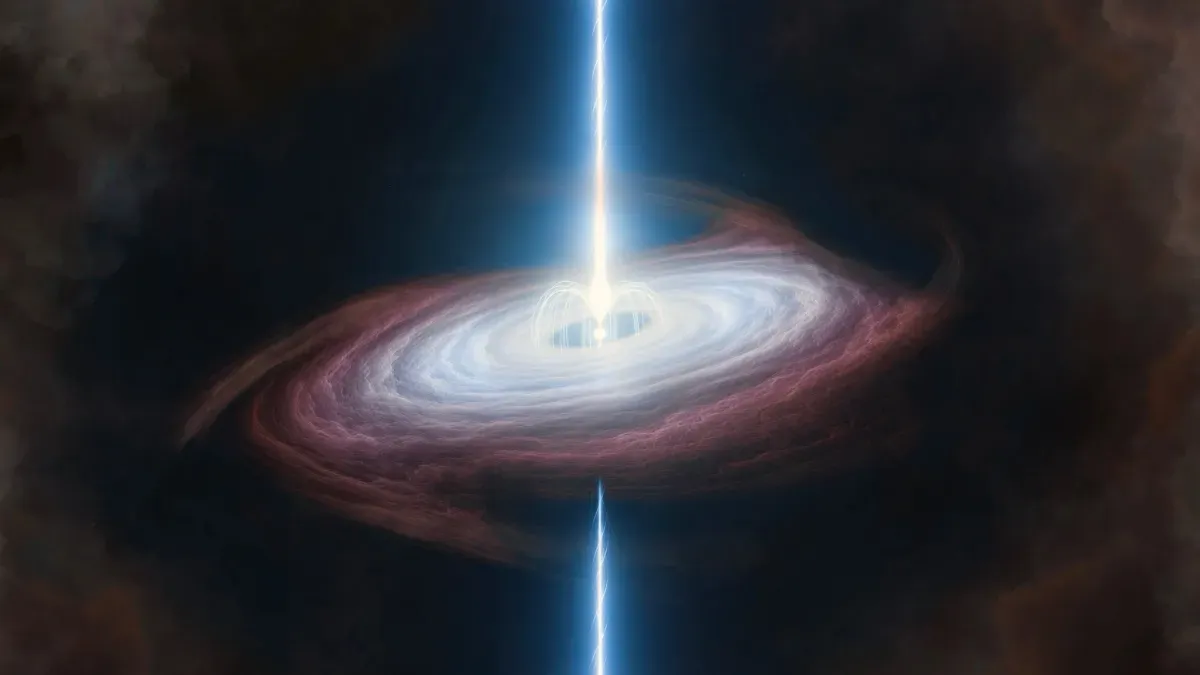
The answer came from general relativity, not Newtonian physics. Farah's model for SN 2024afav suggests that material from the explosion falls back toward the magnetar, forming an accretion disk. This disk of debris is likely uneven, meaning its spin axis doesn't line up with the magnetar's. General relativity states that a spinning object drags space-time as it rotates. For a magnetar, this spinning would create something called a Lense-Thirring precession.
Simply put, the misaligned accretion disk starts to wobble. As it wobbles, it might block and reflect the magnetar's light, like a blinking turn signal. As the disk gets closer to the magnetar, it shrinks and wobbles faster. This explains why the time between SN 2024afav's light flickers decreased. It also confirms Kasen's magnetar theory.
Farah noted that this is the first time general relativity has been needed to describe how a supernova works.
Andy Howell, a senior scientist at Las Cumbres Observatory and co-author, called Farah's discovery the "smoking gun." He said it connects the light flickers to the magnetar model and explains everything using general relativity, which is a well-tested theory in astrophysics.
'The Science I Dreamed of as a Kid'
Magnetars are not the only explanation for all superluminous supernovae. Another theory suggests that a star's shockwave might hit nearby material, making it brighter. Kasen also proposed that a new black hole with a misaligned accretion disk could briefly power a bright supernova.
Even if magnetars only power a small number of superluminous supernovae, this discovery is a big moment for astronomy and general relativity.
Farah described it as the most exciting thing he has ever been part of. He said, "This is the science I dreamed of as a kid."
Deep Dive & References
The birth of a magnetar powering a superluminous supernova - Nature, 2026