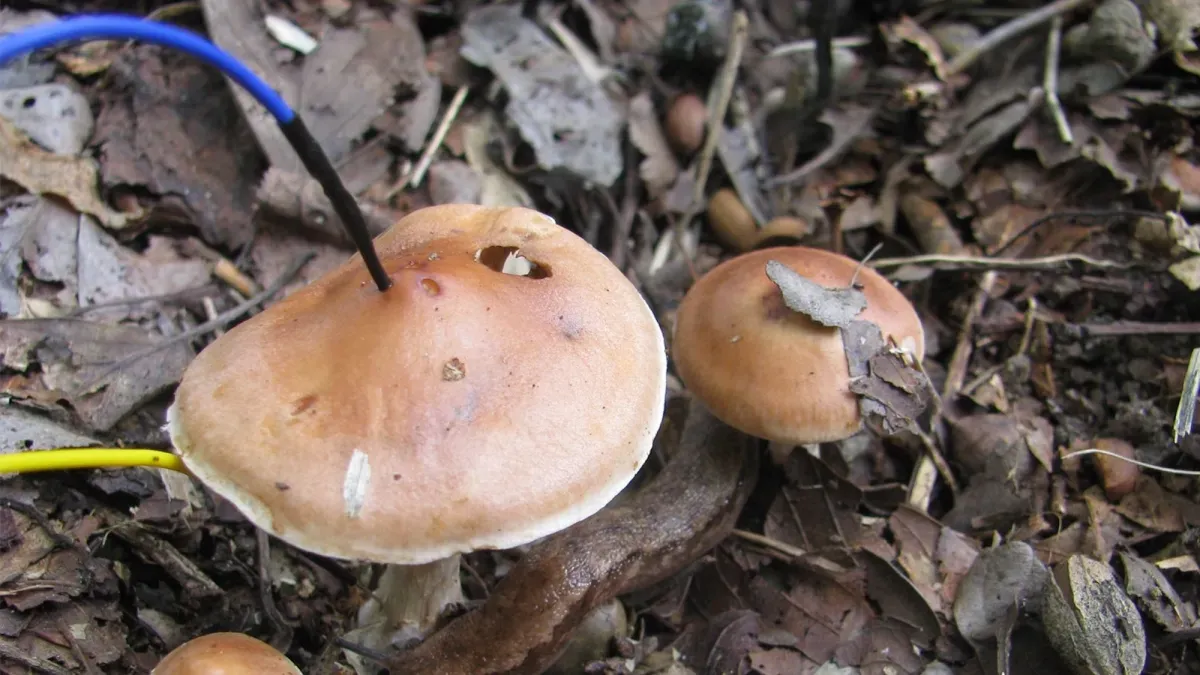
Mushrooms. They're more than just pizza toppings or the things that pop up after a good rain. They're actually quite the social networkers, connecting through vast, intricate underground systems called mycelial networks. Think of it as the fungi internet, sharing environmental intel across hundreds of feet. The only catch? We're still figuring out the Wi-Fi password.
The Ur-ine of Truth
Now, a team of Japanese mycologists has stumbled upon a truly remarkable — and slightly gross — detail about this fungal chatter. Turns out, the way some mushrooms communicate can be dramatically altered by something all animals produce: urine. Yes, that urine. Their findings, published in Scientific Reports, confirm that even the forest floor has its gossip circles, and apparently, pee is a conversation killer.
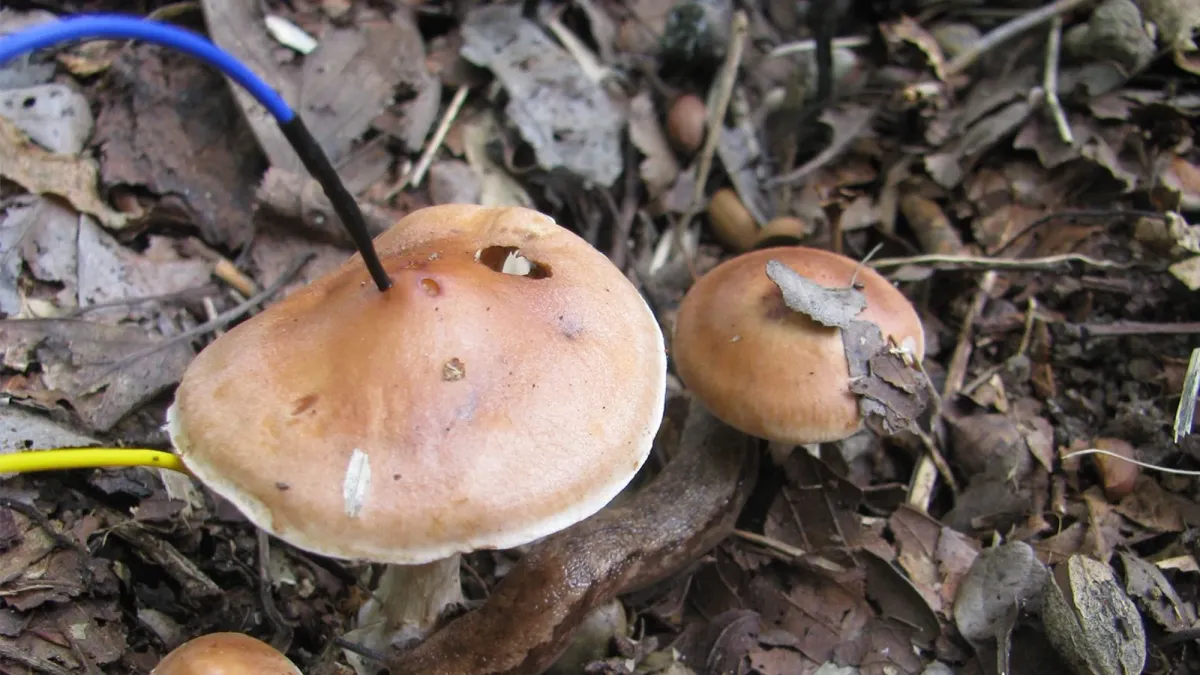
These particular fungi, known as ectomycorrhizal fungi (a subset of the ammonia-loving crowd), are basically soil ammonia addicts. They need it to thrive. And what's urine packed with? Urea, which handily converts into ammonia. So, researchers led by Yu Fukasawa at Tohoku University in Sendai decided to get up close and personal, sticking electrodes onto 37 of these fungi in an oak forest.
We're a new kind of news feed.
Regular news is designed to drain you. We're a non-profit built to restore you. Every story we publish is scored for impact, progress, and hope.
Start Your News DetoxFor three and a half days, they played a rather unique game of cause-and-effect, dousing the fungi with varying amounts of water and urine and measuring their electrical signals every single second. Because, apparently, that's where we are now: eavesdropping on mushroom conversations with scientific precision.
The results were a mixed bag of fungal feelings. A splash of water on a single mushroom? Communication levels shot up. But if all the mushrooms got a drink, the electrical chatter actually went down. Fukasawa speculates this might be the mushroom equivalent of, "Everyone already knows it's raining, so why bother talking about it?" Which, if you think about it, is both impressive and slightly terrifying.

And then there was the urine. Much like a surprise party guest who brings a fruitcake no one asked for, urine also made the fungi clam up. The why remains a mystery, but it clearly shows these underground networks are sensitive souls, adjusting their electrical signals based on whatever delightful (or not-so-delightful) liquids come their way.
The team hopes to eventually link specific electrical signals to specific fungal activities, which means one day we might just understand exactly what the mushrooms are complaining about. Probably the squirrels.