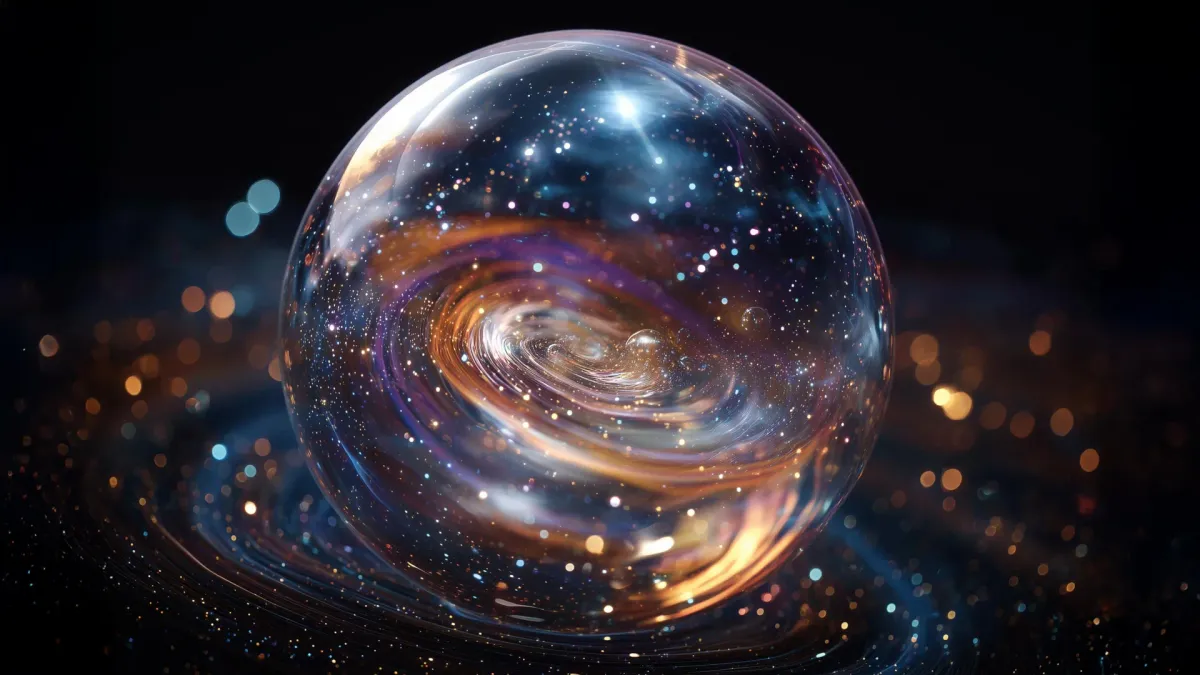
For decades, physicists have been wrestling with a cosmic paradox so mind-bending it could make your brain spontaneously invent a new dimension. It’s called the black hole information paradox, and it’s basically the universe’s most infuriating magic trick.
Here’s the gist: Stephen Hawking predicted that black holes aren't quite the cosmic vacuum cleaners we thought. They actually leak a faint glow of particles, now known as Hawking radiation. Over eons, this leakage would cause a black hole to shrink and then, poof, vanish. Which sounds fine, until you realize that everything that fell into it—every star, every planet, every rogue space sock—would also vanish. And quantum physics, bless its stubborn heart, insists that information cannot be destroyed. Ever. So, where did all that information go?
It’s a cosmic headache that’s been baffling the brightest minds because, well, you can't exactly see Hawking radiation with a telescope. And the math involved in merging gravity (Einstein's domain) with quantum physics (the Standard Model's turf) is notoriously, spectacularly difficult.
We're a new kind of news feed.
Regular news is designed to drain you. We're a non-profit built to restore you. Every story we publish is scored for impact, progress, and hope.
Start Your News DetoxThe Translator for the Universe
Enter an international team of researchers who decided, "If we can't look at black holes, let's look around them." Their brilliant workaround? They translated Hawking radiation into the language of particle physics using a mathematical tool called the "double copy."
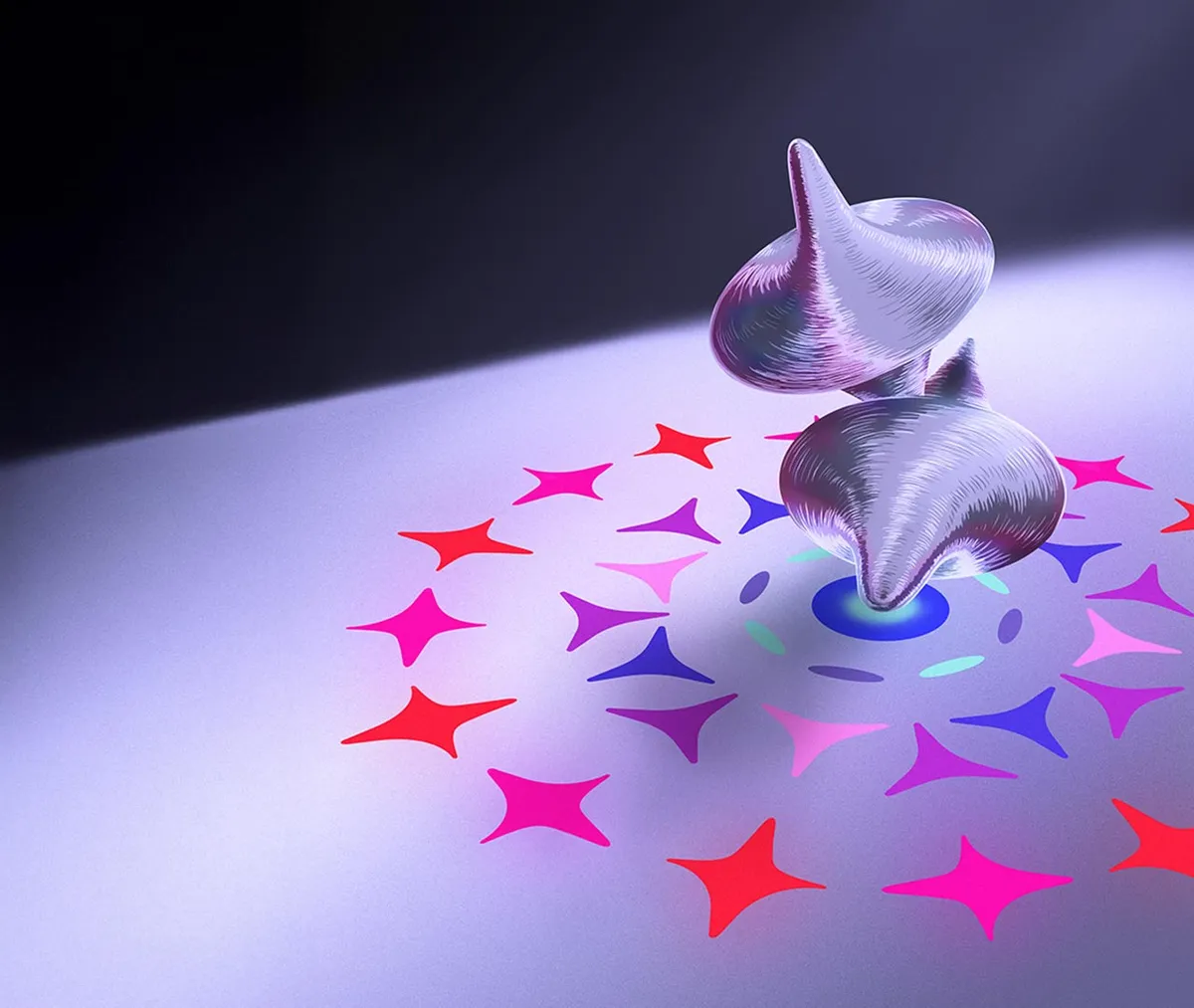
Think of it as a universal translator, but for the fundamental forces of the cosmos. The double copy suggests that some incredibly complex gravity equations can be rewritten using much simpler particle physics equations. It's like finding out that Shakespeare can be perfectly understood by reading a Dr. Seuss book, if you just know the secret code.
This tool has been a game-changer in theoretical physics for the last decade, allowing physicists to reuse old calculations in new, clever ways. But Hawking radiation was always the missing piece. No one had figured out its particle physics equivalent—until now.
When a Black Hole is (Almost) a Bumper Car
In their new study, the researchers found that Hawking radiation, when translated, looks a lot like a charged particle slamming into a collapsing ball of charged matter. Instead of particles escaping a black hole, you're watching a particle collide with something else. The math for this collision surprisingly matched the equations for Hawking radiation.
And just to make sure they weren't seeing things, two other research teams independently stumbled upon similar results. Which, if you think about it, is both impressive and slightly terrifying. It's like three different people drawing the same incredibly specific, fantastical creature without ever talking to each other.
This discovery hints that crucial parts of black hole physics might have been hiding in plain sight within regular particle physics equations all along. It’s a profound link between the gargantuan (black holes) and the infinitesimal (quantum particles), suggesting a deeper connection between gravity and the quantum world than we previously understood.
While this doesn't solve the black hole information paradox, it gives physicists a whole new playground to try and figure it out. Since real Hawking radiation is too faint to detect, they can now mathematically study its particle physics doppelgänger. They can explore black hole behaviors that were previously impossible to touch.
Of course, for now, it's all theoretical. These mathematical mappings currently work for highly specific, controlled situations, not yet the swirling, cosmic monsters out in space. But it’s a tantalizing step toward untangling one of modern science’s biggest, most elegant mysteries. And maybe, just maybe, figuring out where all those space socks actually went.