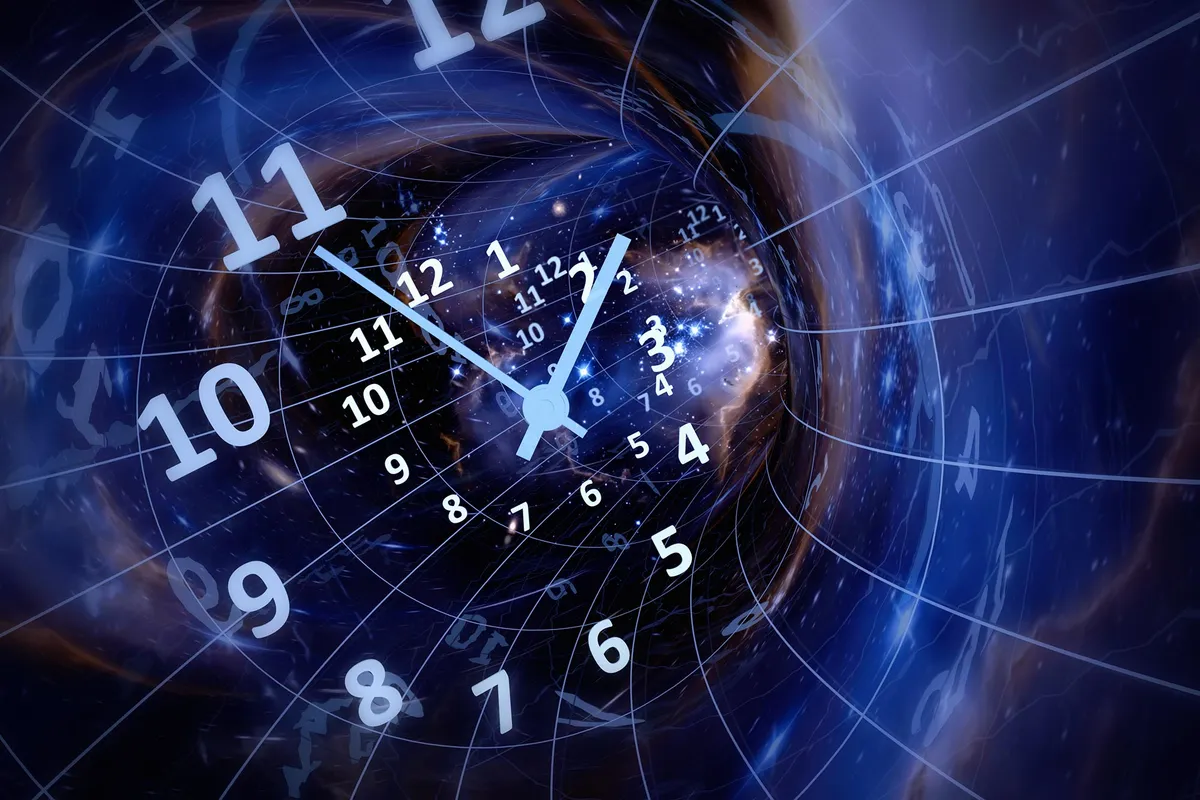
What if time wasn't just a relentless, forward march? What if it could, you know, superposition? As in, exist in multiple states simultaneously, like some kind of cosmic choose-your-own-adventure novel? Physicists are now seriously exploring this head-spinning idea, suggesting we might actually be able to test it soon.
Einstein already messed with our heads by showing time isn't fixed – it bends and warps with speed and gravity. But add quantum physics to the mix, and things get delightfully weird. Suddenly, the very flow of time might be able to exist in overlapping states, ticking at different rates all at once. Because apparently that's where we are now.
The Quantum Clock Conundrum
Igor Pikovski from Stevens Institute of Technology, along with teams at Colorado State and NIST, has been looking into how quantum effects could mess with time, and how our increasingly precise atomic clocks might help us catch time in the act. Their new study in Physical Review Letters suggests that the advanced clocks and quantum computers we're building could actually help answer some of the deepest questions about reality.
We're a new kind of news feed.
Regular news is designed to drain you. We're a non-profit built to restore you. Every story we publish is scored for impact, progress, and hope.
Start Your News DetoxThink of it like Schrödinger's cat, but for time itself. Instead of a cat being both alive and dead, a quantum clock could be both younger and older at the same moment. It’s measuring time, but that measurement is in multiple states. Pikovski explains that quantum theory and relativity have very different ideas about time, and combining them might reveal "hidden quantum signatures of time-flow" that classical physics simply can't explain. Which, if you think about it, is both impressive and slightly terrifying.
Relativity already tells us that a clock moving at a brisk 10 meters per second for 57 million years would be a full second behind a still clock. Experiments with ultra-precise aluminum ion clocks at NIST have confirmed this. This is the famous "twin paradox" – one twin ages slower after a high-speed trip.
But the quantum twin paradox asks: could a single clock experience many timelines at once? Could it be both younger and older simultaneously? Pikovski's earlier work hinted at this, but the effects were too minuscule to measure. Until now.
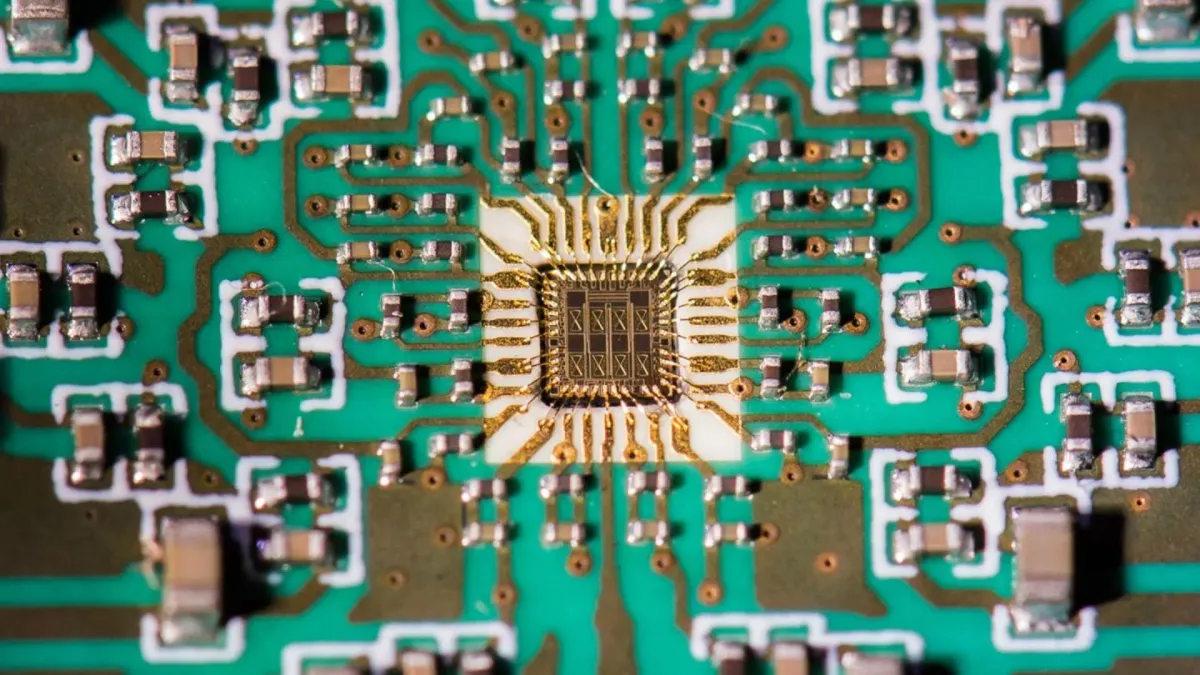
To glimpse this quantum weirdness, researchers are turning to atomic clocks that trap single ions, like aluminum or ytterbium. These tiny timekeepers are cooled to just above absolute zero and controlled with lasers, allowing scientists to manipulate their quantum states. The study suggests that by combining these super-precise clocks with trapped ion quantum computing, we might finally reveal these new quantum effects in time itself.
Gabriel Sorci, a PhD candidate at Stevens, points out that these clocks are so sensitive, they can detect minute time differences just from thermal vibrations. Even at absolute zero, he says, quantum fluctuations alone would still affect their ticking rate. It’s like trying to keep perfect time while the universe itself is doing the cha-cha.
Squeezing the Quantum Vacuum
The team isn't stopping there. They've also proposed an even more advanced method: instead of just chilling atoms, they want to manipulate the quantum vacuum itself to create "squeezed states." In these states, a clock’s position and motion would exhibit undeniable quantum behavior. This could allow a single clock to measure itself ticking at different rates at once, and even become entangled with its own motion. They're working to test these wild predictions in the lab.
Christian Sanner from Colorado State confirms they have the tech to create the necessary squeezing and the clock precision to actually see these effects for the first time. Pikovski even suggests that this kind of quantum tech could eventually help us detect single gravitons – the elusive particles of gravity. Because apparently, quantum technologies are the new Swiss Army knife for solving fundamental physics mysteries. And time, it seems, is no exception.