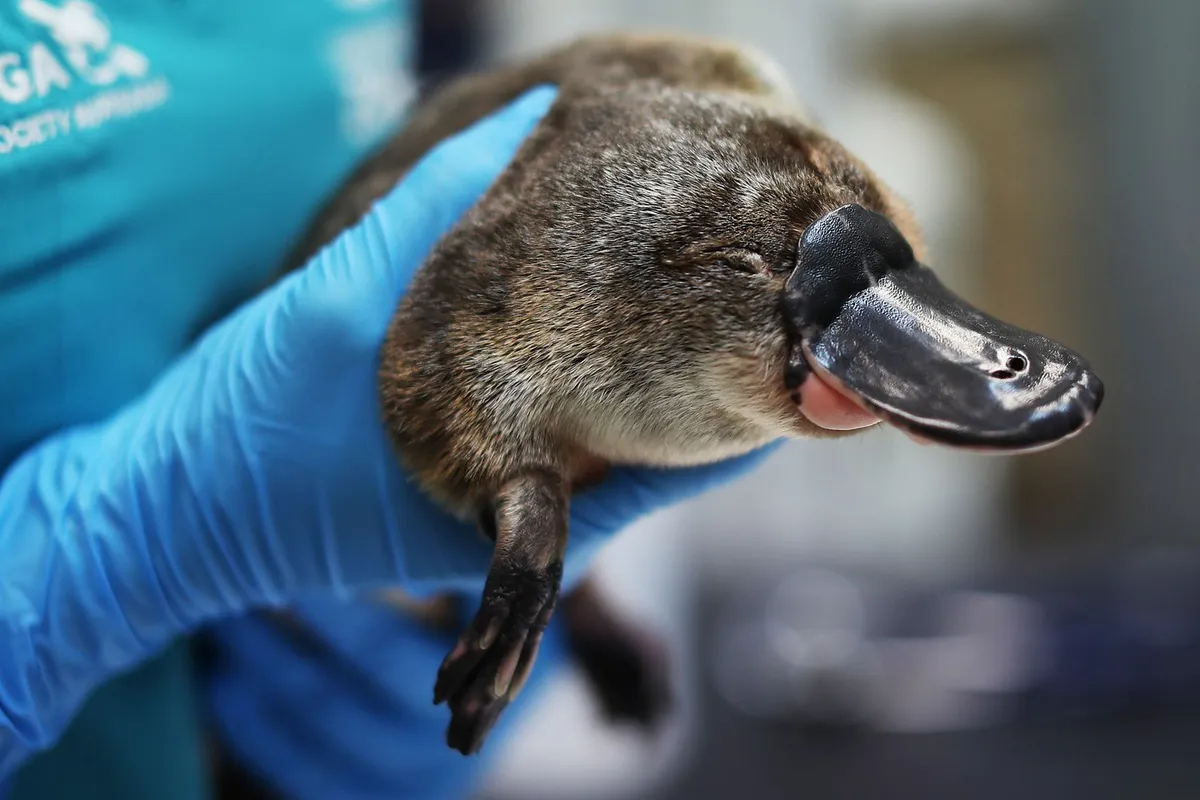
Platypuses are already known for being unique. They have duck-like bills, beaver-like tails, and otter-like bodies. These egg-laying mammals hunt using electric signals from their prey.
They also glow bluish-green under UV light. Platypuses have five times more sex chromosomes than most mammals. Males are venomous, and females produce milk without nipples.
A New Discovery About Platypus Hair
Now, researchers have found another unusual trait. Platypus melanosomes, which are tiny pigment structures in their hair cells, are hollow. This feature was previously only seen in bird feathers. The study was published in Biology Letters on March 18.
We're a new kind of news feed.
Regular news is designed to drain you. We're a non-profit built to restore you. Every story we publish is scored for impact, progress, and hope.
Start Your News DetoxMelanosomes give color to feathers, fur, skin, hair, and eyes. In mammals, these structures are usually solid. However, in birds, they can be hollow.
Researchers at Ghent University in Belgium were building a database of mammal melanosomes. They noticed that platypus melanosomes appeared empty. They then took hair samples from 10 more platypuses and examined them under a microscope. They also looked at fur from two echidna species, which are the platypus's closest relatives, and several marsupials like a wombat and a Tasmanian devil.
Only the platypus hairs had hollow melanosomes.
Why Hollow Melanosomes?
The platypus is the only known mammal with hollow melanosomes out of 126 species studied. Lead author Jessica Leigh Dobson, a biologist at Ghent University, believes it's unlikely this trait would have gone unnoticed in other mammals if it existed.
Platypus melanosomes are also uniquely spherical and hollow. This combination has never been seen in vertebrates. Bird melanosomes are hollow but typically rod-like or flattened. Some mammals have spherical melanosomes, but they are solid.
The melanin in platypus hair was also surprising. Researchers found mostly eumelanin, which creates browns and blacks. They found only trace amounts of pheomelanin, which makes red and yellow. This is puzzling because pheomelanin is usually linked with spherical melanosomes, not eumelanin.
Dobson noted that this doesn't fit current knowledge about how melanosome shape relates to color.
In birds, hollow melanosomes contribute to iridescence, which creates shifting, rainbow-like colors. However, platypus hair is not iridescent; it's just brown. Mammals with iridescent fur, like golden moles and giant otter shrews, have solid melanosomes.
Researchers are still unsure why platypuses have hollow melanosomes. They think it might relate to their aquatic life, possibly helping with insulation. Tim Caro, an evolutionary ecologist not involved in the study, suggests it's likely for a lifestyle attribute other than color.
This raises questions about why other aquatic mammals don't have them. Dobson says more research is needed to understand their purpose.
Since platypuses share traits with birds, scientists wonder if they also have similar genes for melanin production and melanosome formation. This is an area for future studies.
Deep Dive & References
- Biology Letters - 2025