The Mediterranean region is becoming hotter and drier. This pushes scientists to find new ways to get water, even from the air. A German team has now made a porous material that can do this, even when the air feels very dry.
Norbert Stock from Kiel University's Institute of Inorganic Chemistry led the study. He explained that regions like the Mediterranean face rising temperatures and less rainfall. Their goal is to create an eco-friendly technology that turns water molecules from the air into drinking water. The study was published in the Journal of Materials Chemistry A and Industrial & Engineering Chemistry Research.
How CAU-10-H Works
The material is called CAU-10-H. It is a type of Metal-Organic Framework (MOF). These structures have tiny pores that act like sponges. They soak up water vapor and then release it easily.
We're a new kind of news feed.
Regular news is designed to drain you. We're a non-profit built to restore you. Every story we publish is scored for impact, progress, and hope.
Start Your News DetoxOmar Yaghi won the 2025 Nobel Prize in Chemistry for the basic science behind MOFs. Yaghi's company, Atoco, is already developing large units. These units are designed to pull up to 1,000 liters of water per day from desert air. The first commercial systems are planned for late 2026.
CAU-10-H uses a different but related method. Its creators believe it is ready to move from the lab to real-world use. The name "CAU" comes from Christian-Albrechts-Universität zu Kiel, the university where it was created. "10" shows its place in the university's list of compounds, and "H" refers to the hydrogen-based chemical group used to build it.
Most materials that collect moisture need fairly humid air to work well. CAU-10-H starts collecting water at room temperature when the relative humidity is just 18%. Most other systems would consider these conditions too dry.
Releasing the water is also simple. Heating the material to about 70 °C (158 °F) is enough to release the captured moisture. This temperature is low enough to be reached using solar heat or waste heat from a factory. This means it avoids expensive electricity. When the researchers added conductive carbon structures to the material, they made the cycle even faster. This allowed for continuous operation with cycles lasting only a few hours.
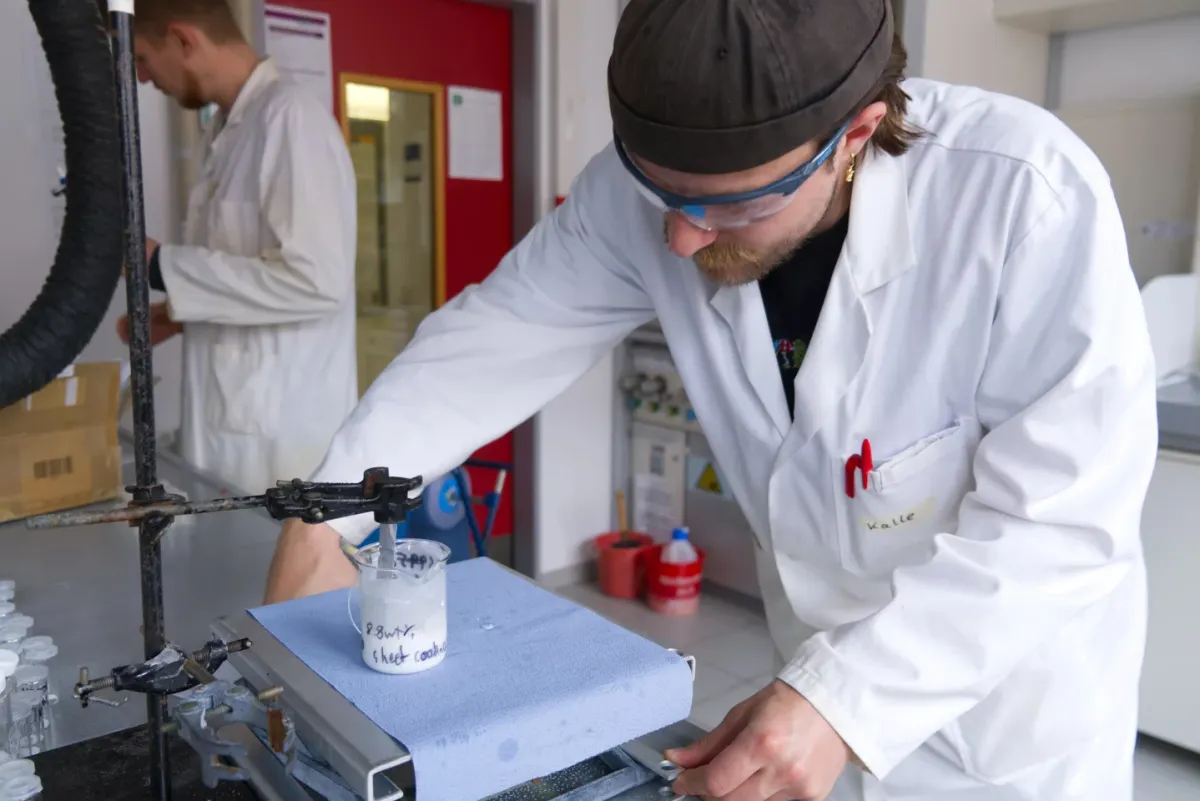 CAU-10-H, the porous MOF material developed by researchers in Kiel, Germany. Image: Kiel University
In dry air, the material captures up to 0.17 grams of water per gram of material. This means one kilogram of the composite could produce about 1.8 liters of water per day. Lasse Wegner, another author of the study, said this makes the material good for making drinking water, even in dry areas.
Beyond Drinking Water: Cooling
CAU-10-H also works as a refrigerant. In cooling systems that use adsorption, it performs three times better than silica gel. Silica gel has been the standard drying agent for decades. This means waste heat, like from a data center or a bakery oven, could be used to cool spaces. This would reduce the need for conventional air conditioning.
These results show CAU-10-H is one of the most efficient materials for low-humidity and low-heat water capture. However, direct comparisons are hard. The Kiel numbers are for raw material in lab settings. Atoco's numbers are for liters produced by a full machine with fans and heat exchangers. There is also no standard way to compare CAU-10-H to a material from UNC Chapel Hill. That material, announced in July 2026, releases water in about three minutes at 50 °C (122 °F). It is designed for fast release, not maximum water uptake.
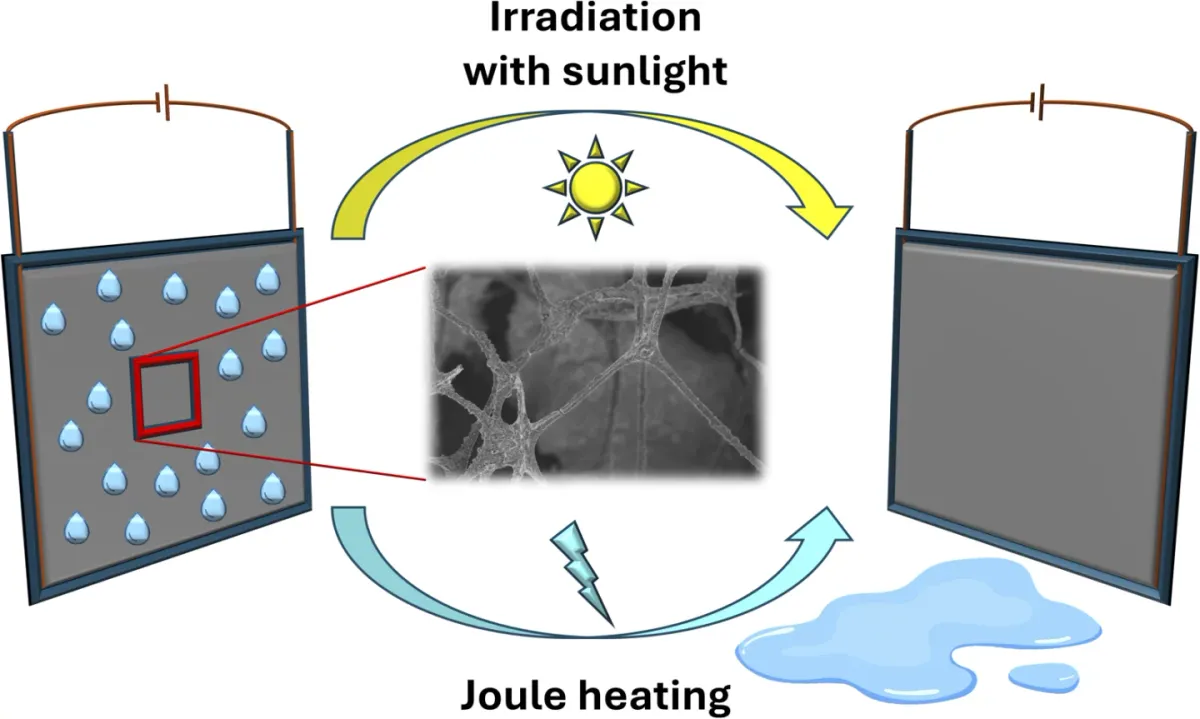 Diagram showing how CAU-10-H captures and releases water molecules. Image: Kiel University
Ready for the Real World
The most important part is making the material on a larger scale for actual use. Stock, who has researched MOFs for over 20 years, said they found CAU-10-H about 15 years ago. Since then, its possible uses have been studied worldwide.
With support from Kiel University, the team has now made about 30 kilograms (66 pounds) of the material. This is about 60 times more than any previous lab batch. The estimated cost is $12 to $14 per kilogram. Stock noted that this makes practical uses for their materials possible. They have shown it works in the lab and can be made at a cost-effective scale.
Scaling up from grams to kilograms is often a challenge for new lab materials. CAU-10-H now has a factory price and a plan for larger production. The next step is to test it in real-world situations. If these tests confirm the lab results, CAU-10-H could become a key part of the MOF revolution. It could help provide drinking water from the air in places where rain is scarce.
Deep Dive & References: Kieler Material gewinnt Trinkwasser aus Luft und kühlt effizienter als heutige Systeme - Kiel University